©

WALK FOR COUPLES IN LOUPIAN

|

O_OCTOBRE_OT-THAU

The must-sees in Loupian

Imagine walking on the same ground as the Romans did two millennia ago, admiring the multicoloured mosaics that have survived the centuries, then strolling through medieval alleyways before enjoying fresh oysters on the shores of the Thau lagoon… Welcome to Loupian, this exceptional village in the Thau Archipelago where every stone tells a story, every monument reveals a piece of our shared heritage.

Nestled between the lagoon and the garrigue, Loupian possesses hidden treasures that make it one of the richest heritage sites in the Thau Archipelago. From its exceptional Gallo-Roman villa, one of the few examples in France of mosaics preserved in situ, to its Romanesque and Renaissance chapels, via its early Christian remains, this village of 2,000 inhabitants offers a fascinating journey through time from antiquity to the present day.

Get ready for a unique heritage experience where archaeology, Romanesque art, Mediterranean cuisine and the good life come together in perfect harmony. Join us to discover the treasures of Loupian!
The Gallo-Roman Villa An archaeological gem of the Thau Archipelago

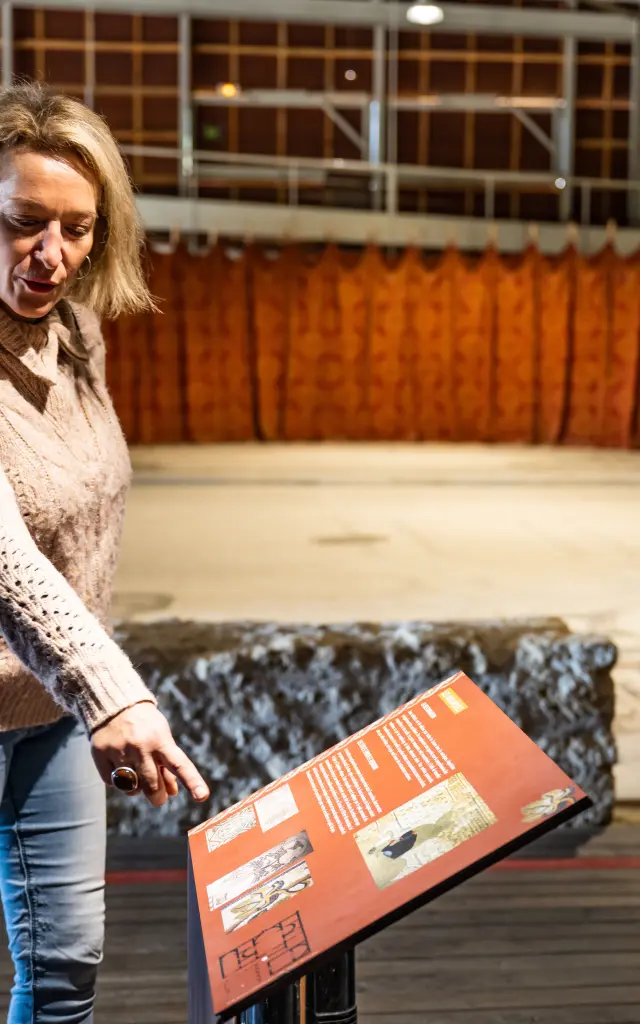
Begin your journey through time at the Gallo-Roman Villa of Les Prés Bas, a major archaeological site and the pride of the Thau Archipelago. Located at the entrance to the village, this on-site museum is one of the few examples in France of the conservation and ‘in situ’ display of polychrome floor mosaics. An exceptional treasure that attracts thousands of history enthusiasts every year.

A thriving vineyard in ancient times

Founded in the 1st century BC, this villa bears witness to the importance of Loupian during the Roman period. The site reveals the development of a prosperous agricultural estate over more than four centuries, from the 1st century BC to the 5th century AD. The main activity?

Viticulture, already flourishing at that time! The Romans had realised that the terroir of the Thau Archipelago, with its lagoon and Mediterranean microclimate, offered ideal conditions for growing vines.

The museum is organised around permanent exhibitions where you can discover how this wine-growing estate operated: winemaking techniques, the organisation of work, trade with the Mediterranean…

The villa operated both asa ‘closed community’ (self-sufficient) and was fully open to the Mediterranean world thanks to trade via the Thau lagoon.

400 m² of spectacular mosaics

The highlight of the exhibition? Over 400 m² of polychrome mosaics thatadorned the residence in the late 5th century AD, remarkably well-preserved in their original setting. A rare privilege that allows you to admire these works of art exactly where the inhabitants of the time would have gazed upon them every day!

These mosaics dazzle with their diversity: sophisticated geometric patterns, delicate floral designs, captivating mythological scenes… Each tessera (small stone cube) speaks to the refinement of this civilisation and the high status of the villa’s owners. The colours—ochres, reds, whites and blacks—have endured for nearly 1,600 years and remain astonishingly vivid.

The museum space displays objects found during archaeological excavations: pottery, farming tools, coins, everyday objects… An educational approach that enriches the visit and offers a concrete understanding of the lives of the people of Loupiana in ancient times.

The Augustales Step back in time to a living history

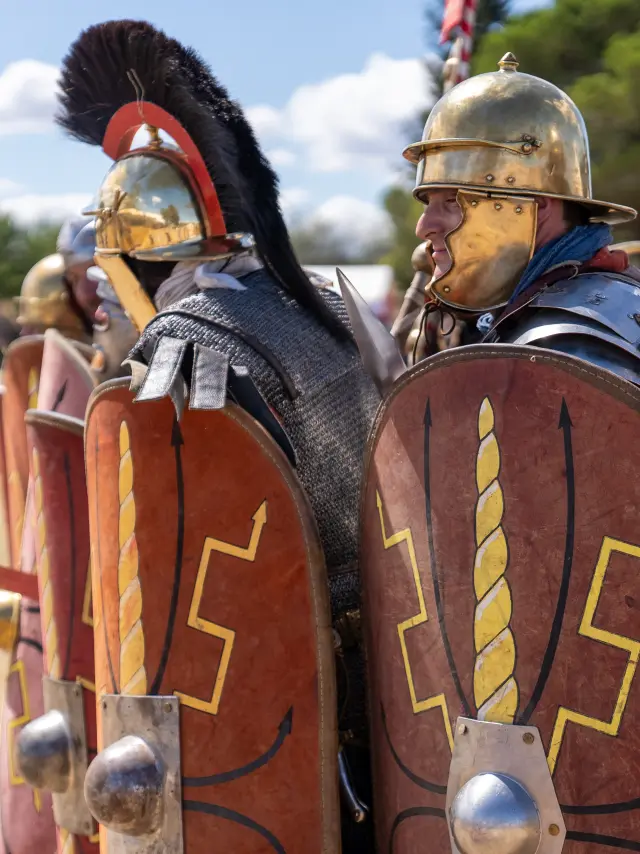
Every summer, the villa comes alive during the Augustales, a spectacular event that brings antiquity back to life for a magical weekend. Get ready for an unforgettable journey back in time – completely free for the whole family!

On the programme every year: demonstrations of experimental archaeology, ancient crafts (mosaics, pottery, metalwork, weaving, dyeing, Roman cuisine), and reconstructions of Celtic, Greek, Germanic and Roman camps. Feel the thrill of gladiatorial combat, admire the Roman legionaries on parade, watch demonstrations of Greek sports and much more! These shows and workshops will delight young and old alike during a weekend full of discoveries.

Les Augustales transform the villa into a veritable time machine, where history comes alive, becoming tangible and palpable. An unmissable event in the Thau Archipelago!

Medieval and Renaissance heritage A stroll through the ages

After your journey back to antiquity, head to the heart of the village to discover the architectural treasures that mark the centuries that followed. Loupian has managed to preserve a remarkable architectural heritage that bears witness to its importance during the Middle Ages and the Renaissance.

The historic centre: an open-air museum 

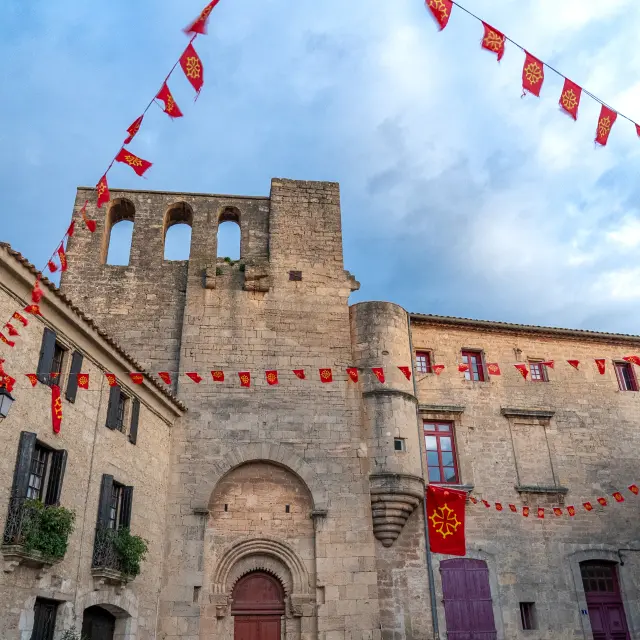
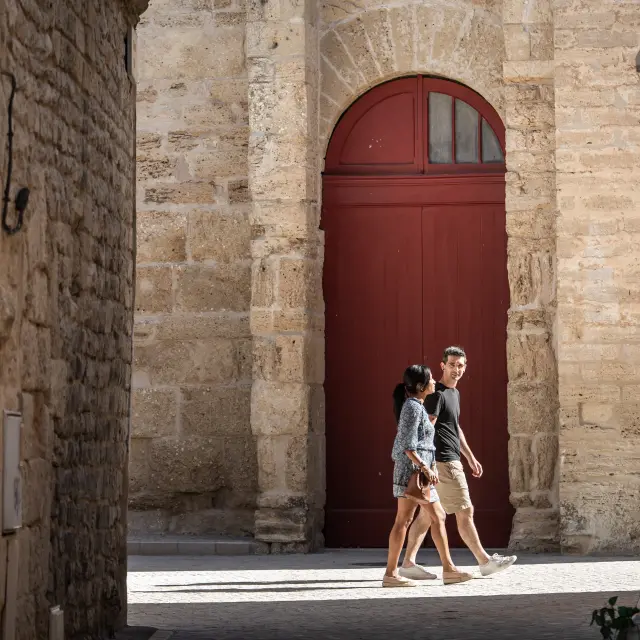
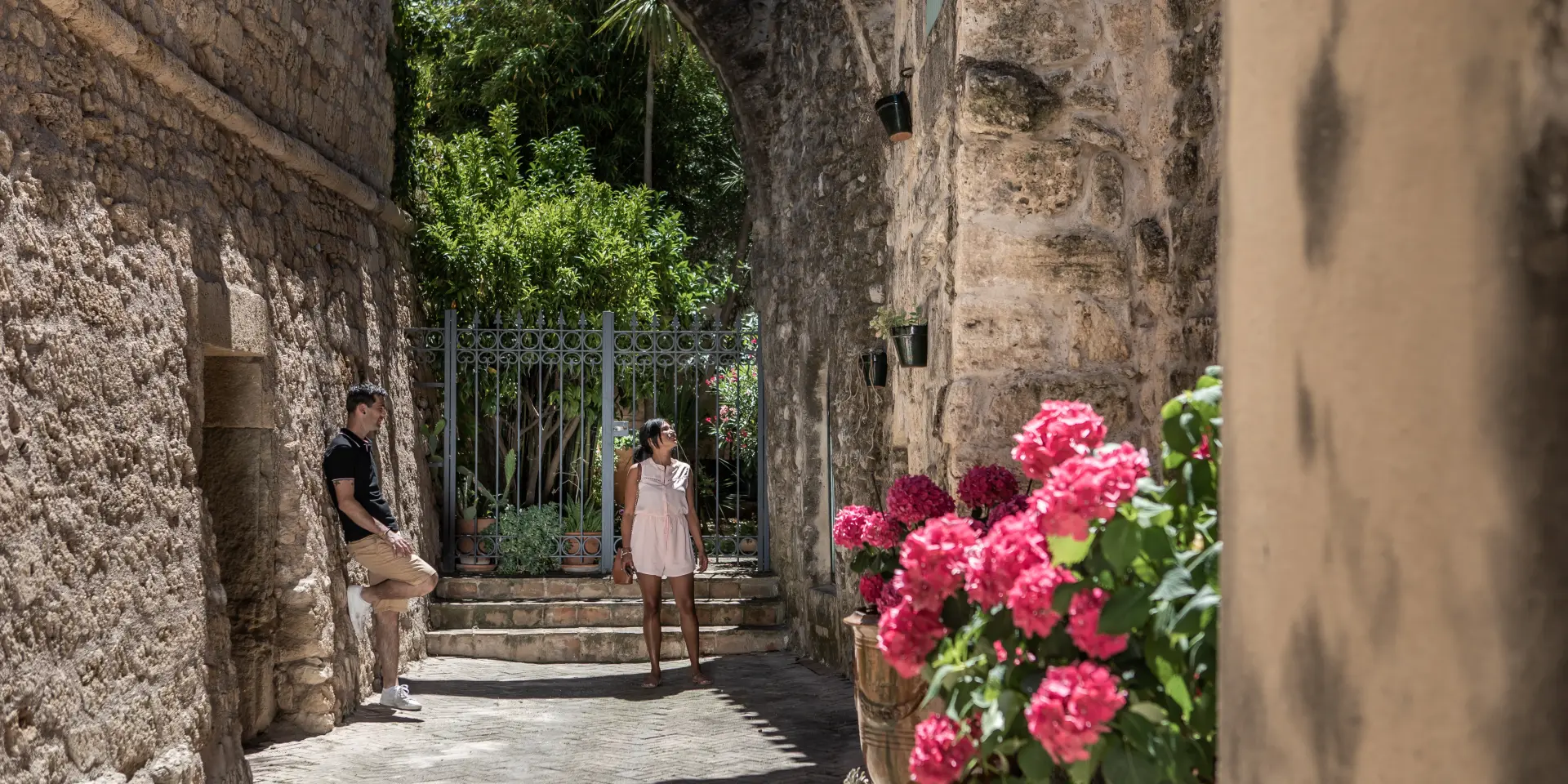
Stroll through the picturesque narrow streets where every façade tells a story. Admirethe mullioned windows, characteristic of medieval architecture, with their delicately carved stone tracery. The Renaissance façades with their elegant decorations reveal the refinement of the 15th and 16th centuries, a period of prosperity for the village.

Don’t miss the façade of the town hall, which is none other than the former seigneurial castle of Loupian. This imposing building bears witness to the feudal power that once reigned over the area. Also take a look at the Porte de l’Étang, which once led to the Saint-Hippolyte Chapel, theMarianne Well,the Porte du Caylis and the remains of the ramparts that protected the medieval town.

Every Wednesday morning, the open-air market takes over Place Charles de Gaulle. It’s the perfect time to stock up on delicious local produce, meet the producers fromthe Thau Archipelago andsoak up the typically Mediterranean, friendly atmosphere. Seasonal fruit and vegetables, goat’s cheese, honey, fresh oysters and mussels, local wines… The colourful stalls reflect the bounty of the region!

St Cecilia's Church A spiritual stronghold on the Cami Romieu

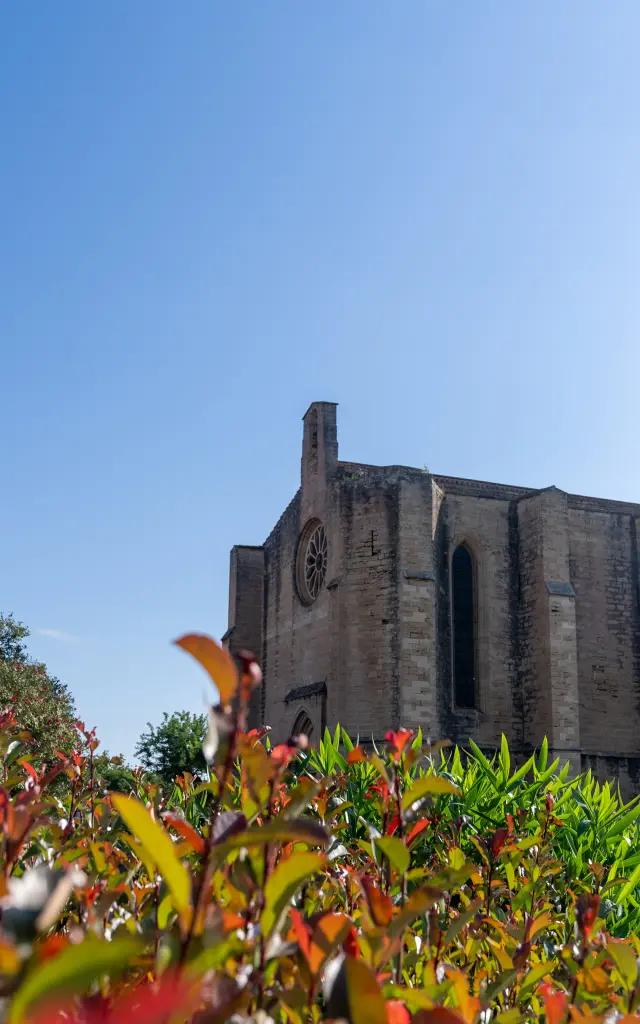
The parish church of Sainte-Cécilestands majestically on the edge of an ancient path:the Cami Romieu(the pilgrims’ route to Santiago de Compostela), one of the main routes in the Mediterranean Languedoc region in the late Middle Ages. This strategic location bears witness to Loupian’s importance on the pilgrimage routes.

Just a stone’s throw away, admire the remains of the early Christian church built in the 5th century. This exceptional site bears witness to the spiritual continuity of the place from late antiquity to the present day, making Loupian a major centre of Christianity in the Thau Archipelago. 


Saint Hippolyte’s Chapel A jewel of Romanesque art

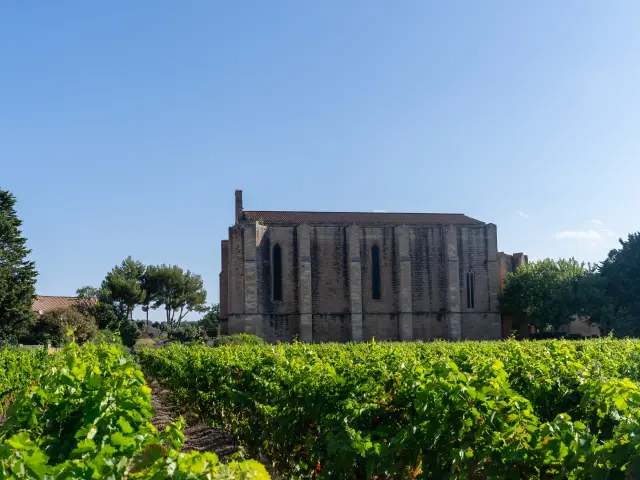
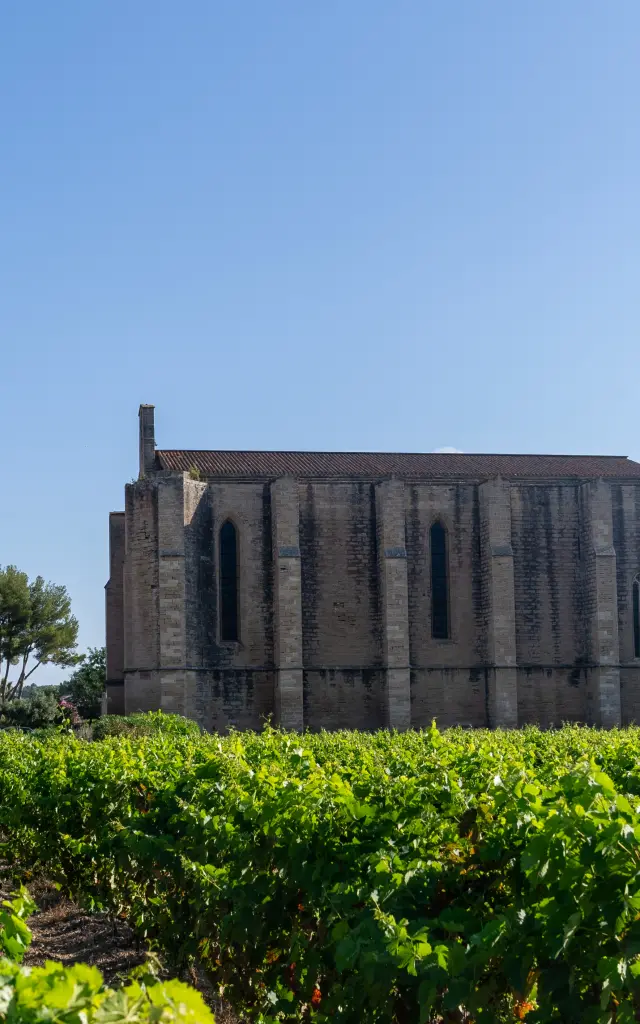
A true gem of religious heritage, the 12th-century Saint-Hippolyte Chapel is a masterpiece of Romanesque art that is not to be missed. Situated in the heart of the old village, accessible via the Porte de l’Étang, this fortified chapel holds a surprise inside.

Its barrel vault, characteristic of Romanesque architecture, is fascinating in its construction: stones arranged in a herringbone pattern using a perfected traditional technique. Look up and observe carefully: you will discover stonemasons’ marks, the signatures left by the medieval builders. Each worker carved his personal mark to identify his work and be paid accordingly.

These unique details, often overlooked by hurried visitors, create a moving connection with the men who built this place nearly 900 years ago. Imagine their precise movements, their craftsmanship passed down from generation to generation, their pride in working for eternity…
Every summer, the Saint-Hippolyte Chapel hosts art exhibitions and concerts, transforming this thousand-year-old site into a vibrant cultural space. It is open to the public during the summer months. Check the programme on theArchipel de Thau website

Le Mourre Rouge Meeting with the oyster farmers of Loupian

Loupian isn’t just about its architectural heritage – it’s also all about the lagoon! Leave the picturesque narrow streets behind and head across the main road to Mourre Rouge, Loupian’s shellfish harbour, which opens out onto the Thau lagoon.

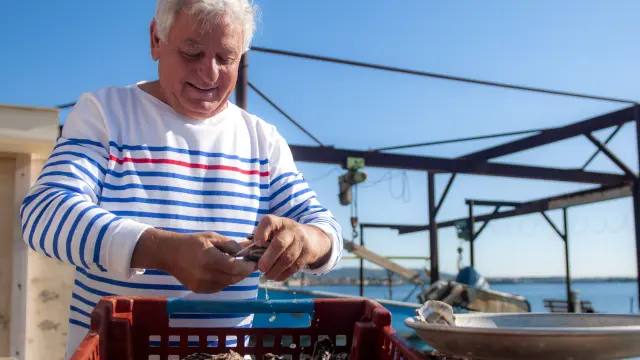
Here, shellfish farmers carry on an ancestral tradition adapted to the unique characteristics ofthe Thau Archipelago. With 13,000 tonnes of oysters and mussels produced annually on the Thau lagoon by 450 passionate oyster farmers, the lagoon is an exceptional shellfish farming area renowned throughout France.
The producers at Le Mourre Rouge will be delighted to introduce you to their trade and oyster farming techniques: attaching spat, growing oysters suspended on submerged tables, shucking, maturing… You’ll understand why Thau oysters stand out for their plump flesh, rapid growth and slightly briny, nutty notes that appeal to the finest chefs.

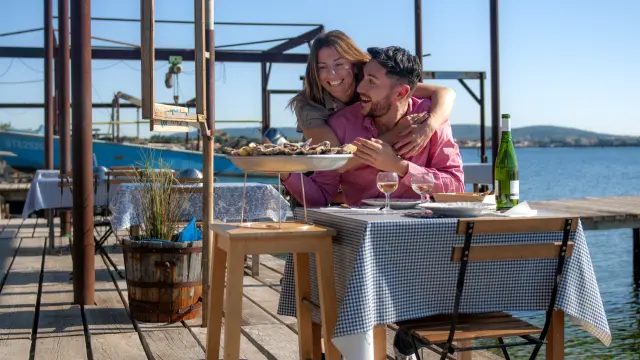
Of course, you’ll be able to sample the lagoon’s freshest produce: creamy oysters, plump mussels, delicate clams… All washed down with a glass of chilled Picpoul de Pinet or a Muscat de Frontignan to delight your taste buds! Take a seat facing the pond, breathe in the sea air, and savour this moment of pure Mediterranean bliss.

Le Mourre Rouge embodies the shellfish-farming heritage of the Thau Archipelago and is the perfect way to round off your visit to Loupian. From the Roman-era vineyard to the modern oyster farms, the region’s rich history unfolds before you!


Loupian Keeper of the history of the Thau Archipelago

A village of exceptional heritage, Loupian embodies 2,000 years of living history at the heart of the Thau Archipelago. From its Gallo-Roman villa with its dazzling mosaics to its Romanesque chapels, via its well-preserved medieval centre and its authentic shellfish-farming port, Loupian offers a fascinating journey through time that will appeal to all lovers of heritage, art and history.

The Gallo-Roman villa at Les Prés Bas, with its 400 m² of mosaics preserved in situ, is an archaeological treasure unique in France. The Augustales, who bring this remarkable site to life every summer, transform history into a live show accessible to the whole family. An unmissable event in the Thau Archipelago that brings antiquity to life with authenticity and passion.

Today, Loupian continues to preserve and promote its exceptional heritage whilst welcoming visitors with the Mediterranean warmth that characterises the Thau Archipelago. Whether you’re an archaeology enthusiast, a fan of Romanesque art, curious about history, or simply in search of authentic discoveries, Loupian promises you an unforgettable cultural experience.

Getting to and around Loupian

Getting to Loupian and exploring the Thau Archipelago is easy thanks to the wide range of transport options available in 2025. 

The cycle path that circles the Thau Lagoon (58 km) passes close to Loupian, allowing visitors to explore the village and the Thau Archipelago in a gentle, eco-friendly way.

This accessibility makes it easy to explore the entire region, from Sète to Marseillan, taking in the wine-growing villages and shellfish ports along the way.

The Lio Hérault Transport route 604 connects Montpellier to Loupian (stop: “Les Augustales”, 40 minutes, departures every 4 hours from Monday to Saturday). Sète Agglopôle Mobilité services also run to Loupian from Mèze and neighbouring towns. Visit mobilite.agglopole.fr and lio.laregion.fr for up-to-date timetables.

  • From Montpellier ( 25 km, 30 minutes), take the D613 south-west
  • From Sète ( 12 km, 18 minutes), follow the D2. From Mèze (3 km, 5 minutes), take the D613. Free parking is available in the town centre and at the Gallo-Roman villa.
Your questions about Loupian and the Thau Archipelago