Dinosaur Park, dinosaur
Dinosaur Park, dinosaur
It all began in March 1996 when a large number of dinosaur eggs were discovered at this site, proving that the region had been inhabited by various species of dinosaur for nearly 10 million years.
In 1997, Alain Cabot decided to take over the site and turn it into a museum-park covering 6 hectares of landscaped pine forest and scrubland. Visitors can now enjoy this fossilised nesting site, ranked third in the world after the Gobi Desert in China and the state of Montana in the United States.
What makes this place so special is that the excavations here are ongoing and open to the public. Visitors can thus follow the researchers’ work, observe the excavations and the uncovering of fossils, or even the construction of dinosaur reconstructions.
For nearly two hours, you’ll be immersed inthe world of dinosaurs, from their origins to their extinction, at the open-air museum dedicated to them. In the shade of the pine trees, wander between the Tyrannosaurus Rex and the family of Triceratops facing it, and watch the Troodonts laying eggs in a group whilst the Dromaeosaurs attempt to attack a nest.
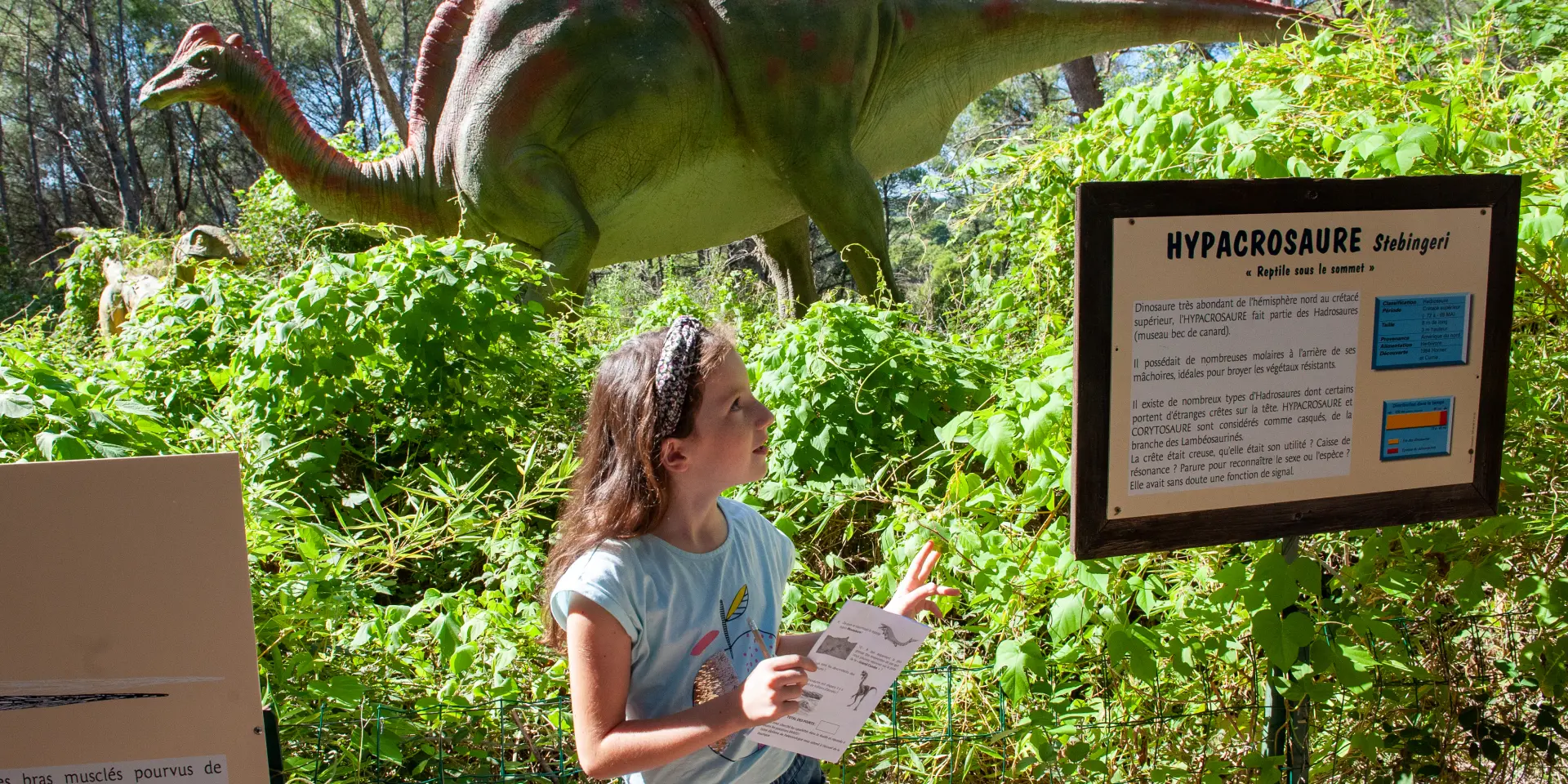
Among the other displays, you’ll come across Spinosaurus, Stegosaurus, Allosaurus, Iguanodon, Hypacrosaurus and even groups of Deinonychus. Don’t miss the reconstructed Triceratops skeleton and Dima, the baby mammoth fossil.
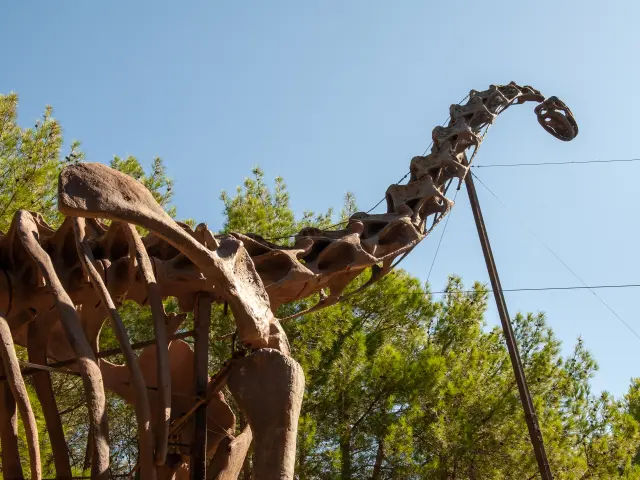
The most impressive part of this tour is seeing the world’s largest dinosaur skeleton: a Brachiosaurus measuring 25 metres in length, 12 metres in height and weighing nearly 50 tonnes. What makes it unique is that it is the only dinosaur with forelimbs longer than its hindlimbs.
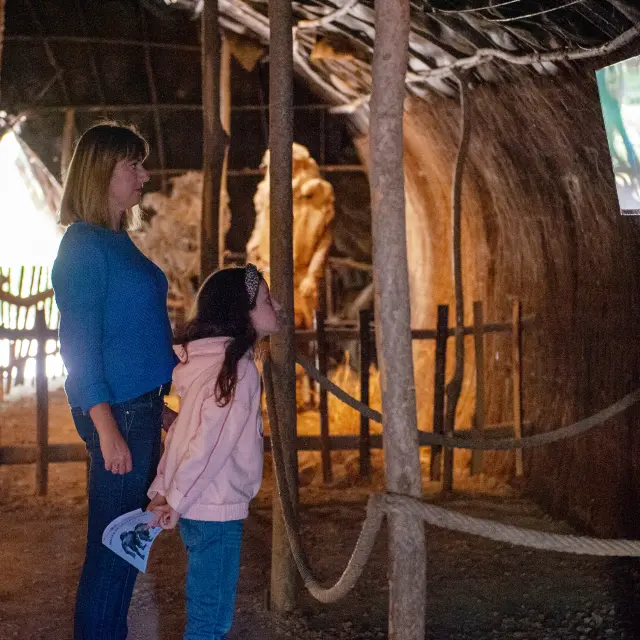
Throughout your visit, information panels, videos and interviews will tell you a little more about each of them. Children aged 6–7 and above will also be able to learn more, as the information is tailored to their age group.
Tip: Why not stop off along the way at the picnic area, which is open to visitors in July and August, or at the refreshment bar on site?
Head to the large area dedicated to the end of prehistory and human evolution, where you can, in turn, spend a few minutes experiencing the human species’ journey from its origins to its evolution.
In this open-air museum too, you can see reconstructions of scenes from prehistoric life, examine objects used in the daily lives of our ancestors, and help your child complete the quiz that will earn them a certificate at the end of their visit! And to round off your visit, head to the “Children’s Dig” area. Resembling a sandpit from a distance, it reveals its secrets to budding palaeontologists. Indeed, hidden beneath 60 m² of sand are life-size dinosaur skeletons to be unearthed by hand or using the tools provided on site.
Tip: A shop will allow you to round off this adventure in style. Please also note that you can bring your dog to the Dinosaur Museum-Park, as they are welcome here.
Dinosaur Park, dinosaur
|