St Léocadie’s Church
|
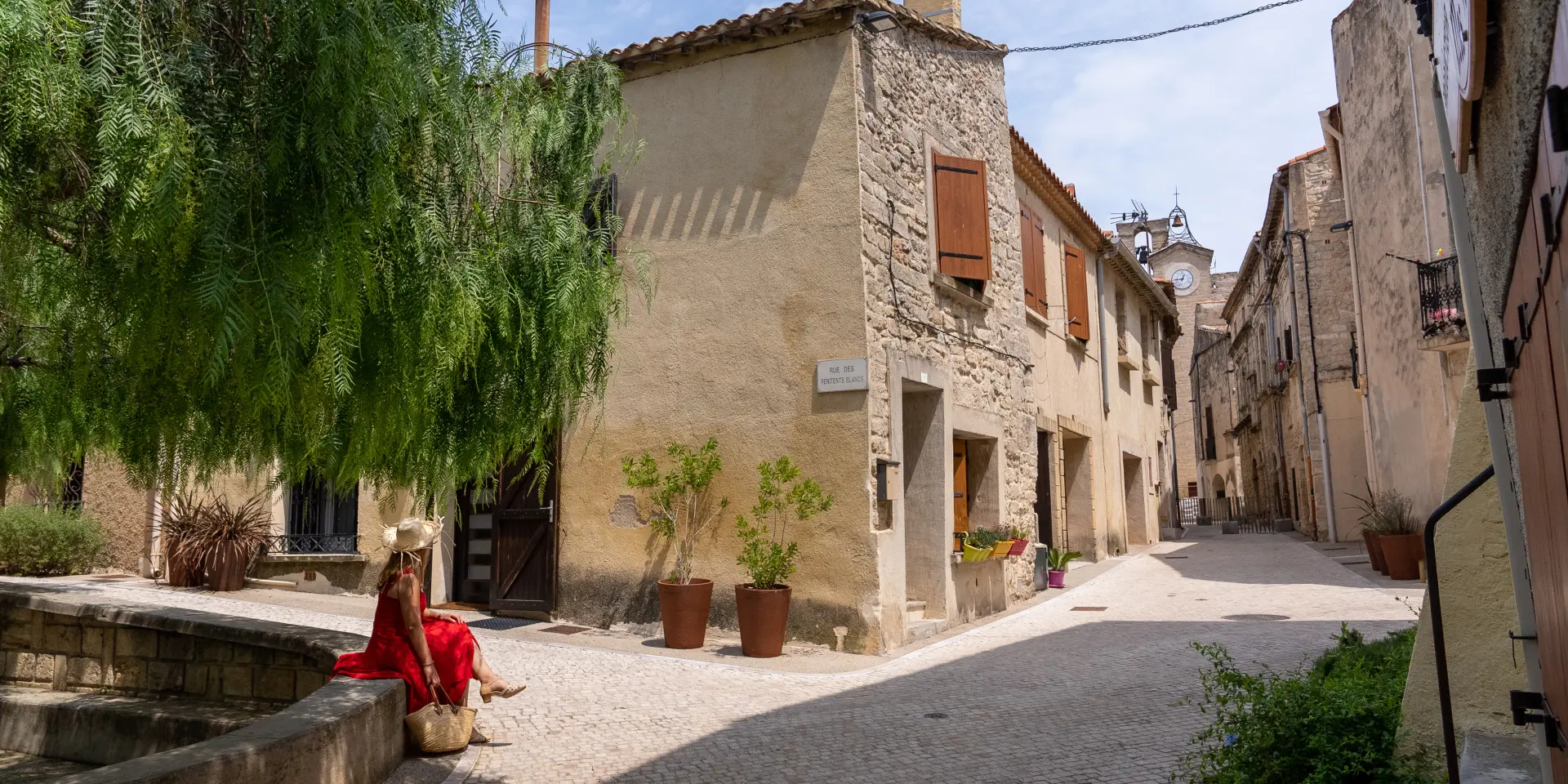
A young woman in the narrow streets of Vic-la-Gardiole, historic centre
|
St Léocadie’s Church
|
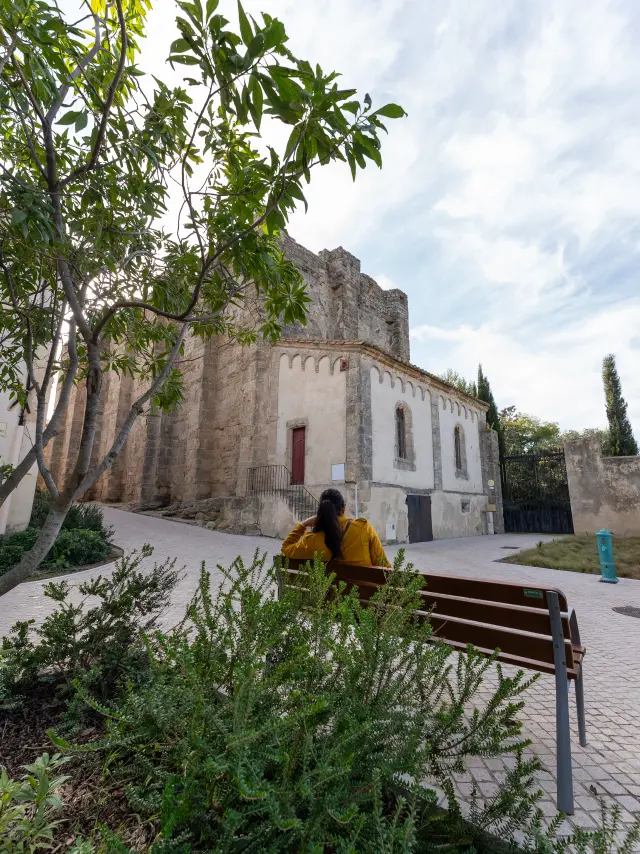
Built in 1173 with royal permission to fortify churches, Sainte-Léocadie epitomises an era when the faith had to be defended by force of arms. Louis VII himself alludes to this network of 22 fortified churches established along the coastline to protect the population from the Saracen raids that terrorised the medieval Mediterranean. Today, only four of these divine fortresses remain: Saintes-Maries-de-la-Mer, Maguelone, Agde, and Vic-la-Gardiole.
The originality of the building strikes the eye at first glance. Rising in a single sweep from the hillock on which it stands,12 metres above sea level, the church was built without foundations, carved directly from the fossilised shell limestone quarried from the hill. This stone, a mixture of rock and shells, bears witness to the Quaternary marine invasion when the Mediterranean extended up to 100 kilometres further north. The walls are two metres thick, pierced by loopholes rather than proper windows, and reinforced by powerful buttresses.
The original machicolations and battlements still remain on the west façade and part of the side façades, a reminder that this church once served as a protective keep for the castle, which no longer stands. In the event of an attack, villagers and animals would take refuge in the single nave, where a freshwater well situated in the centre enabled them to withstand a siege. This unusual defensive function is evidenced by the absence of an apse, a chapel or a transept – all these religious elements sacrificed on the altar of military efficiency.
The interior exudes Romanesque simplicity. The single barrel-vaulted nave is divided into four bays separated by transverse arches. Only the first bay retains its original vault and limestone slate roof; the others were re-roofed in 1920, when the church was listed as a Historic Monument. A few paintings adorn the walls, likely replacing lost medieval frescoes. The technical mastery is impressive: the stone is perfectly cut, and the facing is laid in large blocks or opus monspeliensis, a hallmark of the craftsmanship of 12th-century Montpellier builders .
Sainte-Léocadie is open to visitors all year round. After exploring the building, take a stroll through the medieval village, laid out in a circular pattern around the church. It invites you to wander through its picturesque narrow streets, where the entirely pedestrianised old town centre has retained its authentic character.
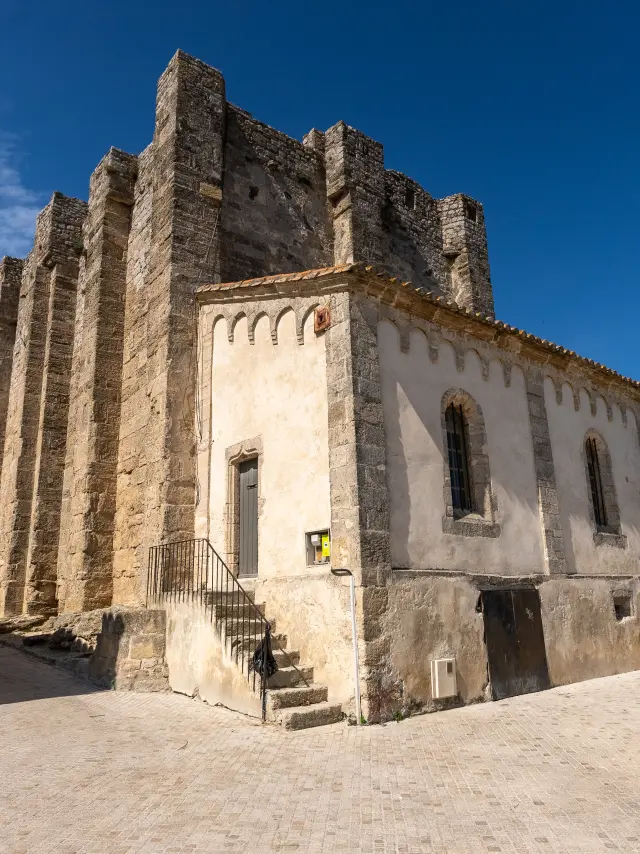
The Church of Saint Leocadia was built in 1173 with royal permission to fortify churches.It is a military-style building, a fortress built to defend against invaders.This church was built without foundations and has no chapel. The stone used is fossilised shell limestone on the south side. Originally, the building had a semi-circular barrel vault, reinforced by transverse arches. Only the first bay has retained this type of roof. The roof, made of limestone slates, rested directly on the vault. The other bays were roofed in 1920; at the same time, the church was listed as a Historic Monument.
|
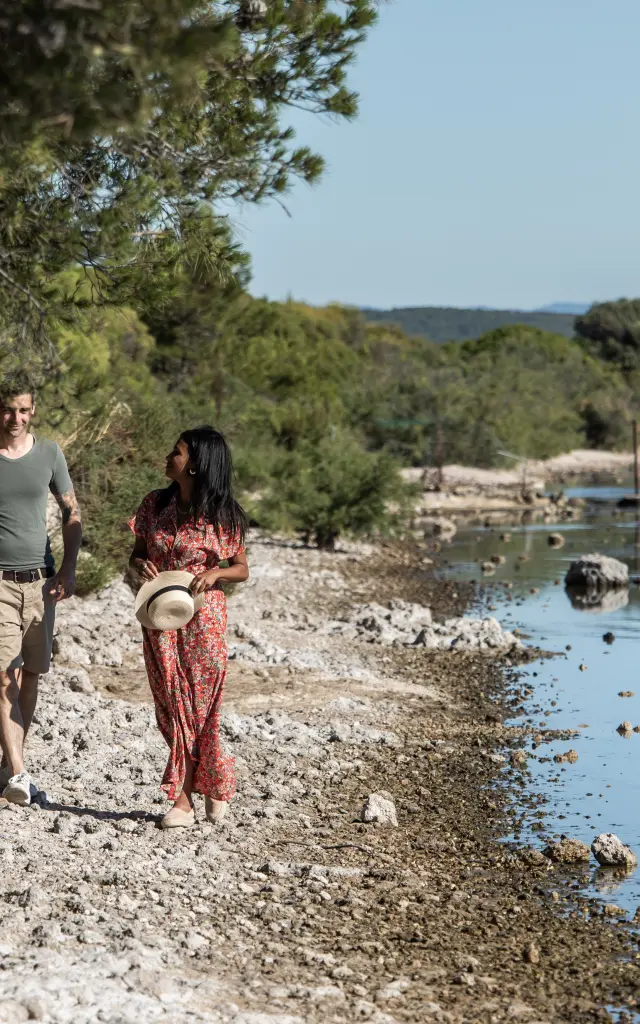
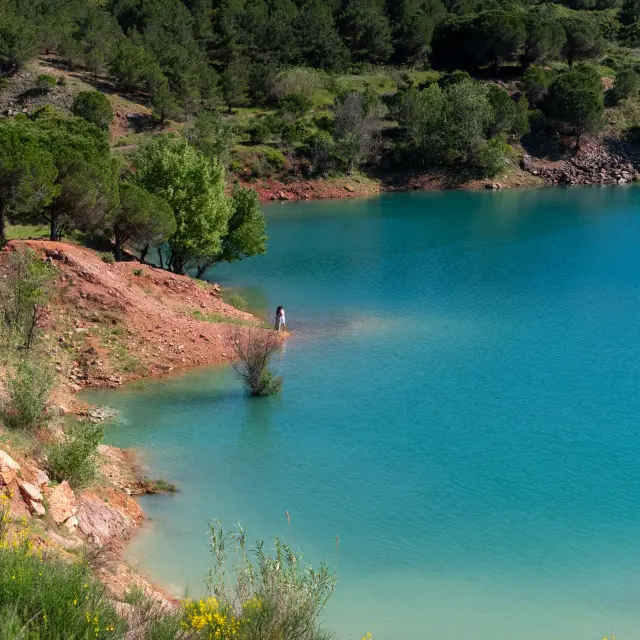
Pine forest and woodland around Vic Pond.
|
To the south of the village lies a protected lagoon system that makes Vic-la-Gardiole a paradise for birdwatchers and lovers of unspoilt nature. The Vic lagoon lies between the Rhône Canal at Sète and the Bois des Aresquiers, fed with fresh water by the Robine stream, which rises at the foot of the Gardiole massif, and with brackish water from the canal.
This diversity of salinity makes the lake an exceptional ecosystem. The waters are home to green crabs, grey and pink shrimp, jols, gobies, blennies, pipefish, eels, sole and other local fish. On the banks and in the reed beds, birds reign supreme: flamingos that tint the horizon pink when they gather in their hundreds, grey herons standing motionless like feathered statues, warblers singing in the reed beds, elegant stilts and other little terns. This natural area serves as a resting and feeding ground, as well as a nesting site for rare species.
To the north, the Grande Palude marsh stretches across 267 hectares of wetland, remarkable for its ecological and scenic richness. This marsh receives rainwater from the Gardiole massif and channels it towards the Frontignan salt marshes, playing a vital role in water regulation. Reed beds and salt marshes create a habitat enjoyed all year round by numerous species of birds that nest, feed or stop over here during their migrations.
Nine kilometres of footpaths runalongside the ponds, accessible on foot or by bike. These easy walks offer magnificent views of the water, the birds and, in the distance, the silhouette of the Gardiole massif. Sunrise and sunset transform the ponds into orange-hued mirrors reflecting flamingos and flocks of birds. A free spectacle that repeats itself every day, which photographers and contemplative visitors come to capture religiously.
Stretching between the Vic and Ingrillakes to thenorth and the Mediterranean Sea to the south, the Bois des Aresquiers covers 179 hectares of Mediterranean pine forest. Listed since 1978 under the protection of sites and landscapes, this woodland is a rarity: a pine forest just a few metres from the sea, creating an exceptional transition between the salty environment of the ponds and the forest environment.
Nine kilometres of well-maintainedpaths wind through this fragrant pine forest where the air is filled with the scent of warm resin. The umbrella pines cast their distinctive silhouettes against the blue sky, the ground crunches beneath the dry needles, and the song of the cicadas sets the pace. Typical Mediterranean vegetation punctuates the route: broom bursting with yellow in spring, rockroses with flowers as delicate as tissue paper, and rosemary whose leaves you can rub to release their fragrance.
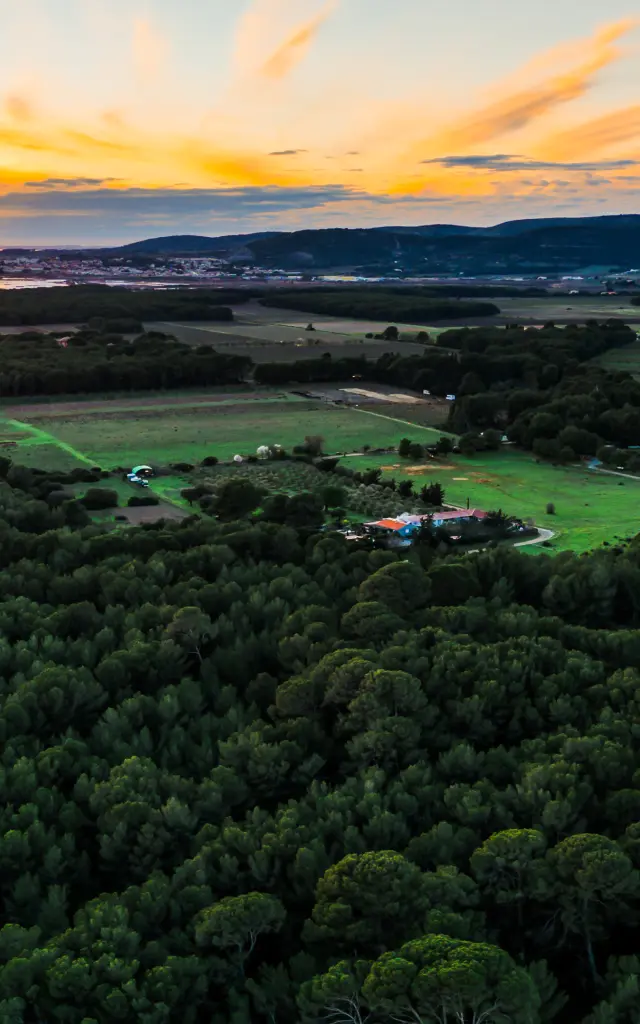
Bois des Aresquiers, landscape, nature, forest, trees, aerial view, drone, countryside, horizon, sunset, golden light, panorama, outdoors, peaceful, horizontal
|
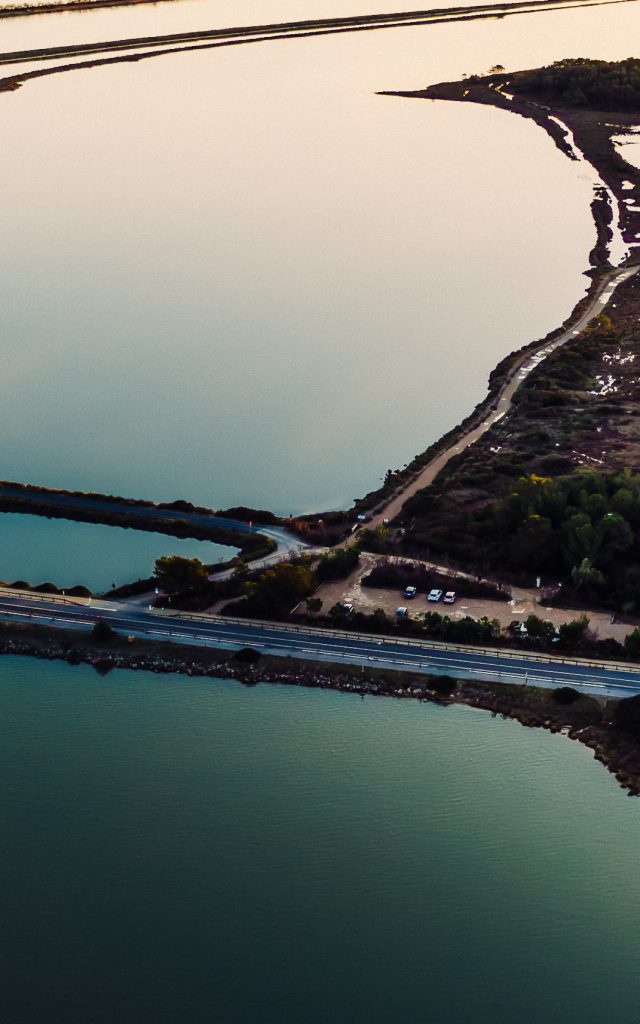
The Bois des Aresquiers, pond, lagoon, aerial view, drone, landscape, nature, calm water, reflections, salt pans, salt marshes, dyke, footbridge, bridge, riverbank, vegetation, trees, horizon, sunset, golden light, panorama, outdoors, sunny, calm, wild,
|
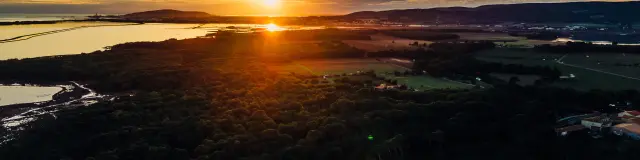
Bois des Aresquiers, landscape, nature, forest, trees, aerial view, drone, horizon, sunset, golden light, reflections, panorama, outdoors, tranquillity, horizontal
|
These easy walks are suitable for all abilities and are perfect for families with children. Along the old salt marshes, birds can be spotted: flamingos filtering water through their strange beaks, grey heronspatiently searchingfor food, warblers flitting about in the bushes. On hot days, the shade of the pine forest offers welcome coolness, whilst the sea breeze tempers the heat of the Mediterranean sun.
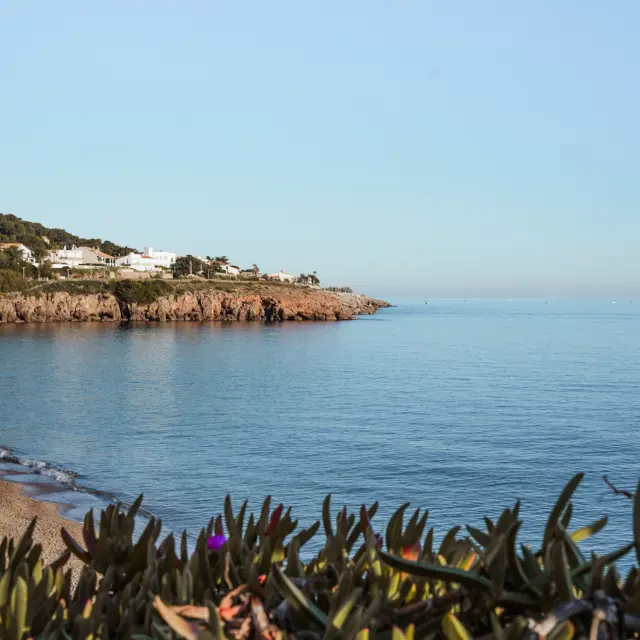
At the end of the walk, Aresquiers beach stretches for 7 kilometres of sand and pebbles between Vic and Frontignan. On the Vic side, the beach consists mainly of pebbles, gradually becoming sandy as you head towards Frontignan. A notable feature: 5 kilometres are closed to road traffic, classified as a Natura 2000 site and a coastal protection zone. No buildings spoil this wild landscape where the sea laps at the dunes, held in place by rare vegetation and protected by the Conservatoire du Littoral.
Access is via a cycle path that runs alongside the Étang de Vic from the village, crosses the Bois des Aresquiers, passes under the Rhône Canal and leads to the sea. This greenway allows you to reach the beach without a car, on foot or by bike, in a preserved natural setting. During the summer, lifeguards are on duty and free car parks provide easy access on the Frontignan side, where the beach is accessible to people with reduced mobility.
To the north of Vic lies the Gardiole massif, a range of hills covered in woodland and scrubland which, though not particularly high, offer remarkable views. Several marked trails start from the village and wind through this Mediterranean scrubland, where kermes oaks, rockroses, rosemary, thyme and broom form a fragrant vegetation that fills the air with its scent under the sun.
These walks, of varying difficulty, are suitable for all levels. The paths climb gradually, offering new views at every bend of the path over the village below with its fortress-like church, the ponds glistening in the sun, and further afield, the Mediterranean tracing its blue line on the horizon. On a very clear day, the view stretches as far as Mont Saint-Clair in Sète, Mont Saint-Loup in Agde, and sometimes even to the Pyrenees, whose bluish silhouette can be seen in the distance.
Themassif’s flora and faunareveal themselves to attentive walkers. In spring, the garrigue bursts into colour with white and pink rockroses, yellow broom, and blue rosemary. In summer, only the cicadas disturb the silence of the heat. Autumn adorns the oaks with russet hues, and winter reveals the rocky structure of the massif as the vegetation recedes.
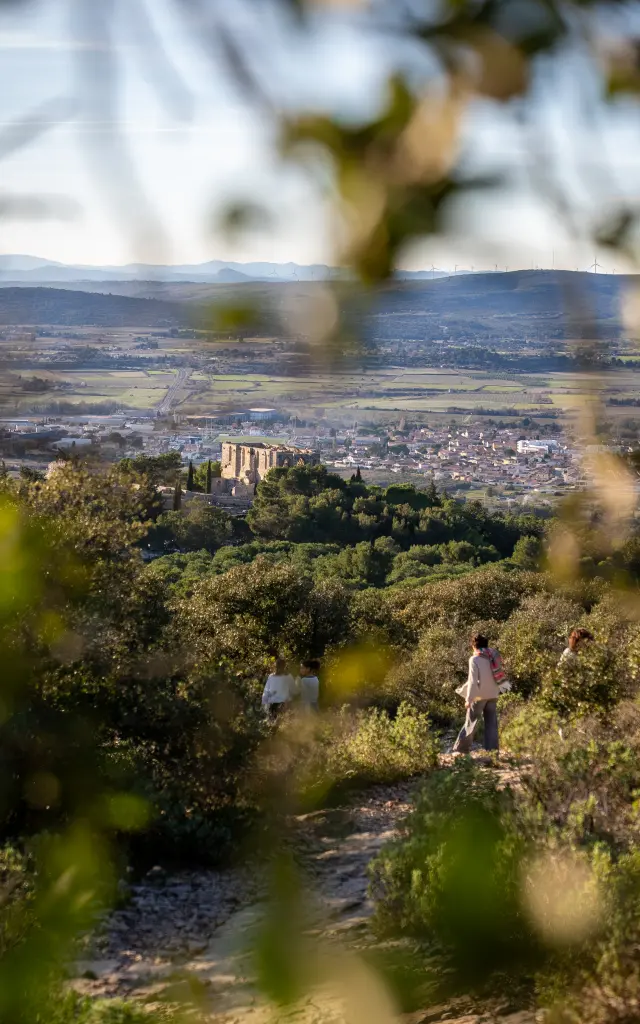
Ending the day around the abbey, a stroll with friends
|
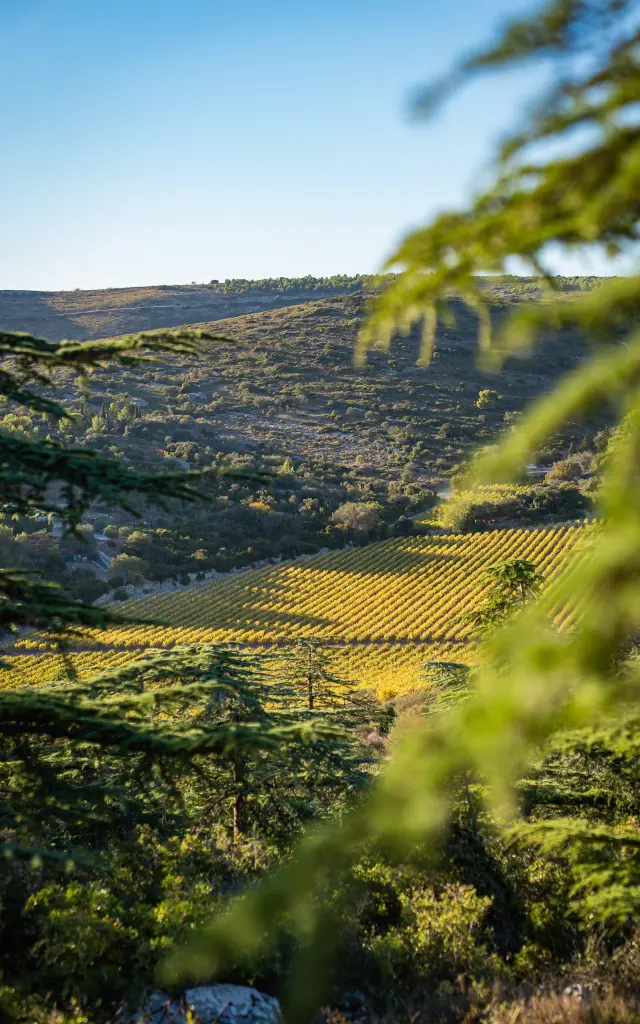
The Pioch Michel Fitness Trail, with views of the vineyard and the vines.
|
Every year, at the end of summer, Vic-la-Gardiole is transformed into a huge, authentic medieval village. The Médiévales de Vic attract many visitors who come to relive the atmosphere of the 12th century in the exceptional setting ofthe fortified church and ancient alleyways.
Stalls and taverns line the streets, craftsmen in period costume demonstrate their traditional skills, and troupes and men-at-arms parade to the beat of drums. Knightly tournaments thrill the crowds, traditional medieval dances get young and old alike moving, and storytellers transport children into tales of dragons and valiant knights. A wonderful invitation to discover a fascinating era in a family-friendly and festive atmosphere that combines historical accuracy with the festive spirit of the Languedoc.
The Vic-la-Gardiole region is home to two prestigious Protected Designations of Origin: Muscat de Mireval and Muscat de Frontignan. The small-berried white Muscat vines thrive on the south-east-facing slopes, between the Gardiole massif, which shields them from cold winds, and the lakes, which bring that distinctive maritime influence.
Several wine estates dot the landscape and welcome visitors for tastings of these internationally renowned naturally sweet wines. These golden nectars pair divinely with foie gras, enhance fruit-based desserts, or can be enjoyed on their own as an aperitif whilst watching the sunset over the ponds.

Wine tasting at Domaine de la Plaine, winemaker, vine grower, Muscat
|
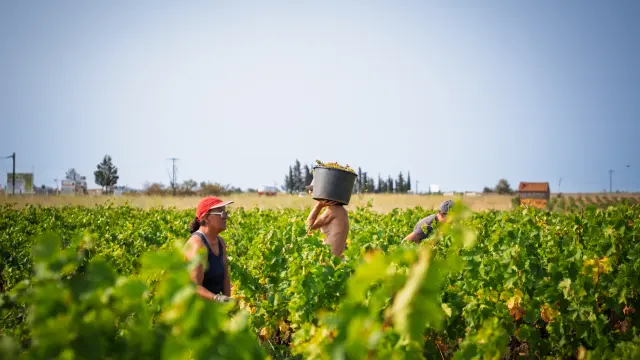
Hand-harvesting of Muscat Petit Grains at Domaine de la Plaine, owned by the Sala family, a wine producer.
|
Just 3 kilometres from the sea, 15 kilometres from Montpellier and 12 kilometres from Sète, Vic-la-Gardiole is ideally situated for exploring the whole region. Mireval and its medieval village are 4 kilometres away, Frontignan and its 7 kilometres of beaches are 6 kilometres away, and Villeveyrac and Valmagne Abbey are 12 kilometres away.
The village is fully integrated into the Archipel de Thau transport network. The Sète Agglopôle Méditerranée bus network serves Vic from other local towns. For cyclists, safe cycle paths link Vic to Frontignan via the Bois des Aresquiers, and routes connect to Mireval and the inland villages. Major national routes such as La Méditerranée à Vélo (EuroVelo 8) and theViaRhôna(EuroVelo 17) pass right by.
This central location makes Vic-la-Gardiole a charming stopover for those exploring the Thau Archipelago. You can enjoy the tranquillity of an authentic village untouched by mass tourism, whilst having the Mediterranean beaches, the Thau lagoon and its oyster-farming villages, protected natural areas, and the lively atmosphere of Montpellier and Sète all within easy reach.
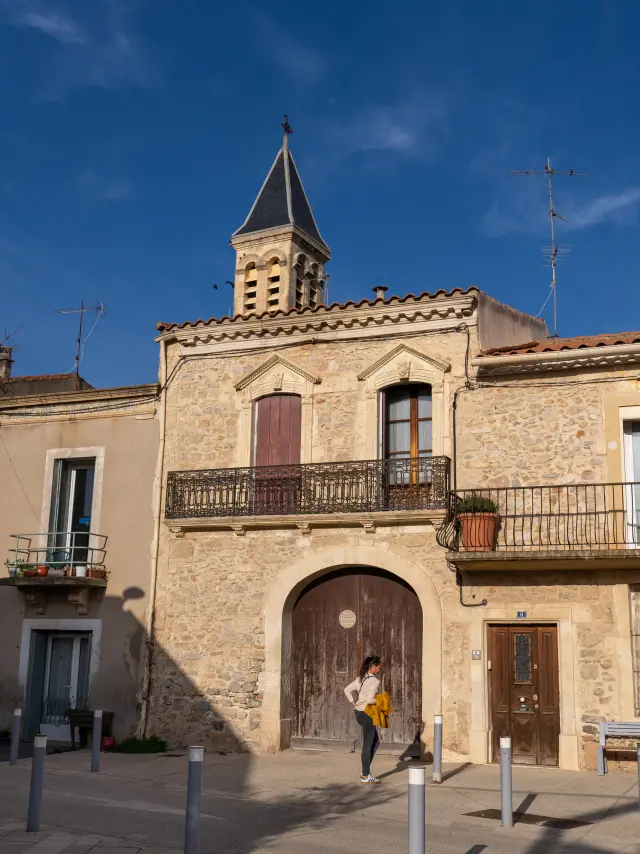
Historic centre
|
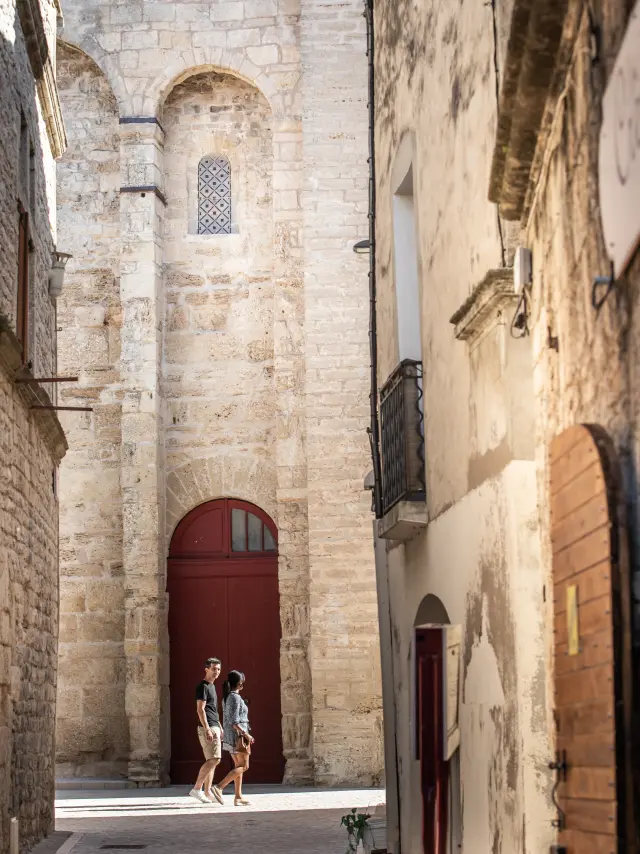
Alleyway leading to the Church of Sainte-Léocadie in Vic-la-Gardiole
|
Sainte-Léocadie has stood sentinel with its battlements reaching towards the sky since 1173, an unchanging stone sentinel that has witnessed nine centuries of history. Around it, Vic-la-Gardiole has preserved its medieval soul: winding alleyways, pale stone façades, and shady little squares where time seems to slow down. But this village refuses to live solely with its back to the past. To the south, the ponds echo with the cries of flamingos and the flapping of herons’ wings. To the west, the Aresquiers pine forest stretches its cool shade all the way to a listed wild beach. To the north, the scrubland of the Gardiole massif exudes the scent of thyme and rosemary in the sunshine.
This harmonious coexistence of fortified heritage and natural sanctuaries makes Vic a rare gem in the Thau Archipelago. In a single day, you can explore a 12th-century fortified church in the morning, watch the flamingos on the ponds at midday, stroll through the pine forest in the afternoon, and swim in the Mediterranean in the evening. Few villages of this size offer such a wealth of experiences.