©

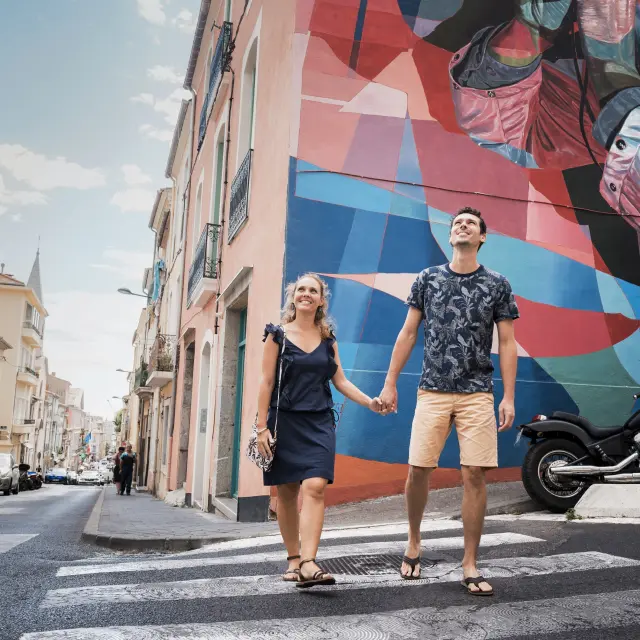
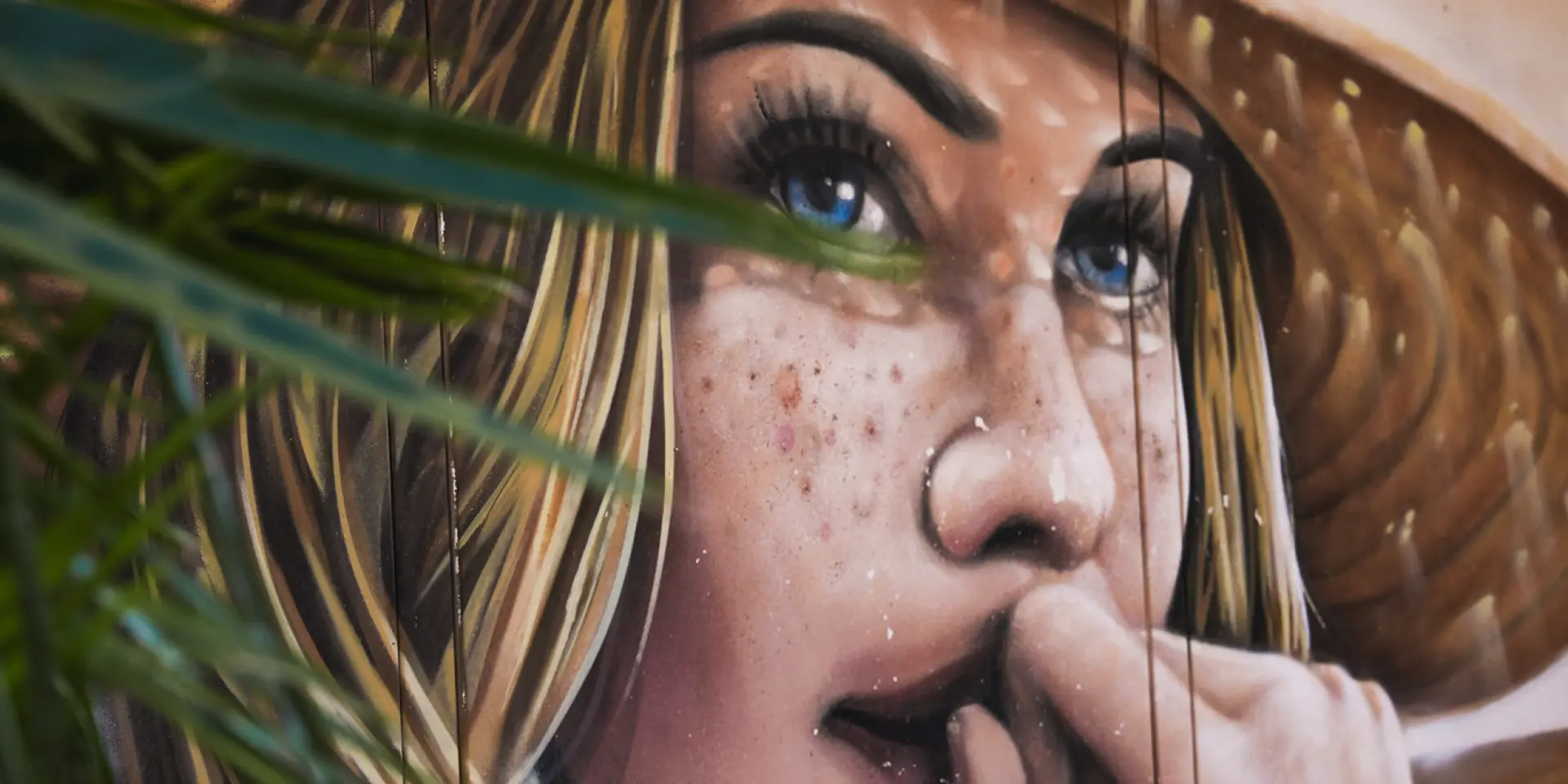
ARTWORK ON RUE DE TUNIS

|

S_GRANDJEAN_OT-THAU

Street art in the Thau Archipelago 

When walls tell a story

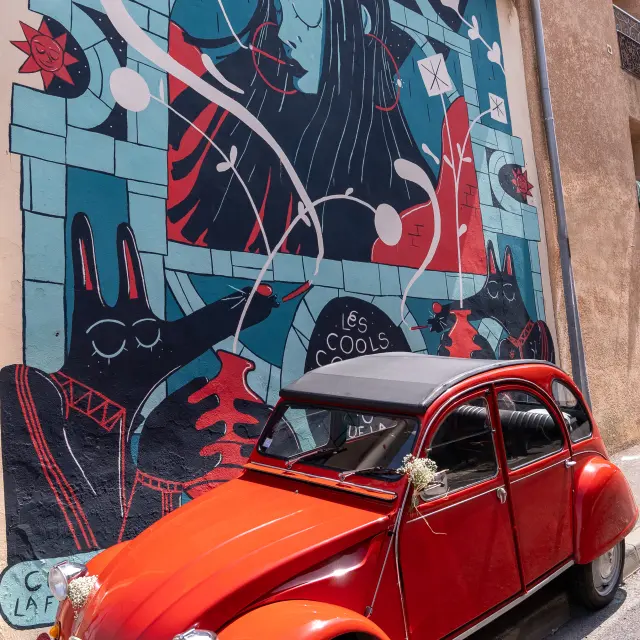
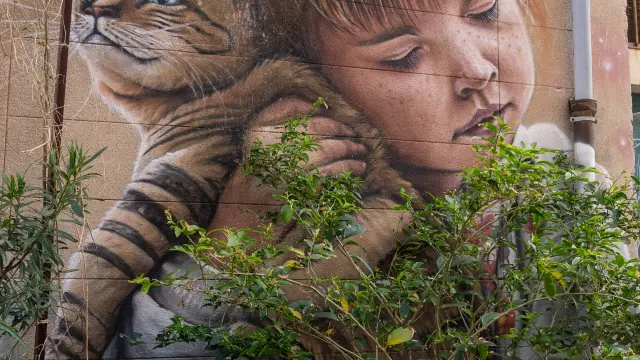
In the Thau Archipelago, art isn’t confined to art galleries and museums. It takes centre stage, around a street corner or on a wall facing the sea, giving free rein to the imagination of artists from near and far. From Sète to Mèze, via Frontignan, street art adorns the towns and reveals their unique character, making this Mediterranean region a popular destination for lovers of urban art. Whether you’re out for a stroll on your own, with your family or as a couple, look up: art is all around you.

MACO A pioneer of Mediterranean street art

Since 2008, Sète has been home to its own MACO – Musée à Ciel Ouvert (Open-Air Museum). This bold initiative, which originated during the K-Live festival, has transformed the town into a veritable urban gallery where more than forty works interact with the Mediterranean architecture.

Every year, during the K-Live festival between May and June, leading international street artists take over the walls of Sète. The art trail winds its way along the canals, climbs up to the Quartier Haut, meanders through Pointe Courte and explores the town’s authentic nooks and crannies.

The names that have left their mark on the walls are the stuff of dreams for connoisseurs: C215 and his poetic stencils, Philippe Baudelocque and his monumental chalk drawings, Seth Globepainter and his colourful characters, Levalet and his mischievous silhouettes, Kashink with his pop art world, and Ememem, who patches up the pavements with tile mosaics.

The mural dedicated to Agnès Varda by Barbara Carrasco at Pointe Courte remains iconic. This legendary neighbourhood, immortalised by the filmmaker, now hosts her vibrant portrait amidst fishing nets and the colourful façades of fishermen’s houses.

The respect shown for the artists’ work is immediately striking. Unlike other towns, Sète jealously guards its urban heritage. The artworks are not covered in graffiti: a genuine street art tradition has become ingrained in the town’s DNA.
The K-Live Festival

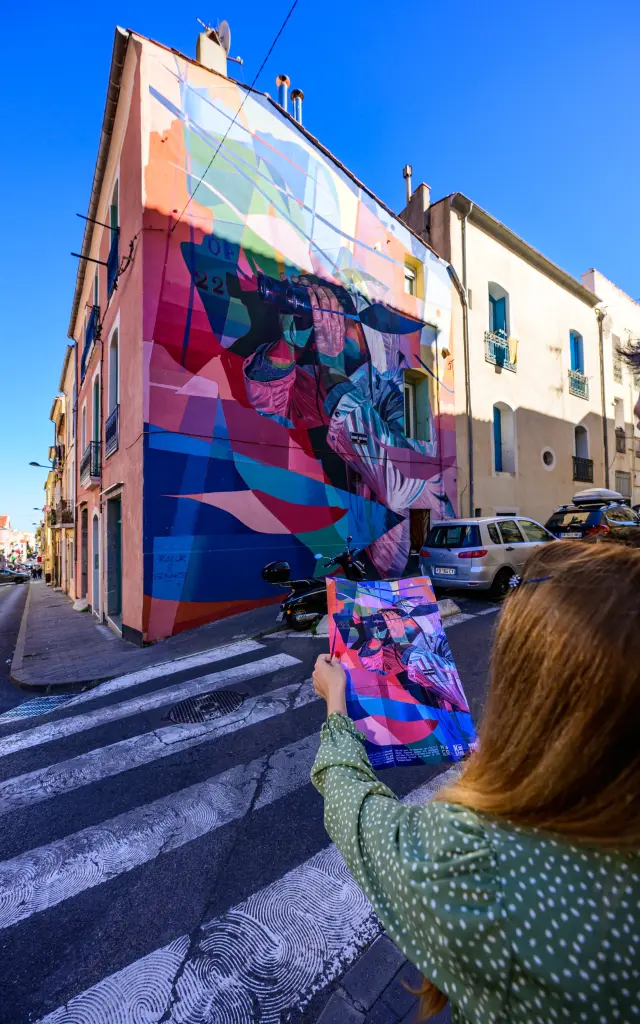
Every spring, Sète comes alive to the rhythm of K-Live. This pioneering festival anticipated the rise of urban art in France. Over the course of an intense week, the town becomes a creative laboratory where the public can watch artworks take shape right before their eyes.

The programme features K-Live Beach Party to kick off the festivities with your feet in the sand, K-Live Young, which gives carte blanche to emerging young regional artists, K-Live Kids to introduce children to street art techniques, K-Live Women, which celebrates female artists, and K-Live Exquis – an urban take on the surrealist ‘exquisite corpse’ where two artists create a joint work blindfolded.

In 2026, for the 19th edition scheduled for 2–7 June, new spaces will be taken over thanks to collaborations with IFREMER, Habitat Jeunes, Club SC Sète and the ESAT in Frontignan. The festival does more than just create: it passes on knowledge. The workshops broaden access to various techniques by promoting an educational and eco-friendly approach. And to round things off in style, the K-Live Klub transforms the Théâtre de la Mer into an open-air dance floor overlooking the Mediterranean.

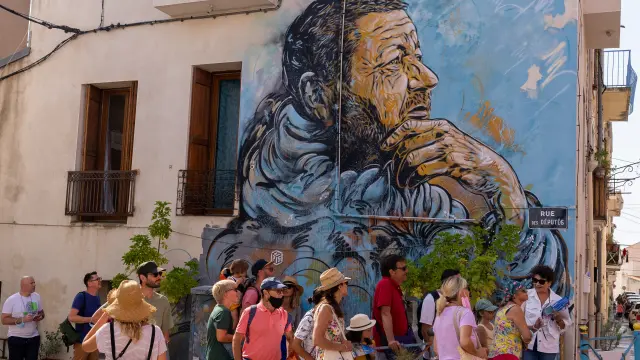
The Sète Tourist Office offers guided tours throughout the year, lasting around two hours and taking in the whole town. The roughly 2-kilometre route, which includes some hills, allows you to appreciate the full artistic and urban scope of this unique project. A map of the MACO is also available for independent explorers who prefer to wander at their own pace.


Mèze Colourful transformers and an artistic chapel

Just a few kilometres from Sète, Mèze has developed its own artistic identity through two remarkable initiatives that are transforming the urban and heritage landscape.

Electrical transformers: from utilitarian to poetic 

Since 2024, the town has been transforming electrical transformers into artistic canvases. Gone are the grey, anonymous boxes! Make way for colour, poetry and imagination that brighten up everyday life.

As part of a participatory budget scheme, eight transformers have been transformed by four painters and a graffiti artist. These concrete cubes, essential for the distribution of electricity but often overlooked, have become striking visual features that add colour to the streets of Mèze.

This initiative is part of a trend seen across France. Enedis, the electricity network operator, has developed partnerships with local councils and artists to breathe new life into these ‘little houses’ of around 12 square metres. The aim? To enhance street furniture, foster social cohesion, and give local artists the visibility they deserve.

The transformations are astonishing. One austere cube is adorned with multicoloured birds that seem to be flying off towards the lagoon; another reveals Mediterranean landscapes bathed in light; a third celebrates the local wildlife in compositions that blend realism and fantasy. The chosen themes reflect the region’s identity: the ever-present lagoon, the vineyards undulating across the hillsides, and the exceptional natural heritage. Each work is the result of a collaborative effort between the artists, the local council and Enedis to ensure the creations blend harmoniously with their surroundings.

These decorated transformers become landmarks in the town, topics of conversation among neighbours, and reasons for residents to go for a stroll. Visitors, camera in hand, set off in search of them as if on an urban treasure hunt, creating an impromptu artistic trail through the streets.


The Penitents’ Chapel Art in the service of heritage

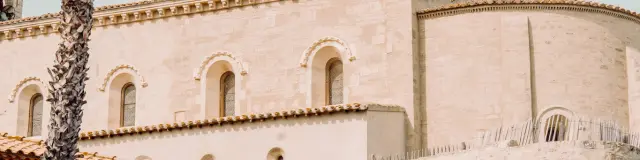
On Place Monseigneur Hiral in Mèze, the Chapel of the White Penitents looks out majestically over the Thau Lagoon. This 12th-century Romanesque building, also known as Notre-Dame des 7 Douleurs, has since 2016 served as a summer showcase for contemporary art with the exhibition “Sacré St Art”.

The initiative is organised by the association Les Amis des Pénitents and Éditions d’Art Anagraphis. The aim? To raise funds for the restoration of this chapel, which has been weakened by sea spray and salty sea air eroding its centuries-old stones. Every summer from 5 July to 31 August, the venue welcomes painters, sculptors and street artists in a striking fusion of sacred heritage and contemporary urban creativity.

In 2025, the exhibition “Sacré St Art – Acte X” celebrated its tenth edition with a retrospective bringing together the works of all the artists invited since the event’s inception in 2016. Among the guests from previous years:

Polar, who hails from the world of street art and brings his urban aesthetic to this place of contemplation; Bella Bah, trained in screen printing, with her striking graphic compositions; Momies, whose graffiti-inspired geometric forms engage with the Romanesque architecture; and Salamech and Camille Adra. A diversity of styles that testifies to the richness of the local art scene and the open-mindedness of this initiative.

This exhibition is accompanied by the “Sur tous les tons” Festival, which features six concerts of diverse musical genres right in the chapel itself. Jazz, classical music, world music: the eclectic programme attracts a varied audience. This symbolic partnership uses art to help preserve the building. Admission fees go towards the restoration, a wonderful way to combine aesthetic pleasure with heritage conservation. Visitors leave with the emotional impact of the art and the satisfaction of having contributed to preserving this architectural gem.

Frontignan an international artistic career

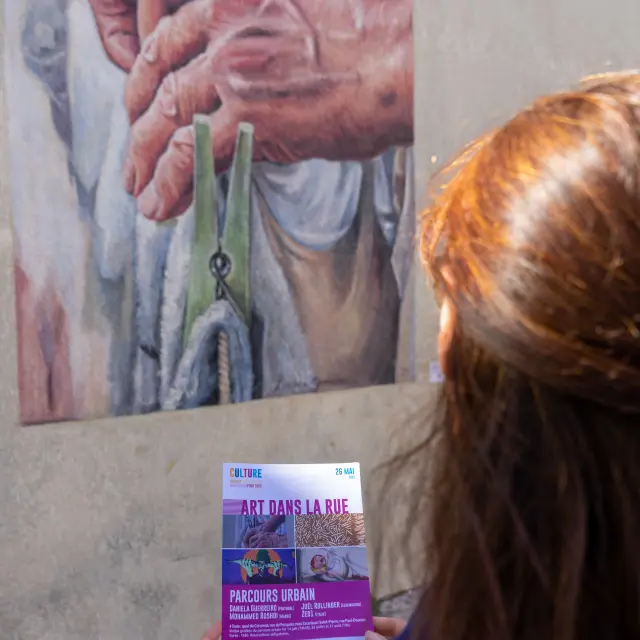
Since 2022, Frontignan has embarked on an ambitious street art project. As part of the Sete Sois Sete Luas (Seven Suns Seven Moons) festival, the town welcomes internationally renowned artists every year, who transform its walls into monumental works of art. This network promotes cultural exchanges between Portuguese-speaking and Mediterranean countries, creating a veritable urban trail known as “Art in the Street”.

Artists from all over the world have left their mark on Frontignan. Zed1 from Italy with his mural “Cherchez la perle en vous”, Mohammed Roshdi from Morocco depicting a traditional fisherman, Joël Rollinger from Luxembourg, Daniela Guerreiro and Tamara Alves from Portugal with their creations inspired by Mediterranean nature, João Ribeiro and his flamingo wearing a boater hat at the jousters’ hall – a nod to local traditions – and Diavù with “Se Canto”, a vibrant ode to Occitan culture.

Each mural engages with the Frontignan region: Mediterranean flora and fauna, maritime traditions, and the wine-growing heritage featuring the famous Muscat. An open-air gallery that celebrates the local heritage whilst placing it within an international cultural context.

To explore these works, QR codes dotted around the murals allow for a self-guided tour. An explanatory booklet available at cultural venues (media library, tourist office) provides further insight into the artists. The walk connects the various creations along a route accessible to all.

Planning your street art tour

A map of the MACO is available at k-live.fr or from the Sète Tourist Office. The MACO is open all year round, but if you want to see the artworks being created live, visit in late May or early June during the K Live festival.

Guided tours are offered by the Sète Tourist Office, particularly during the school holidays. Allow 2 to 3 hours for a full tour. Please note that the route includes steps that are not suitable for pushchairs.

  • In Mèze, you can explore the transformer stations at your own pace: let yourself be carried away by a stroll through the town and keep your eyes peeled. The Chapelle des Pénitents hosts exhibitions and artistic events from time to time throughout the year, with a packed programme in the summer.
  • In Frontignan, the urban trail can be explored at your own pace. QR codes placed near the murals tell the story of each work and introduce the artists. The booklet available at cultural venues provides further information. Guided tours are organised during the opening events following each edition of the Sete Sóis Sete Luas festival.
  • In Poussan, the trompe-l’œil murals are tucked away in the old town centre. Look up as you stroll; a surprise awaits just around the corner. The best approach is to wander without a set route and let your curiosity guide you.

For photographers, the play of light changes with the time of day. In the morning, the low-angled light brings out the contours. In the late afternoon, the colours take on a warmer hue. Don’t hesitate to venture off the beaten track: the finest pieces are hidden away in quiet side streets.

Between Mediterranean traditions and contemporary creativity, the Thau Archipelago has found its balance. The walls speak, tell stories, and move the soul. Electrical transformers become visual poems. Chapels are transformed into galleries. Urban art has conquered this area with the same quiet force as the waves lapping against the Thau basin. And this story, written with spray paint and a brush, is only just beginning. The walls of the Archipelago still have so many beautiful stories to tell us…

Sources

Official website of the K-Live festival (k-live.fr) – Sète Archipel de Thau Tourist Office (tourisme-sete.com, archipel-thau.com) – Town of Sète (sete.fr) and Town of Mèze (ville-meze.fr) – Les Amis des Pénitents de Mèze Association (lespenitentsmeze.wixsite.com) – Hérault Tribune – Articles on urban art and the transformers of Mèze – Town of Frontignan (frontignan.fr) – Art in the Street urban trail – Hérault Tourism (herault-tourisme.com) – Urban art in the Hérault – Specialist webzines: Fish and Child, Lucky Sophie, Les Découvertes de Fab – L’Usine Nouvelle – Electrical substations decorated by Enedis