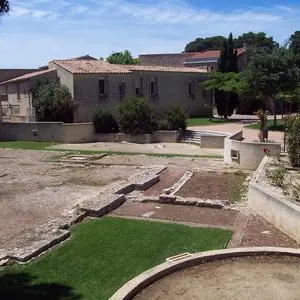
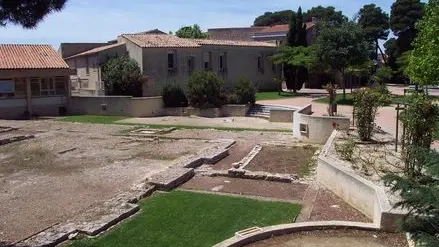
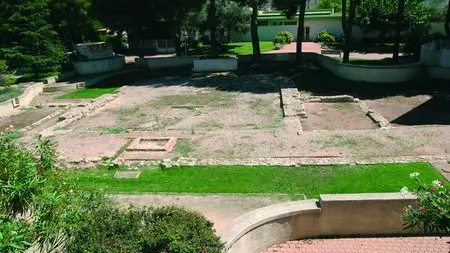
The remains of the Gallo-Roman basilica, restored during the excavations carried out in the 1980s, are evidence of their long history in our town. The part of the archaeological site that is visible today dates from the 3rd century. The whole site consists of the foundations of a large building approximately 185 m² in size containing a large room reminiscent of a basilica and two annexed rooms. It is all accessed via a long, 3-metre-wide corridor.
The discovery of a stone bust of Neptune on these premises in 1981 led to the assumption that this basilica was dedicated to the Roman god of the sea who was the protector of this community – now our town – with its exceptional waters.