©

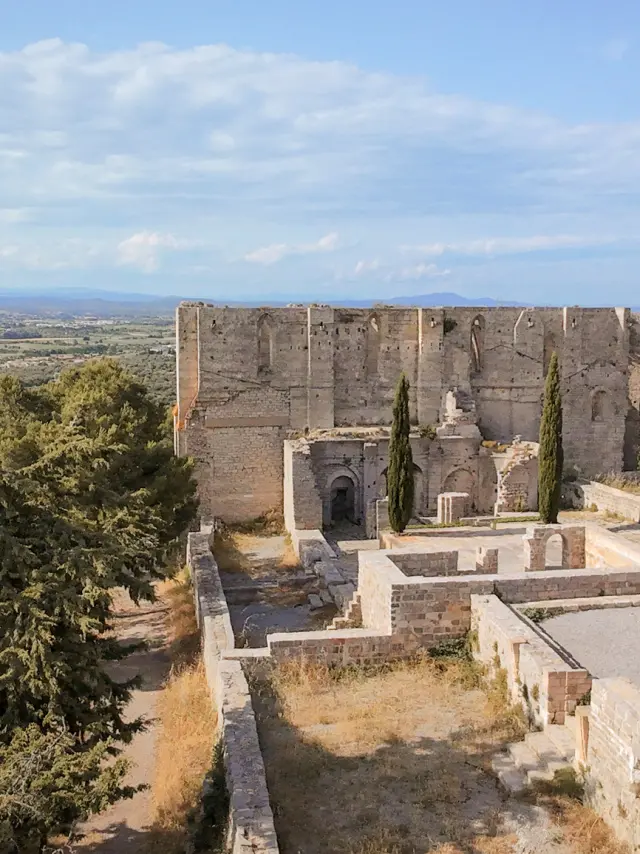
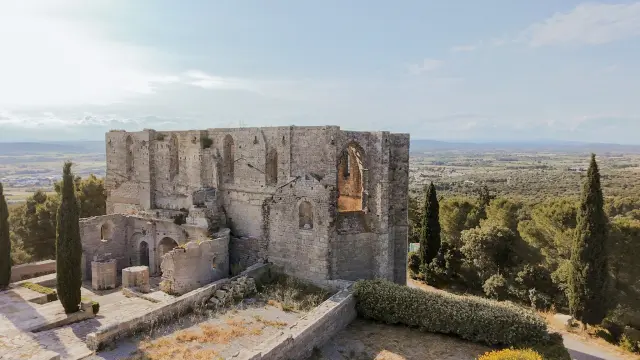
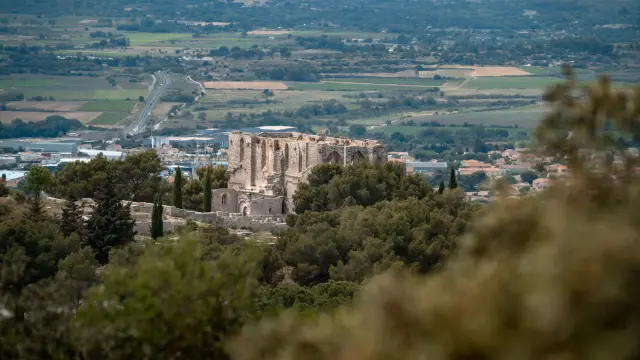
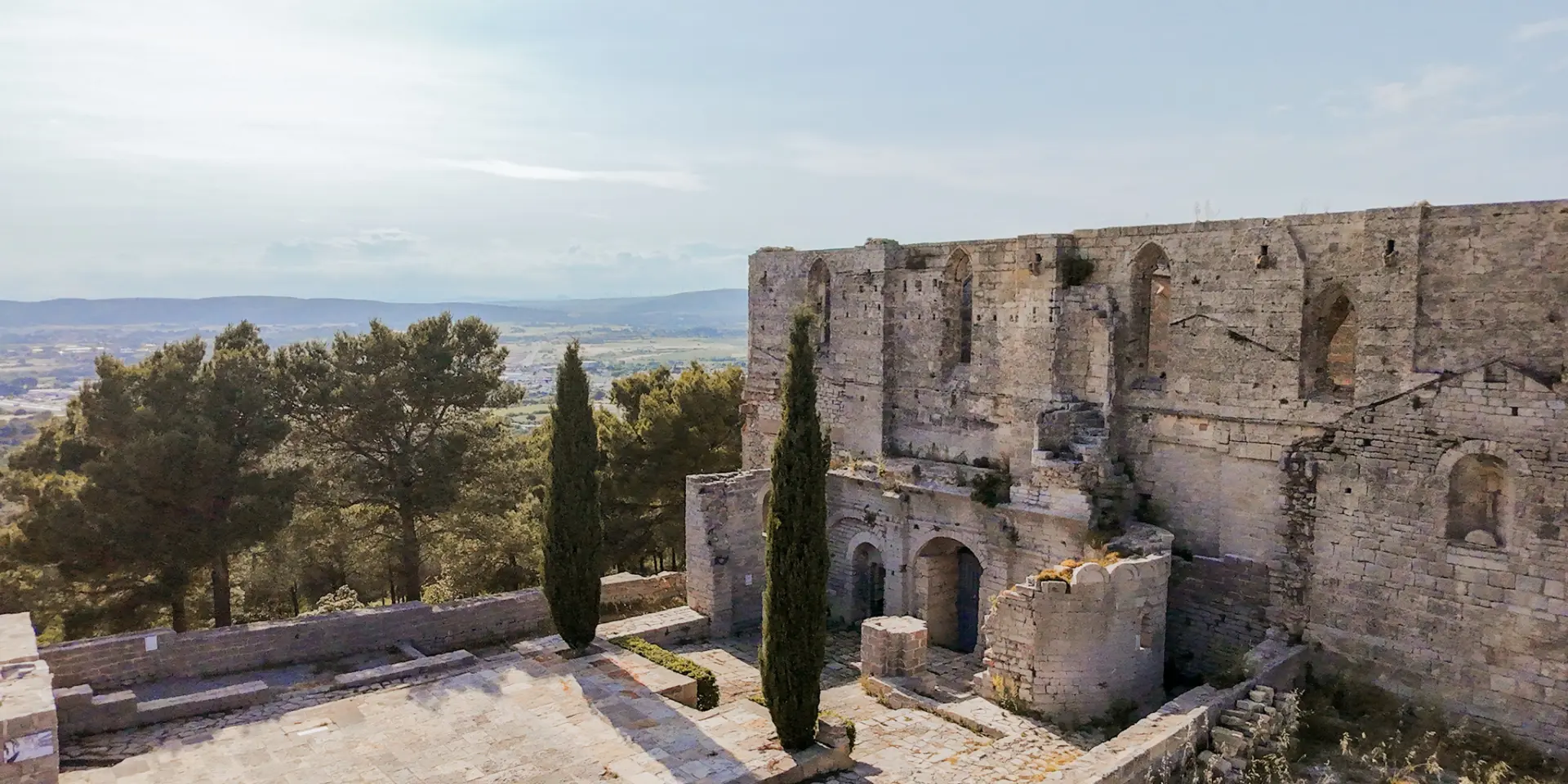
Drone view of Saint-Felix-de-Montceau Abbey in Gigean

|

S_GRANDJEAN_OT-THAU

The must-sees in Gigean

Nestled at the foot of the majestic Gardiole massif, Gigean welcomes you for a getaway where medieval heritage and unspoilt nature come together in perfect harmony. This charming village of 6,200 inhabitants embodies the authenticity of the Thau Archipelago and is sure to charm travellers seeking discovery and a break in the heart of nature.

Imagine strolling through a circular village where every stone tells the story of the people who shaped this land, then climbing up to an abbey that has overlooked the Thau lagoon since the 12th century. Lace up your walking boots to explore the paths scented with thyme and rosemary, where every bend reveals a breathtaking panorama of the shimmering lagoon and the Mediterranean in the distance. Gigean offers the promise of a journey through time and space, at the heart of the unspoilt Thau Archipelago.

Get ready for an authentic experience where history is written in the cobbled streets, where walks reveal natural treasures, and where every moment resonates with the gentle Mediterranean way of life. Join us on this comprehensive exploration of Gigean!

Saint-Félix-de-Montceau Abbey A thousand-year-old sentinel of the Thau Archipelago

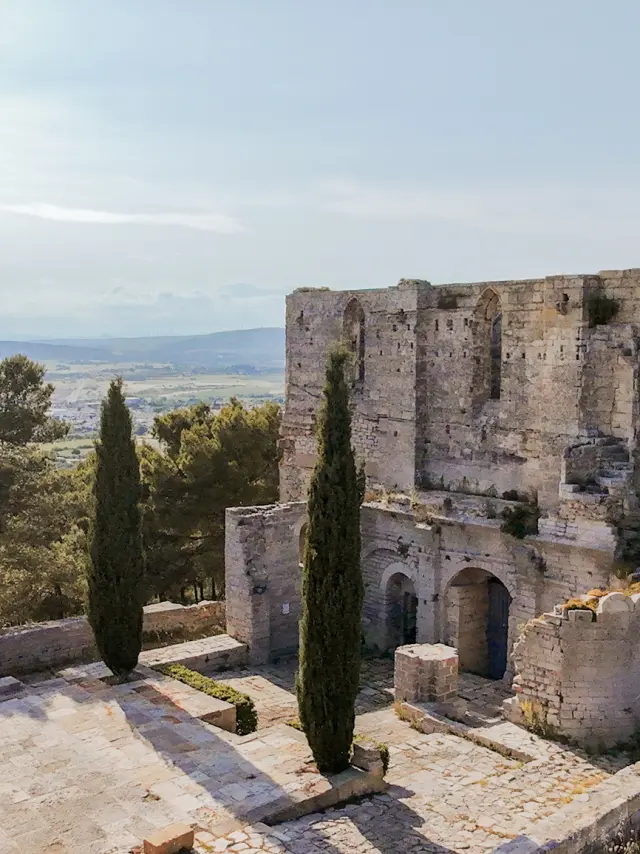
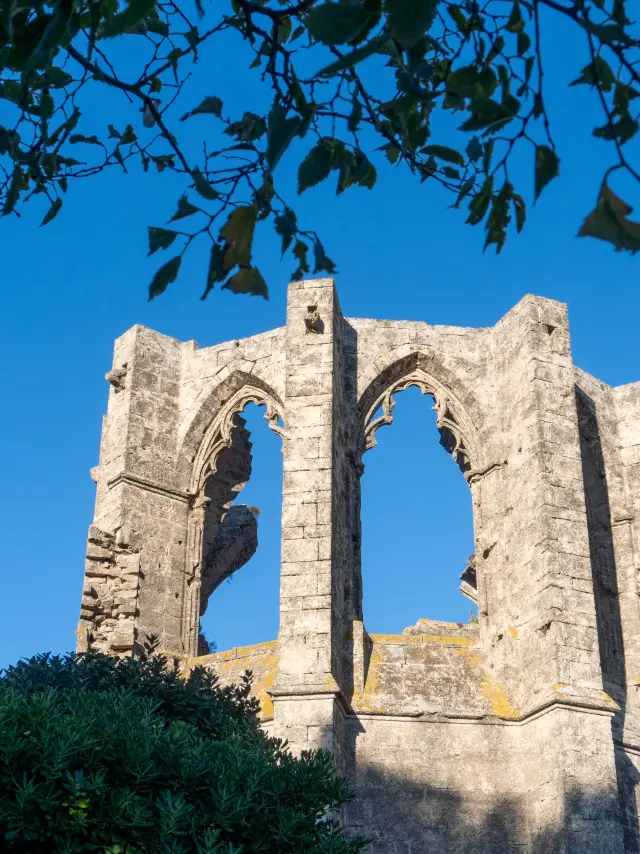
Perched on the heights of Gigean like a spiritual beacon,Saint-Félix-de-Montceau Abbey isthe village’s most iconic site and a landmark of the Gardiole massif. Founded in the 12th century, this former Benedictine abbey, listed as a Historic Monument, offers you much more than just a visit: it is a true immersion in the monastic history ofthe Thau Archipelago. 

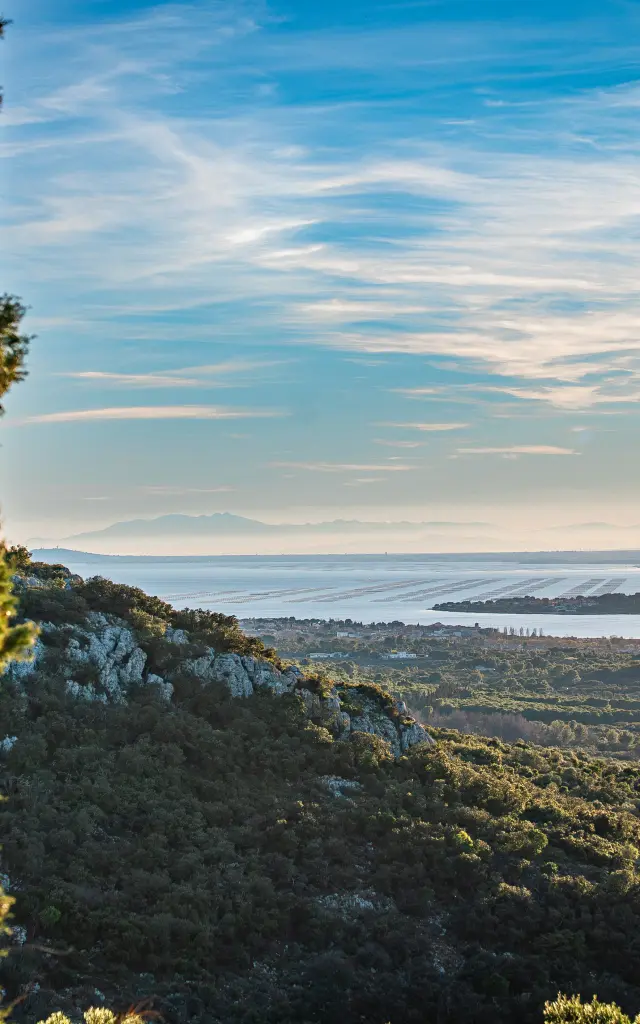
As soon as you arrive, the panorama takes your breath away: the Thau lagoon stretches as far as the eye can see, with its 2,500 shellfish beds glistening in the sun; Mont Saint-Clair in Sète rises majestically in the distance; and on a clear day, the blue line of the Mediterranean marks the horizon. This 360-degree spectacle alone is worth the detour!

The ruins bear witness to its former grandeur: you can see the remains of the imposing Gothic abbey church, as well as traces of the monastic organisation. You can see the refectory, the boiler room and even the chapter house. Information panels are dotted around the site, recounting the fascinating history of this religious community.

Did you know? Contrary to popular belief, the monks who lived at Saint-Félix-de-Montceau were women! These hospitable nuns welcomed pilgrims and passing travellers, offering them food and lodging before they set off again across the garrigue. This tradition of monastic hospitality has left a deep mark on the identity of the place andthe Thau Archipelago. 

Stroll through the monastic gardens surrounding the abbey, true havens of peace where time seems to stand still. For the best experience, visit at sunrise or sunset, when the golden light enhances the ancient stones and transforms the lagoon into a blazing mirror. A magical moment, perfect for photographers and dreamers!
Hikes in the Gardiole massif A panoramic tour of the Thau Archipelago

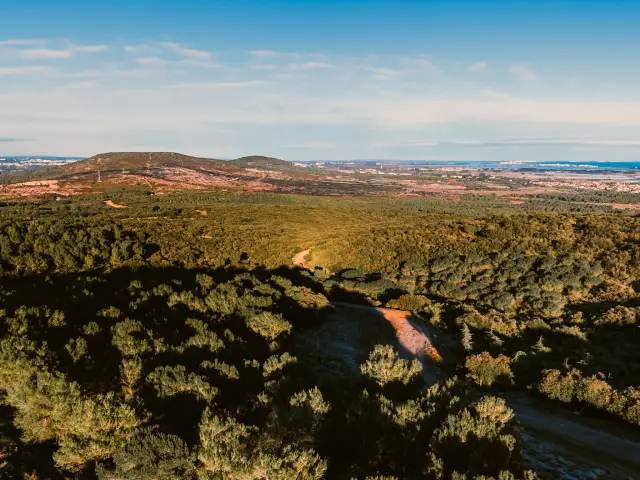
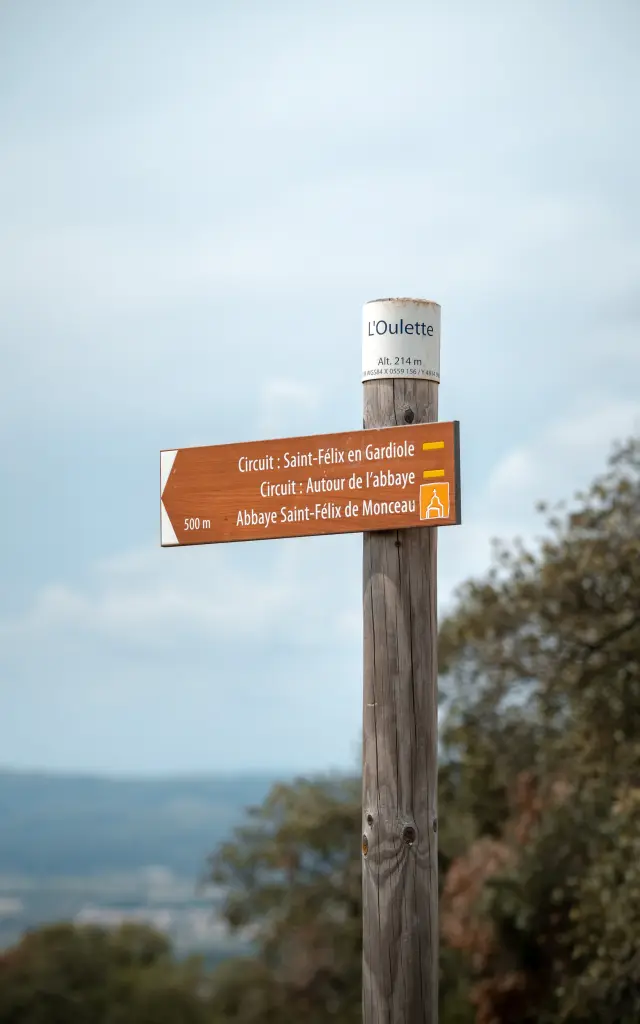
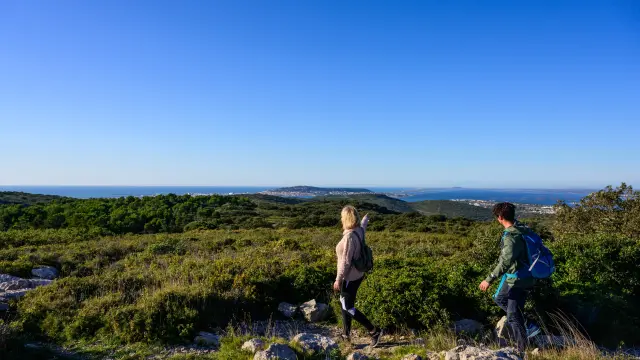
The Gardiole massif, the true green lung of the Thau Archipelago, offers hikers unforgettable experiences amidst fragrant garrigue and exceptional panoramic views. Two signposted routes starting from Saint-Félix-de-Montceau Abbey allow you to explore this unspoilt area, each suited to a different level of fitness. Two opportunities to set off and discover remarkable landscapes where biodiversity and history blend harmoniously!

"Around the Abbey" walk: the family loop (6.5 km – 2 hours – Easy)  

This first walk isthe ideal introduction to the Gardiole, with nomajor technical difficulties. Perfect for families, beginners or those looking for a gentle stroll after lunch inthe Thau Archipelago, it offers views that will delight all walkers.

The route: Startingfrom the abbey, the path climbs gradually through the fragrant garrigue. You’ll pass two hairpin bends before continuing the climb along a path lined with dry-stone walls: capitelles. These structures bear witness to the patient labour of the people who have shaped this landscape over the centuries.

Stay on the main path as it winds around a limestone hillock. At the pass, a magnificent view unfolds before you: the Thau lagoon glistens below, the villages of Bouzigues and Mèze can be glimpsed in the distance, and the garrigue stretches as far as the eye can see. Then turn right into a small valley and climb up a path to join the DFCI track (Forest Fire Defence).

You will walk for 900 metres until you reach a large crossroads, near the old oil wells (remnants of 20th-century oil extraction). This is where the route joins the main“Saint-Félix en Gardiole” circuit.
Continue to the right on the DFCI GAR2 track until the next crossroads. The descent opposite, 250 metres further on, leads you off the track onto a path on the left. Immediately turn right onto the path that leads back down to the abbey, thus completing your circuit.

Points of interest: Mediterranean flora (thyme, rosemary, cotton-leaved rockrose, kermes oak), dry stone structures (clapas, capitelles), views of the Thau Archipelago, old oil wells.

Our advice: Bring1.5 litres of water per person, a hat and sun cream. The garrigue offers little shade. Visit in spring (March–June) or autumn (September–October) to enjoy mild temperatures and the bountiful natural surroundings.

"Saint-Félix en Gardiole" hike The Grand Panoramic Tour (14.5 km – 4½ hours – Moderate)

For more experienced hikers, this 14.5 kmcircuit offersthe ultimate way to discover the Gardiole in all its splendour. A true invitation to explore, this loop takes you from the summit of the massif (234 m) to the viewpoints overlooking the Mediterranean, passing through varied landscapes that reveal the full richness of the Thau Archipelago.

Roc d’Anduze option (10 mins round trip): Don’t miss this detour! On the left, follow a path uphill to reach the highest point of the massif at an altitude of 234 metres. From up there, the view is simply breathtaking: 360° of pure beauty! The Thau lagoon stretches out in all its majesty, the Mediterranean Sea glistens to the south, and on a clear day, you can even see the Pyrenees and Mont Canigou to the south-west. This is THE unmissable photo spot on your hike!

Continue along the track to a large crossroads (junction with the short 9.5 km alternative route and the “Around the Abbey” circuit). Turn left and reach a junction by a painted cistern, where the“Belvédères de la Gardiole” circuit branches off.

Turn right, then right again to walk tothe Mare de Mège, a vital water source for local wildlife. Continue straight ahead and take the DFCI track (GAR3) on the right, which winds along the Mediterranean coastline like a balcony. This is where the spectacle becomes truly magnificent: breathtaking views of the port of Sète, Frontignan and its pink salt marshes, the Étang d’Ingril, the Bois des Aresquiers, Vic-la-Gardiole and its ponds. This section is one of the most beautiful panoramic viewpoints in the Thau Archipelago!

You will pass to the right of the old airfield (a historic site) and, further on, reach a large crossroads near the old oil wells. Turn left, walk 150 metres and leave the track to the right via a straight path, on the edge of the national forest. From there,you’ll enjoy an exceptional view of the lido between Sète and Agde, the Thau lagoon and its oyster beds, which seem to float on the water.

Head down to the Col de Gigean, then turn right and follow the path down which will take you back to the abbey, the starting and finishing point of this magnificent loop.

Main points of interest: Roc d’Anduze (highest point 234m with 360° panoramic views), view over the Mediterranean, Mare de Mège, old oil wells, former airfield, Mediterranean flora and fauna, dry-stone structures (Capitelles de la Gardiole, clapas, low walls).
Recommended equipment: High-top hiking boots, at least 2 litres of water per person, energy snacks, hat, sun cream, sunglasses, binoculars for birdwatching, camera (the views are exceptional!), IGN map or navigation app.

Fire safety: Following recent fires that have affected part of the massif, forest regeneration work is currently underway. Some sections may be temporarily closed. Check the prefecture’s website before setting off (daily fire risk map) and follow the hiker’s code of conduct. In summer, avoid the hottest hours (12 noon–4 pm) and refer to the prefectural decrees.

These two hikes transform your visit to Gigean into a true nature adventure in the heart of the Thau Archipelago. They reveal the untamed beauty of the Gardiole and offer unique views of this exceptional area between the lagoon and the Mediterranean. 

The medieval circulade A journey to the heart of the Middle Ages in Gigean

Come down from your high-altitude explorations to immerse yourself in the historic heart of Gigean, a true medieval gem of the Thau Archipelago. The village is distinguished by its unique circular layout, a medieval defensive urban planning system in which the houses are arranged in concentric circles around the present-day church, Saint Géniès, thus creating a form of protection in the event of an attack.

 Saint-Geniès Church: the spiritual heart

At the heart of the circular village stands the Church of Saint-Geniès, a 14th-century Gothic building recognisable by its imposing bell tower. Currently undergoing restoration (work due to be completed in November 2025), this church bears witness to the local council’s commitment to preserving its exceptional heritage. The most unusual feature of the building is its pediment. Visitors can read there: “French Republic, Liberty, Equality, Fraternity”. This inscription, added following the 1905 law when the State regained control over places of worship, is a feature shared by only around a hundred churches in France.

At its foot, the Place de la République, with its central fountain, serves as a meeting place for the people of Gigean, and is particularly lively during the weekly market.

 The studium: a unique educational legacy

Don’t miss the studium, built in the 14th century on the initiative of Pope Urban V to encourage the education of the younger generations and prepare them for the University of Montpellier. This “studia” bears witness to the importance attached to education in the Thau Archipelago as far back as the Middle Ages. Pope Urban V, himself a professor at Montpellier, hoped in this way to counteract the decline of this prestigious university. A rare and precious educational heritage!

The Chapel of the White Penitents  A focal point in village life

This chapel, built between the 12th and 13th centuries, was home to more than a hundred White Penitents at the height of its influence. Built of stone in a simple style, the chapel features elements characteristic of religious buildings in the small villages of Languedoc. Its interior still retains some original features, such as simple vaults, frescoes and ex-votos, illustrating the devotion of the local people.

Cobbled streets and winegrowers’ houses Authentic architecture

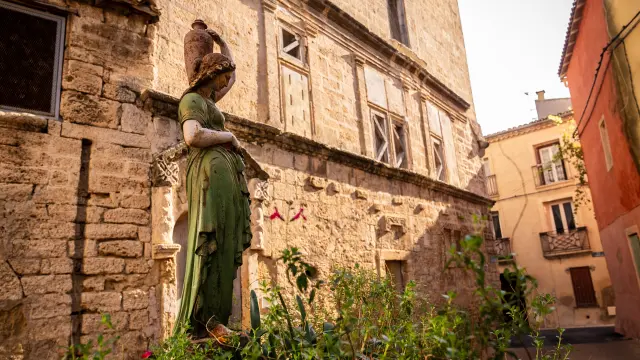
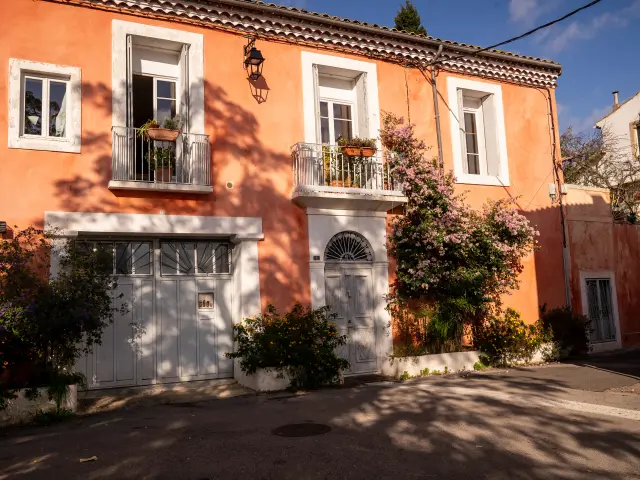
Lose yourself in the calades, those traditional cobbled alleyways that wind their way between the winegrowers’ houses with their pale stone façades. The old doors, mullioned windows and typical external staircases form an authentic architectural ensemble that transports visitors back several centuries.

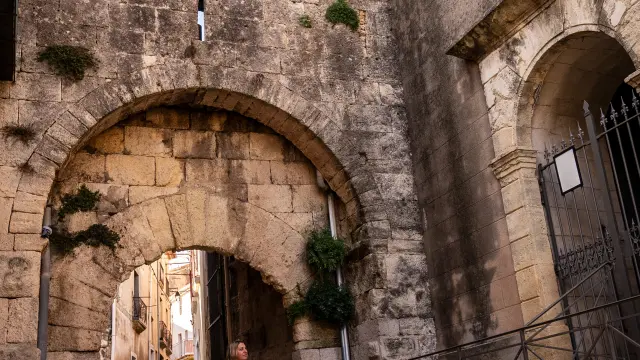
Some sections of the medieval ramparts are remarkably well-preserved and tell the story of a strategically important fortified town. Every stone, every architectural detail whispers the tales of the men and women who lived here, shaping the identity of Gigean and the Thau Archipelago.

Gigean The perfect balance between heritage and nature in the Thau Archipelago

An authentic medieval village nestled at the foot of the Gardiole,Gigean embodies the heritage and naturalspirit of the Thau Archipelago. From its thousand-year-old abbey overlooking the lagoon to the well-preserved medieval village, from the papal studium to the breathtaking views from the hiking trails, every discovery reveals the richness of a region that has managed to preserve its identity whilst welcoming visitors.

The two hiking routes offer unique experiences for exploring the Gardiole massif and its exceptional views of the Thau Archipelago. From the highest point of the Roc d’Anduze to the viewpoints overlooking the Mediterranean, these trails offer unforgettable views of the lagoon, the oyster beds, the villages and the coastline.

Whether you’re a fan of medieval history, a hiker who loves the great outdoors, or simply seeking authentic Mediterranean charm, Gigean welcomes you for a rejuvenating getaway just a few kilometres from the beaches and the Thau lagoon.

Getting to and around Gigean

Getting to Gigean and exploring the Thau Archipelago has never been easier, thanks to the wide range of transport options available in 2025. 

The Sète Agglopôle Mobilité network serves Gigean via routes 13 and 22 from Sète, Frontignan, Balaruc and Montbazin. Lio Hérault Transport route 603 connects Montpellier to Gigean (stops: “Gigean – Les Prés” or “Av. de Montpellier”). Check the latest timetables at mobilite.agglopole.fr and lio.laregion.fr.

  • From Montpellier (20 km, 25 mins), take the D613 south-west. From Sète (15 km, 20 mins), follow the D2. From Mèze (8 km, 12 mins), take the D613. Free parking is available in the town centre and at the abbey.

This easy access makes it simple to explore the Thau Archipelago in its entirety, from the lagoon to the medieval villages, via the coastal resorts and vineyards.

Your questions about Gigean and the Thau Archipelago