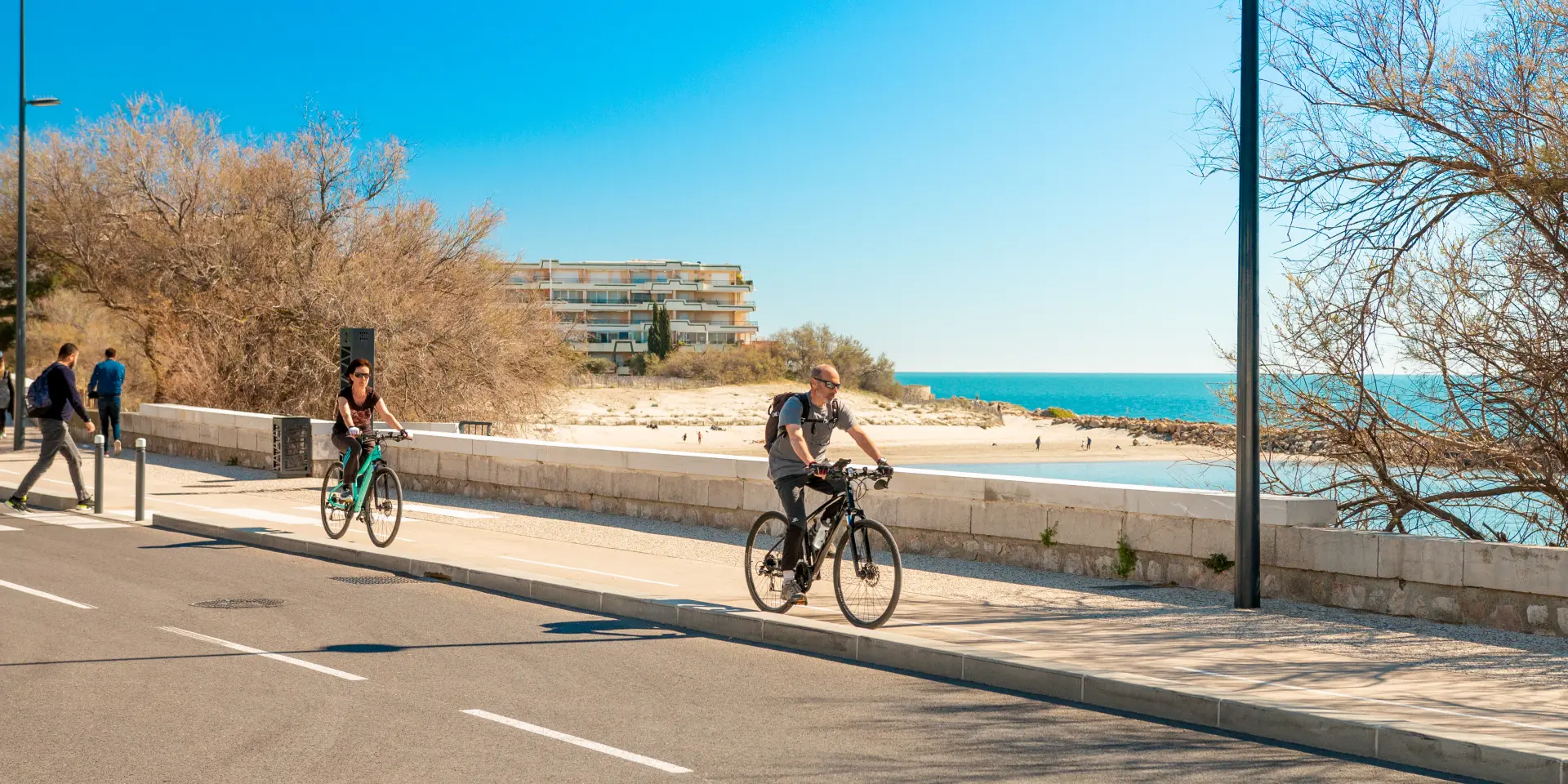
Seaside cycle ride to Lazaret Beach
©

Seaside cycle ride to Lazaret Beach

|

F_AMBROSINO_OT-THAU

Panel 1: From Lazaret Beach to Marseillan, the lido

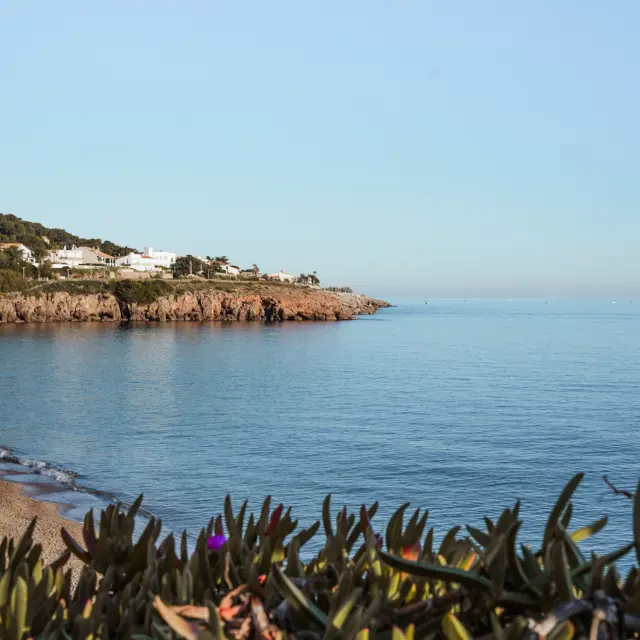
Lazaret Beach

One of the first beaches to host a seaside resort as early as 1865, which remains a holiday village to this day.

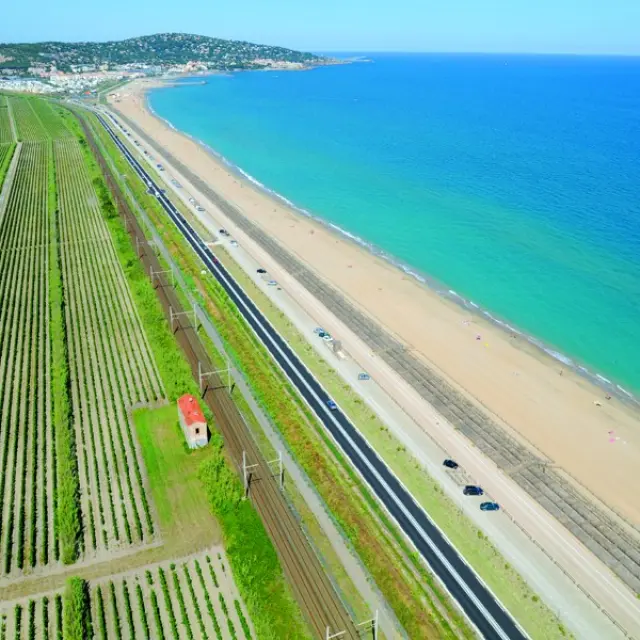
Beyond the Corniche beach, immortalised in Brassens’ song, lies the Lido, a 12-kilometre-long coastal strip separating the Thau lagoon from the sea, stretching all the way to Marseillan. A major conservation and restoration scheme supported by the EU has helped combat coastal erosion here, with the development of safe beaches and the enhancement of natural areas.

The Lido: an ecosystem worth preserving 

Formed entirely in the 15th century, the Lido is a rich ecosystem that must be preserved. Having suffered damage from various storms, a restoration plan has been in place since 2003.

The Sète area boasts a significant coastline stretching over 20 km, including the stretch from the Lido de Sète to Marseillan. Sandy lidos create landscapes of exceptional beauty, forming rare dune ecosystems and supporting significant biodiversity, with flora and fauna specific to coastal areas.

However, these sandy formations are fragile and affected by significant natural erosion, which is accelerated by human activity. The project has enabled the restoration of the dune system and the beach over a 12 km stretch to preserve this major asset that the lidos represent, both from an environmental and economic perspective.

Land and maritime infrastructure

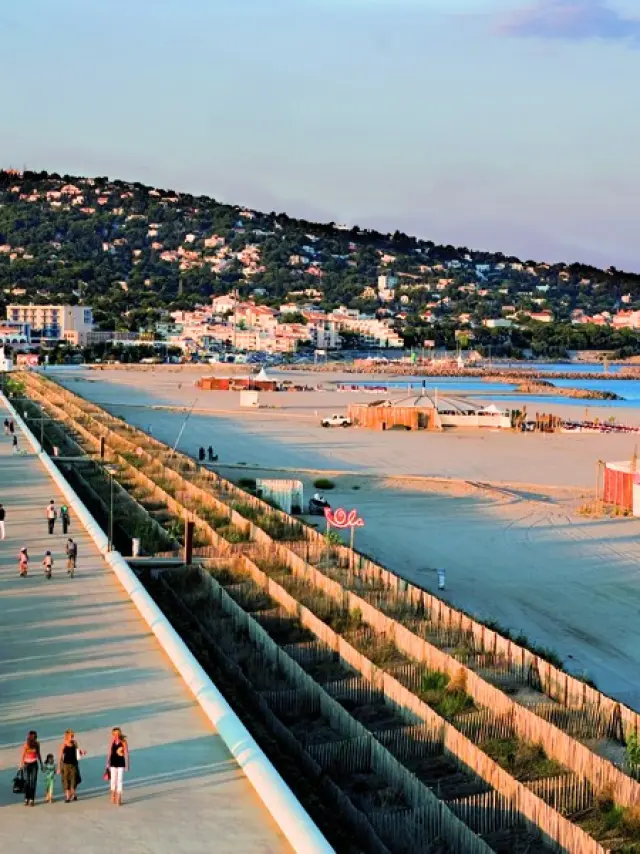
The redevelopment of the coastal strip has involved the relocation of existing infrastructure, such as the road, and the creation of new facilities, including designated parking areas, footbridges crossing the dune ridge, toilet facilities and a cycle path.

This redevelopment has helpedto widen the beach, enhance natural areas and maintain the coastal road, as well as supporting economic activities such as tourism, wine-growing and shellfish farming.

On the section of the Sète-Marseillan lido most exposed to erosion, marine works complement the land-based measures. On the one hand, drains buried beneath the beach in the wave break zone naturally collected the water and channelled it to a pumping station, which discharged it back into the sea

By draining the sand in the surf zone, the drainage system was designed to prevent the sand carried by the waves from being washed back out to sea and to anchor it to the beach.

In addition, a wave attenuator in the form of a geotextile tube was also installed, designed to reduce the impact of breaking waves on the coastline by causing them to break further out to sea. This wave attenuator also involved a major beach nourishment operation, with 350,000 m³ of sand deposited on the beach and in the shallow waters to restore a sufficient beach width and withstand storm surges.  The redevelopment of the coastal strip involved the relocation of existing infrastructure, such as the road, and the creation of new facilities, including organised parking areas, footbridges crossing the dune ridge, sanitary facilities and a cycle path. This redevelopment has helped to widen the beach, enhance natural areas and maintain the coastal road, as well as supporting economic activities such as tourism, viticulture and shellfish farming.

Preserving several functions of the site

The programme to restore the Sète-Marseillan coastal strip aimed to maintain viable operating conditions for economic activities, including more traditional ones such as fishing. To ensure the long-term future of hundreds of jobs linked to tourism or the wine industry, it was necessary to preserve the Thau lagoon, which was at risk of being flooded by the sea.

A total of 550 shellfish farms operate in direct connection with the lagoon, which alone accounts for 80% of Mediterranean oyster and mussel production. In total, 2,000 direct jobs depend on the lagoon. Its disappearance would cost the local community tens of millions of euros, not to mention the loss of the Lido vineyards and the Listel bottling plant.

The loss would be just as severe for all tourism professionals based in the Thau basin and beyond. Preserving the Lido, a sandy strip between the sea and the lagoon, means protecting a natural biotope nearly 12 km long.

Saving the Sète Lido was essential for the preservation of the Thau Lagoon ecosystem and the region’s economic and tourism activities. The works included the installation of a wave attenuator over a distance of 2.4 km, the reconstruction of the dune ridge, and the creation of a cycle path and parking areas.