©

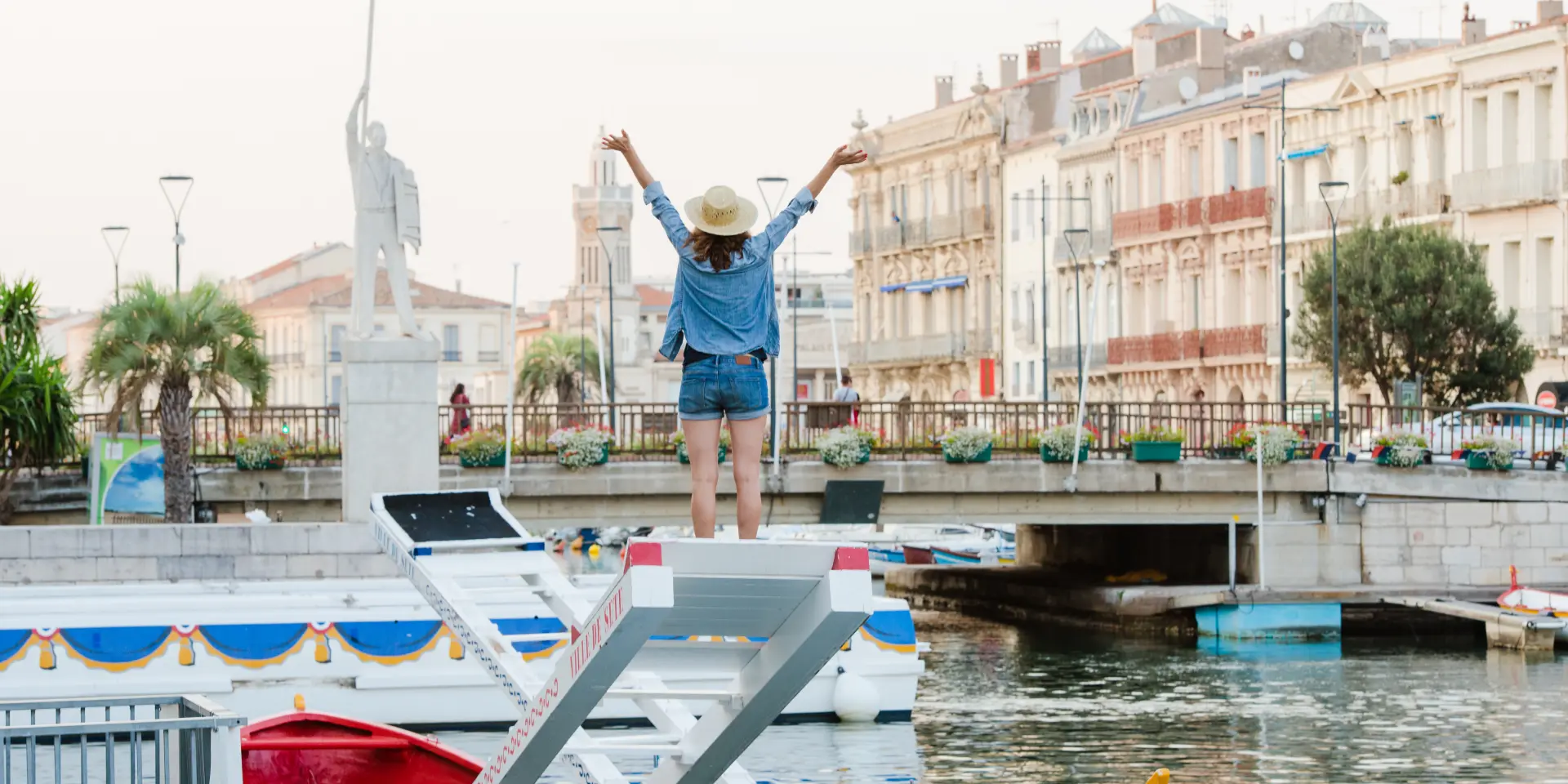
Young woman on a jousting barge, royal box. Quays

|

N_CHAUVEAU_OT-THAU

Traditional sports

On the Canal Royal in Sète, jousters have been battling it out with lances since 1666. In the steep, narrow streets of the Quartier Haut, players throw square balls that bounce in all directions.  In Mèze, the clatter of the tambourine rings out: this sport, invented here in 1861, is now played on four continents. Under the plane trees in the village squares, the sound of pétanque balls echoes until evening. The Thau Archipelago nurtures these traditional sports with rare passion. They set the pace for summers, enliven festivals and forge bonds between generations. From the Saint-Louis festival, which draws tens of thousands of spectators, to village tournaments where everyone knows one another, these sports tell a story of 360 years of living history. Get ready to discover a heritage that is played, lived and passed on every day.

Water sports The big show of the summer

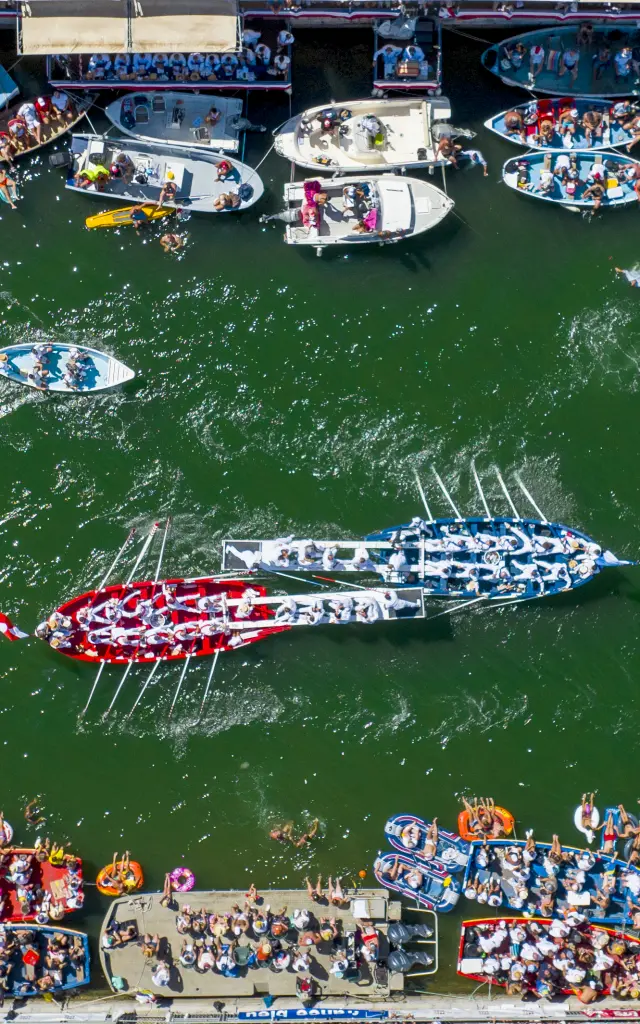
On 29 July 1666, fishermen from Aigues-Mortes introduced the people of Sète to water jousting. Three and a half centuries later, the spectacle has lost none of its splendour. Two boats, one blue, the other red, proudly cross paths on the canal. At the stern, a jouster stands three metres above the water on the tintaine. A 2.80-metre lance in one hand, a wooden shield in the other. Eight rowers propel the boat to the beat of oboes and drums. The collision is violent. The iron-tipped lances clash with a thunderous crash. One of the combatants is knocked off balance and plunges into the canal amid the shouts of thousands of spectators packed onto the quays.

It is the quintessential summer spectacle in the Thau Archipelago. From mid-June to early September, the tournaments follow one after another. Saint Peter’s Day in late June marks the start in Frontignan, Mèze and Balaruc. But the highlight remains Saint Louis’ Day in late August in Sète.

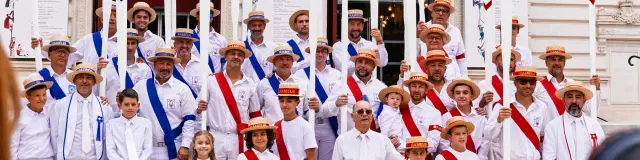
For six days, the town comes alive. Free stands welcome tens of thousands of spectators along the Canal Royal. The parade of jousters, all dressed in white and wearing boater hats, opens the festivities. At the Town Hall square, the macaronade brings everyone together around this dish of pasta in tomato sauce, topped with sausages and brageoles. A tradition within a tradition.

Seven societies keep the tradition alive in Sète. The Navy Jousting School trains the champions of tomorrow from the age of three. This family tradition brings the stands to life, here and in all the coastal towns of the Thau Archipelago, where young jousters compete every summer. The Musée de la Mer devotes two rooms to this tradition, featuring shields, lances and costumes. The shields of the Saint Louis winners, decorated each year by an artist from Sète, are added to the Musée Paul Valéry. A living work of art that has been in the making for 360 years.
Square balls the craziest tournament in France

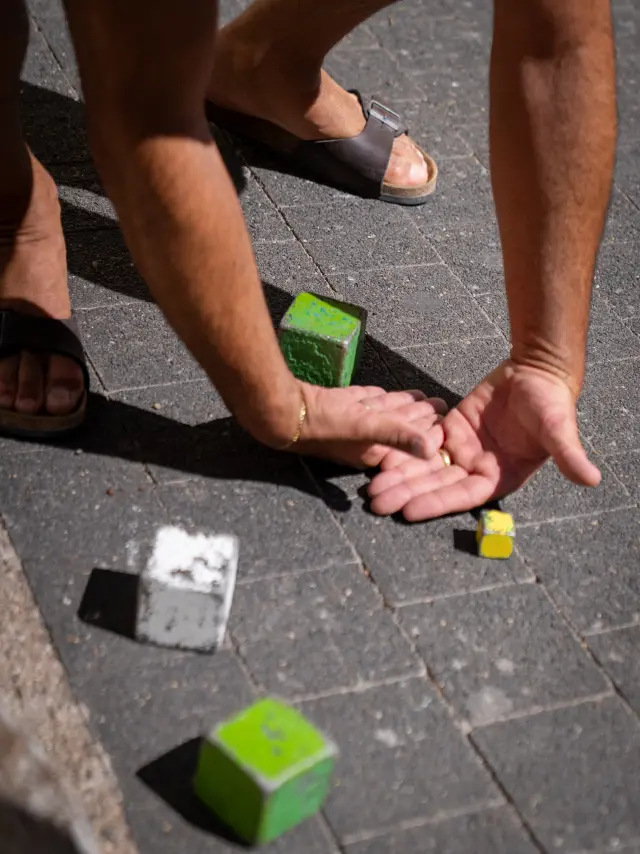
Every year on Saint Louis’s Day, 420 players hurtle down the steep alleyways and stairways of Sète’s Quartier Haut. Their weapon? 700-gram cubic boules that don’t roll in a straight line. Their playing field? The impossible slopes where no normal pétanque ball would hold its line. Their aim? To have a laugh, above all.

The square-ball tournament organised by the Sète Ski Club has become a must-see event. From 8 am, 140 triples spread throughout the Quartier Haut launch their wooden cubes. Everyone wears T-shirts designed by the Sète artist Topolino. The spirit? No strict rules. You can play against walls, bounce off steps, make the most of the slope. The winner is, above all, the one who’s had the most luck and the most laughs.

The square boules originated in Lyon in 1899. But it was in the Thau Archipelago that they found a new lease of life. Frontignan organises its own tournament in September. Balaruc-les-Bains also offers its own version. Recently, Mèze has joined the movement with a tournament held during the Mèze festival in August. This zany, traditional game appeals for its total friendliness and good-natured spirit.

The tambourine When Mèze invented a global sport

In 1861, some coopers in Mèze had a brilliant idea. To hit the ball harder than with a simple armband, they stretched a goatskin over a curved wooden hoop. The tambourin was born. The device revolutionised the ball game. Without realising it, Mèze had invented a sport that would soon be played in ten countries.

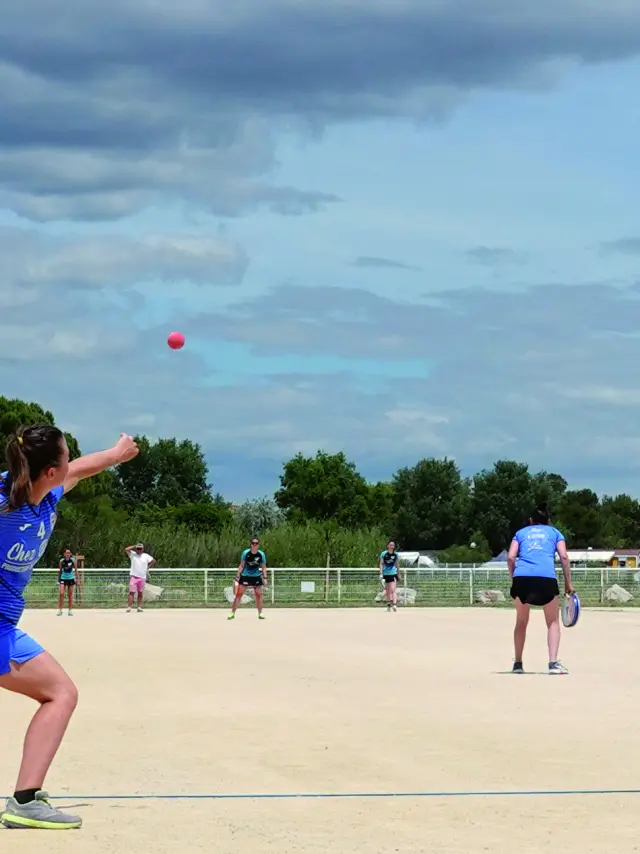
Two teams of five players face off on an 80-metre-long court. No net. A rubber ball flying between the tambourines with a sharp clap. The aim: to hit the ball so that the opponent cannot return it. A spectacular sport combining strategy, reflexes and technique.

In the 1930s, tambourin nearly disappeared. The Occitan writer Max Rouquette saved it by founding the French Federation in 1939. He then discovered that the Italians played palla tamburello. This encounter led to a European Cup in 1996 and a World Cup bringing together ten nations. Today, 2,000 registered players keep the tradition alive. The Hérault region accounts for 85% of them.

In the Thau Archipelago, the tambourine sets the rhythm for summer afternoons. In village squares, the clacking echoes beneath the plane trees. Tournaments enliven the village festivals. Introductory sessions offer a chance to discover this unique heritage. Beach-tamb on the beaches offers a modern take on this historic sport.

Pétanque: anywhere, all year round

Under the plane trees in the village squares, the clatter of metal boules echoes as soon as the sun begins to set. Pétanque has reigned supreme in the Thau Archipelago since the 1930s. Every town has its own boules court, clubs and weekly tournaments.

Frontignan boasts the Carpentier-Nourrigat boules court with 12 lanes. The Francs Pétanqueurs Frontignanais, the Joyeuse Pétanque Mixte and the Boule Amicale organise competitions several times a week during the season. Sète, Mèze, Marseillan, Bouzigues and Balaruc-les-Bains follow suit. Doubles and triples take turns in a friendly atmosphere. A refreshment bar and barbecue complete the picture.

Pétanque originated in La Ciotat, where it was invented in 1910. The name comes from the Occitan ‘pès tanqués’, meaning ‘feet anchored to the ground’. A Provençal champion suffering from rheumatism is said to have drawn a circle in 1907 to avoid having to run. The idea caught on. Today, it is the quintessential popular sport. Accessible to all, suitable for families, and a source of social bonding. The very soul of Mediterranean villages.

The Lyonnaise meatloaf: a tradition from the north

Less well known but just as popular, boule lyonnaise also has its followers in the Thau Archipelago. Originating in Lyon in the 18th century and established as a sport in 1850, it is played on a court measuring 27.50 metres. The boules are larger and heavier: up to 110 mm in diameter and 1,200 grams.

The distance requires a run-up before the throw. The player takes a run-up, accelerates, then releases the boule in a sweeping, powerful motion. This technique lends great elegance to the sport. Frontignan has a dedicated club. The world championships bring together players from all over France and Europe.

Experience these traditions in the Thau Archipelago

Watching these traditional sports is like immersing yourself in the very soul of the Thau Archipelago. The stands at Saint-Louis buzz with the sound of cheering. Brass bands play. Oboes strike up their tunes as the jousters plunge into the canal. From the other side of the lagoon, you can hear the clatter of pétanque balls and the clap of the tambourine as the game unfolds.

All these sports are free. Anyone can watch, cheer, or give them a go. The clubs welcome curious visitors. Introductory sessions are held during village festivals. The elders pass on their skills to the children, who learn from a very young age. That is what living heritage is all about: a tradition that is shared, practised and evolves whilst remaining true to its roots.

So when you visit the Thau Archipelago, look up towards the stands by the Canal Royal. Listen for the clatter of the boules beneath the plane trees. These sports tell a story spanning 360 years. They shape the unique identity of this region, nestled between the lagoon and the Mediterranean.

Sources

Thau Archipelago Tourist Office, France Bleu Hérault, French Tambourine Ball Game Federation, French Pétanque Federation, Ici7.fr, Town of Frontignan, February 2026