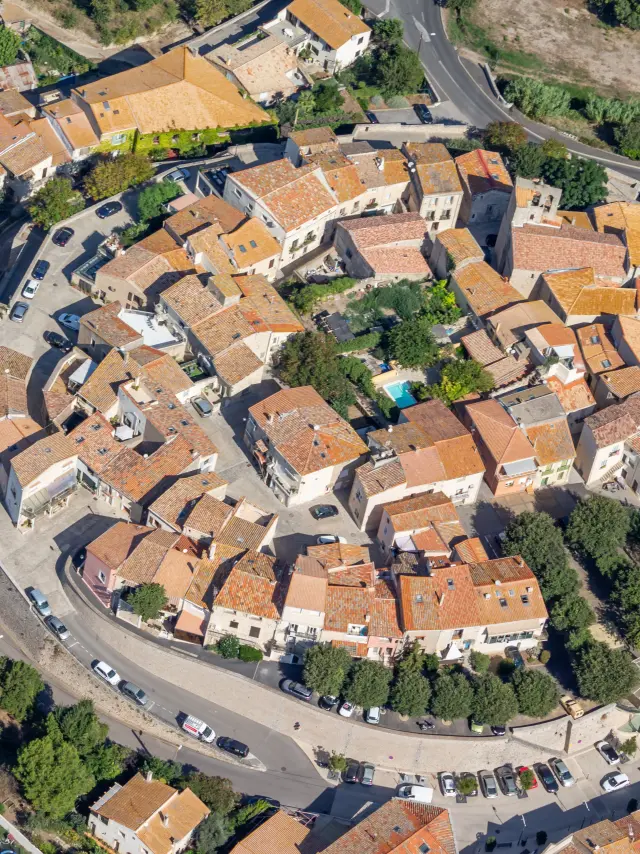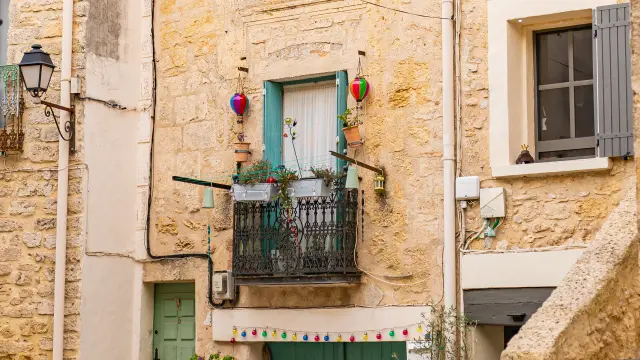
When you arrive in Balaruc-le-Vieux, the first thing you do is try to find your way into the heart of the village. Here, there are no monumental gates, just staircases winding their way between the buttressed ramparts, the last remaining vestiges of the medieval era. These golden-hued stone walls have been carefully restored, restoring the village to its former glory.
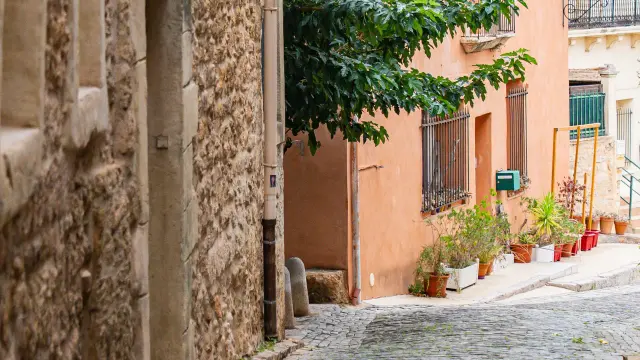
Once at the top, you find yourself in a maze of narrow, winding alleyways where every corner holds a surprise: ancient doorswith ornate fittings, a remnant of the medieval castle now blended into the urban fabric, and the 14th-century Saint-Maurice Church, which stands proudly at the centre of the spiral.
The true route through Balaruc-le-Vieux is the one that winds from square to square, from the heart of the village towards the ramparts and back again. Start at Place Lucien Assié, where a centuries-old mulberry tree casts its welcome shade. Winding your way to the Plan des 4 Seigneurs, which serves as a reminder that four powerful figures once shared sovereignty over the village. Climb up to the rampart walk that circles the circular village, offering a different view of the lagoon at every turn.
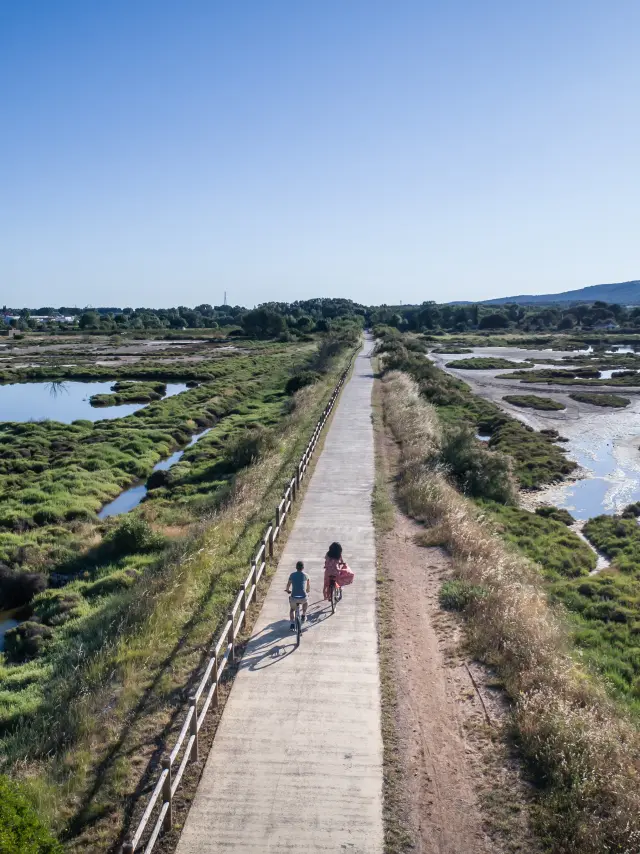
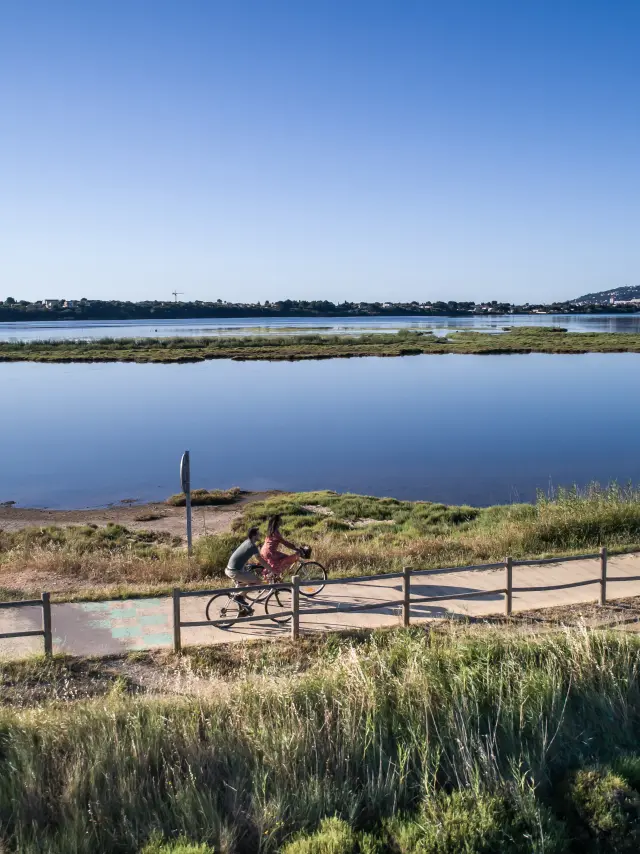
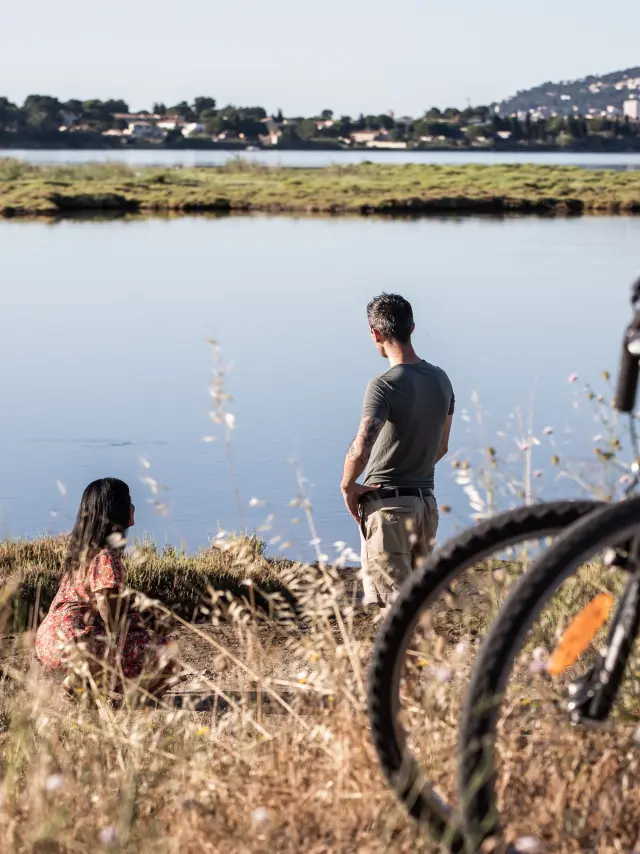
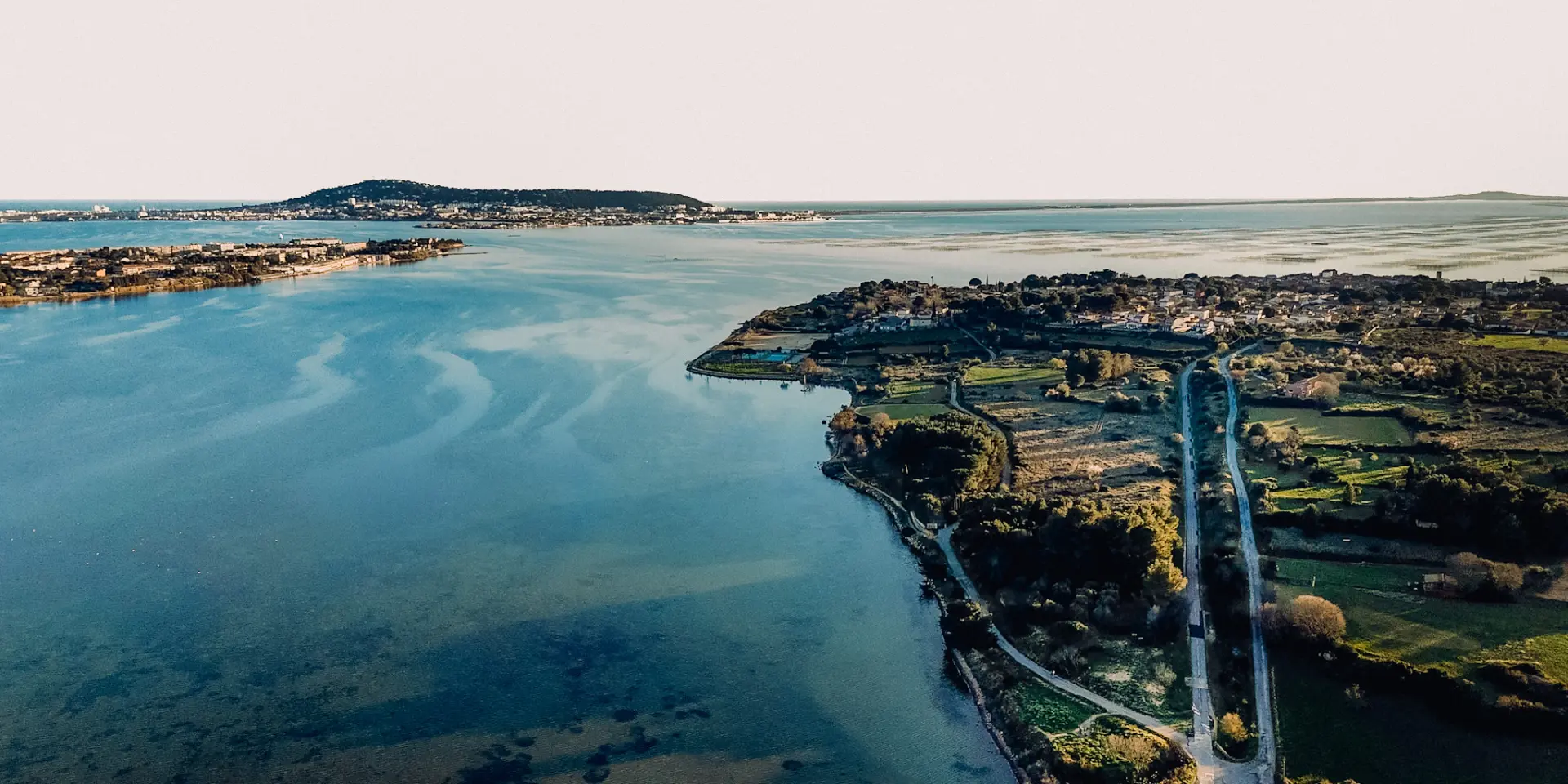
And then there is Place du Truc, probably one of the most beautiful natural viewpoints in the Thau Archipelago. The intriguing name comes from the Occitan word ‘truc’, meaning ‘height’ or ‘high place’. From here, the eye takes in everything: below, the Crique de l’Angle glistens, its brackish waters teeming with birds. Beyond, the Thau lagoon stretches across 7,500 hectares, dotted with oyster beds. On the horizon, the gentle contours of the Moure hills come into view. And when visibility is perfect, the snow-capped silhouette of the Pyrenees stretches across the southern sky. The sunsets here are a spectacle: the sky ablaze, the water tinged with orange and pink, the silhouettes of the oyster beds standing out like shadow puppets.