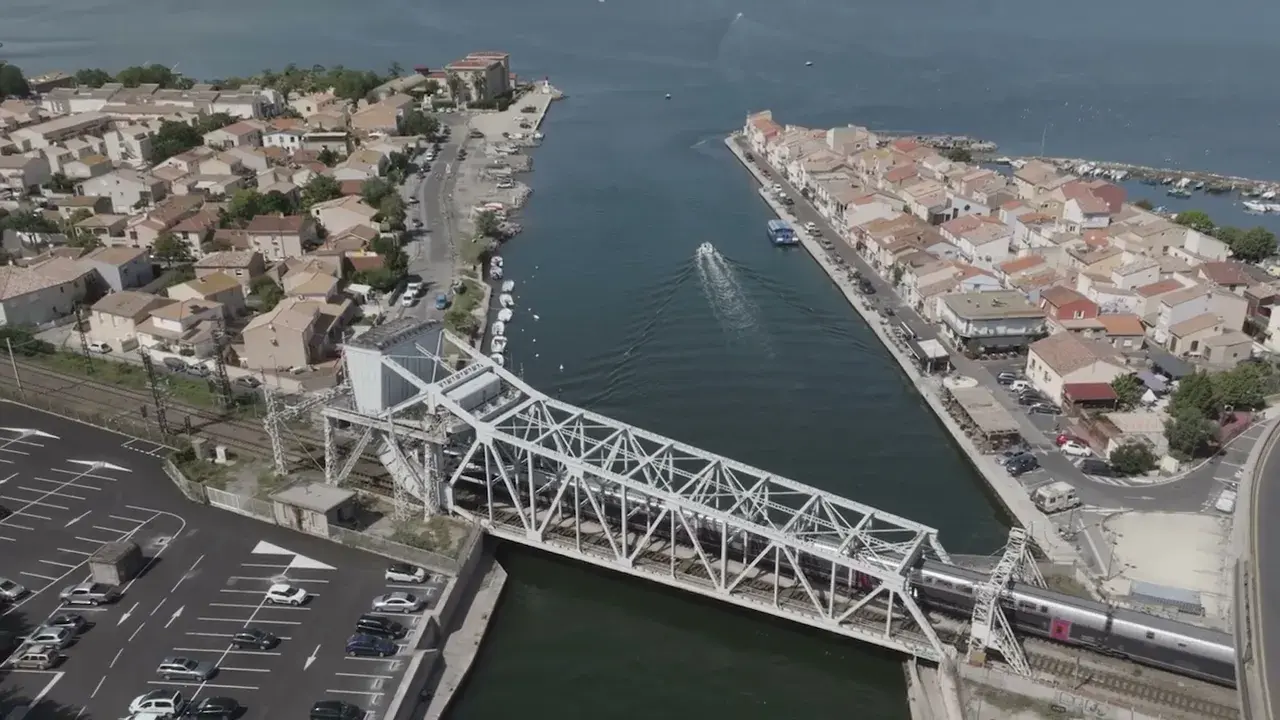
The Short Point – Drone view
©

The Short Point – Drone view

|

S_GRANDJEAN_OT-THAU

Panel 12: La Pointe Courte

History of Sète: the railway station

Histoire de Sète : la gare

La Pointe Courte, a fishing district in Sète

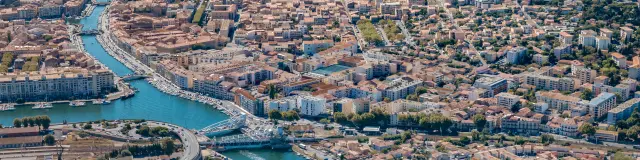
The history of La Pointe Courte began in the mid-19th century when work on the railway line commenced. Once completed, fishermen settled in this area, which opens out onto the lagoon but is also very close to the Canal Royal leading to the Mediterranean Sea. A small harbour and houses were built, and so the neighbourhood took shape.

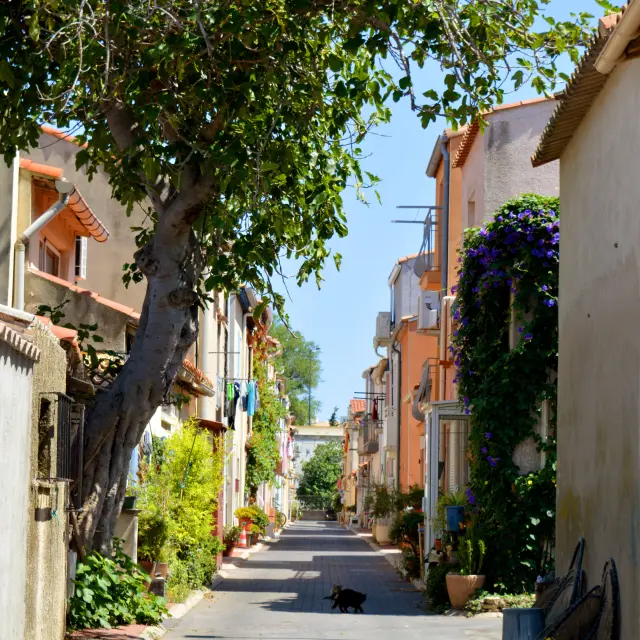
More than 150 years later, we invite you to stop off at La Pointe Courte, the quintessential fishermen’s neighbourhood, far from the city centre and sheltered from the din of traffic. It is, moreover, a neighbourhood that is quintessentially Sète, where properties generally remain in the same families. The neighbourhood carefully preserves its traces of the past with its picturesque alleyways and fishermen’s huts; one need only take a moment to look at the street names to get a feel for the atmosphere of this quintessential neighbourhood.

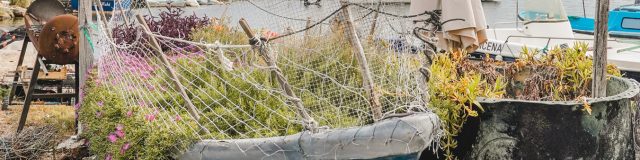
Originally, Pointe Courte consisted of fishermen’s huts cobbled together from odds and ends, along with boats, fish traps and fishing nets drying in the sun. It has since developed, whilst retaining a delightful air of authenticity. Nowadays, the houses have changed in appearance, but the huts and the smell of fresh fish remain.
 Small-scale fishing trades

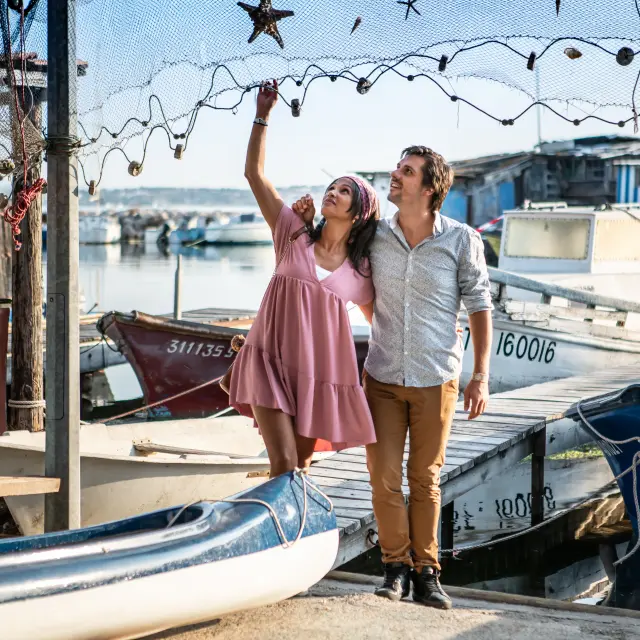
The ‘ pointus ’ made a living from small-scale fishing in the Thau lagoon and forged their own identity, which is just as unique as their little neighbourhood. Today, the fishermen in their yellow oilskins still gather there to store their gear, have a laugh and catch fine sea bream, unfazed by curious passers-by.

 Agnès Varda’s film *La Pointe Courte*

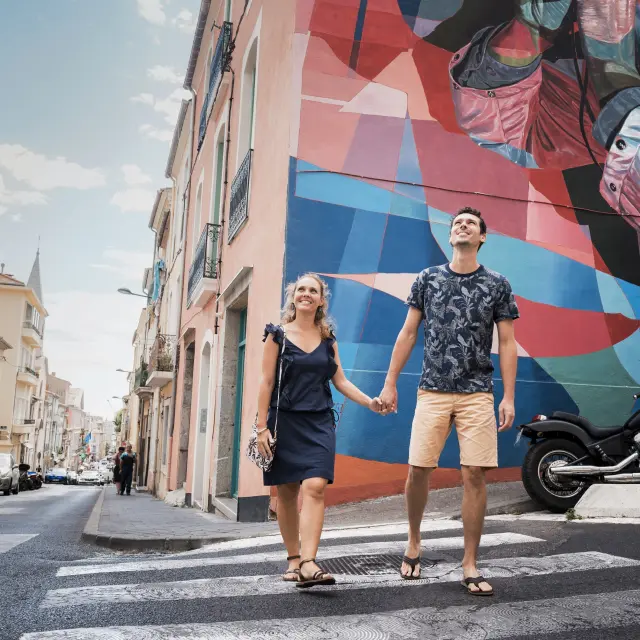
Situated some distance from the town centre, it is sure to make an impression and was, in fact, featured in Agnès Varda’s film *La Pointe Courte*, shot between 10 August and 30 September 1955, starring Philippe Noiret and Silvia Monfort. As a tribute to the filmmaker, Barbara Carrasco, an American artist and activist, painted a portrait of Agnès Varda on the wall of a house in La Pointe Courte during the Sète International Festival of Contemporary Art– Los Angeles in 2019, during which 100 works by 28 artists from Sète and California were exhibited on the walls of Sète and in five exhibition venues. Agnès Varda took part in the initial meetings leading up to this festival last year, before her death on 29 March 2019.

Whilst exploring Pointe Courte, do pop into Le Passage, a restaurant with a terrace right by the water’s edge. Very typical of Pointe Courte, in high season, it’s the sort of place to pop in for a relaxed drink, some tapas or oysters… or enjoy an excellent grilled lunch with a lovely view of the canal leading out to the Thau lagoon.

At the entrance to the Georges Brassens sea wall, which is at the entrance to Pointe Courte – the first right after the car park, with the fishermen’s huts – you’ll feel as though you’ve stepped back in time. Walk past a row of these fishermen’s huts with their signs dotted here and there, alongside the fishermen’s shacks and their many cats. Taste the shellfish and have a drink at Les Copains d’abord at the end of the breakwater, on the shores of the Thau lagoon. Thankfully, there are still places in France where you can soak up a sense of authenticity.

Pointe Longue and its biology station

Opposite Pointe Courte lies Pointe Longue, which is home to an impressive building. Founded in 1879 by Armand Sabatier, a physician specialising in anatomy and professor of zoology at the Faculty of Sciences of the University of Montpellier, at the same time as the major marine stations at Roscoff, Banyuls, Villefranche and Monaco, the Sète Marine Station has, from the outset, served as a base for research, observation and training in the field of marine biology. We both studied marine biology and parasitology there. Scientific activities focus on observation and experimentation, with a particular emphasis on marine ecology (food webs, microbiology), marine population biology (genetics, parasitology, ecophysiology) as well as the quality of the environments in the lagoon and along the coast.

The new Sadi Carnot Bridge

Situated on a strategic road link for the town and the wider urban area, the 430-tonne structure – which also ensures the continuity of the navigable link between the sea and the Thau Lagoon – has been reinstalled, to everyone’s delight, on Friday 12 July 2019 after 11 months of work. This colossal project involved replacing the previous 70-year-old structure, which was rusty and dilapidated. The new bridge was transported by barge from the Venice region in Italy, where it was manufactured. The convoy, measuring 76 metres long and 24 metres wide, faced a considerable challenge navigating its way through the canals – in some places, there was just one metre between the barge and the quay.