fishing, harbour, fish market, Sète
©

fishing, harbour, fish market, Sète

|

F_AMBROSINO_OT-THAU

Panel 6: The fishing port

The fishing port

Immersion au coeur de la criée du port de Sète

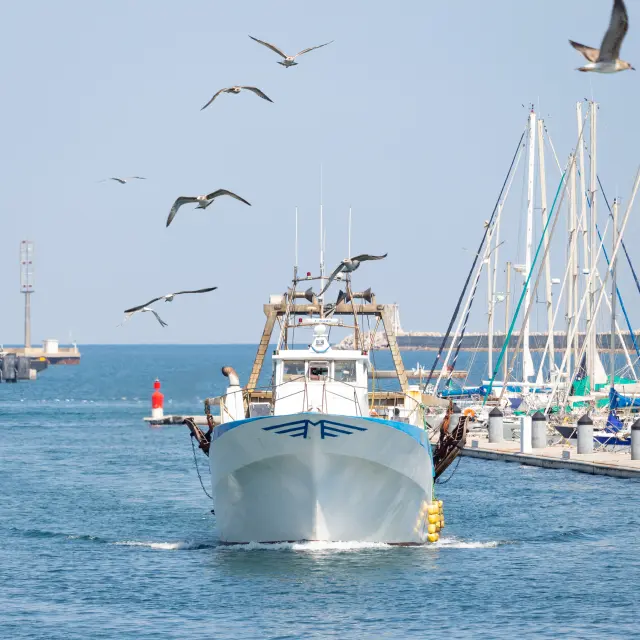
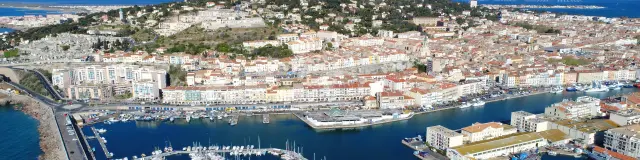
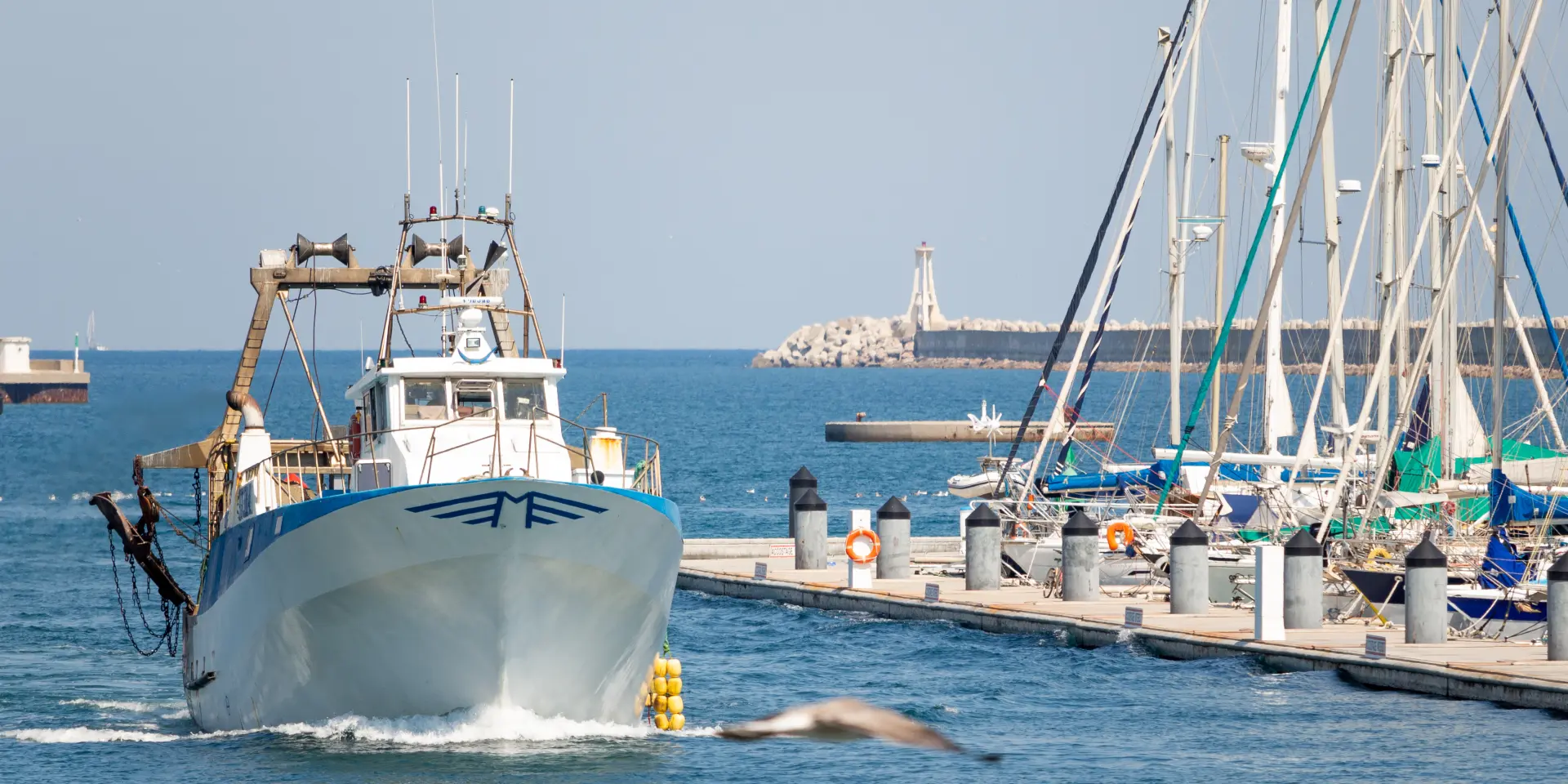
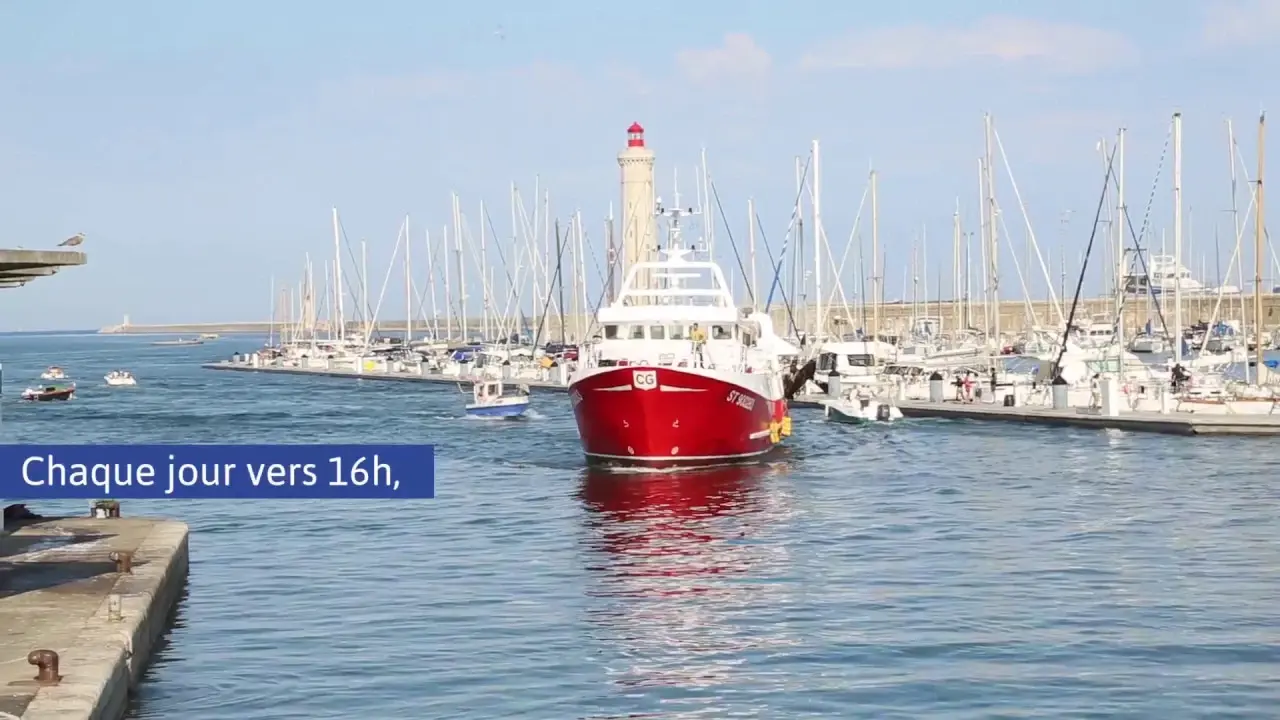
The fishing harbour, situated in the Canal Royal and sheltered by the old harbour, gives Sète a special charm that has always captivated lovers of the sea. Every afternoon, the return of the trawlers to the harbour is a magical spectacle to be admired from the jetty or the promenade overlooking the old harbour basin.

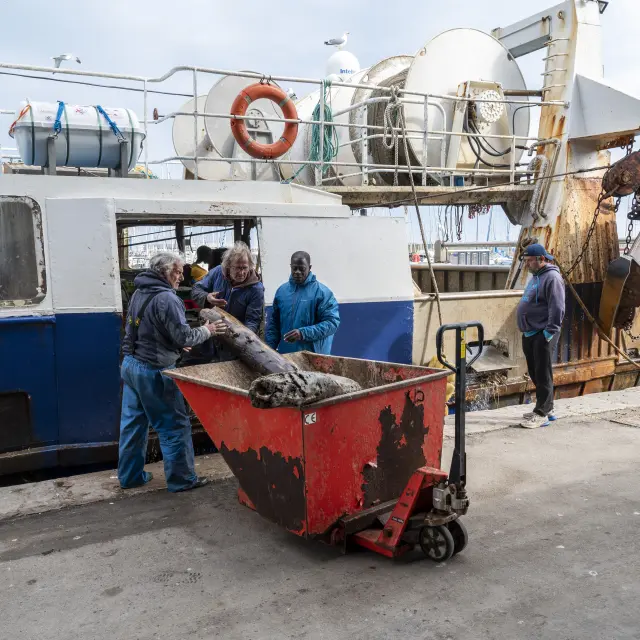
At the heart of the old harbour, Sète’s fish auction supplies the whole of France – Paris, Lyon, Toulouse and Marseille – as well as Italy and Spain. Ten tonnes of fish are caught every day by 17 trawlers and small-scale fishermen. In total, the fish market sells 90 different species: monkfish, red mullet, capelin, octopus… With 2,200 tonnes caught annually, Sète is therefore the leading port on the French Mediterranean coast. The Sète fish auction was the first in Europe to be computerised, back in 1967.

The building has recently been awarded the ‘Remarkable Contemporary Architecture’ label. 
A little history

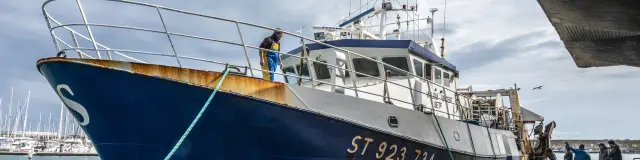
The fishing port of Sète is one of the most important ports in the Mediterranean. Its history dates back to antiquity, but it was in the 17th century that the town of Sète and its port really began to develop.

Originally, Sète was a small fishing village situated on an island between the Mediterranean Sea and the Thau Lagoon. In the 17th century, King Louis XIV ordered the construction of the Canal du Midi, which was intended to link the Atlantic Ocean to the Mediterranean Sea. Sète was chosen as the canal’s mouth, which gave new impetus to the development of the town and its port.

The port of Sète began to specialise in tuna fishing, which became one of the region’s main industries. The fishermen of Sète became renowned for their expertise and traditional fishing techniques, notably ‘tonnara’ fishing, which involves encircling schools of tuna with nets.

Over the centuries, the port of Sète has expanded and modernised to meet the sector’s growing needs. Quays, warehouses and infrastructure have been built to accommodate fishing boats and process the catch. Sète has become a major centre for fish processing and marketing, notably with the establishment of its fish auction.

Today, Sète’s fishing port continues to play a major role in the town’s economy. It is home to a fleet of modern fishing vessels, and a wide variety of species are caught, in addition to tuna, such as cuttlefish, sea bream and hake… more than 120 species in total.

The history of Sète’s fishing port is closely linked to the town’s identity and its connection to the sea. It remains an iconic place where age-old traditions and modernity coexist, offering visitors a fascinating insight into the region’s maritime history.

Key dates in the history of Sète 

1850: Fleeing economic hardship, fishermen from Cetara, an Italian town in the province of Salerno in the Campania region of Italy, settled in Sète. The Cetara fishermen specialise in anchovy fishing; they are familiar with Sète, having stopped there during their blue fish fishing seasons. In search of a better life, they settled in Sète in waves. Many of them signed on as deckhands on ships from Sète.

1968: From the moment it was established, the Sète fish auction was the first in Europe to be computerised. The overhaul of the sales system in 1996 enabled the introduction of real-time management of buyers’ deposits. In 2009, in order to upgrade the system with the aim of maximising the value of the produce, improving the overall running of the auctions and reducing unsold stock, Port Sud de France modernised the sales system at the Sète fish auction (including descending and ascending auctions, amongst other features).

1982: Inauguration of the Frontignan Fisheries Zone by the President of the Republic, François Mitterrand.

2007: Following the port decentralisation laws, the port of Sète became the property of the Languedoc-Roussillon Region. The Region implemented a major programme to refurbish and redevelop the commercial and fishing port, notably involving the modernisation of equipment and infrastructure. The Region, now known as the Occitanie Region, decided to create a regional public body, Port Sud de France, to manage its ports. The fishing port of Sète came under the management of Port Sud de France.

Sète, a fishing port with a diverse range of activities  

The port of Sète is the historic fishing port of the Mediterranean; it has expanded and now comprises three main activities: the fish auction (seafood market), ship repair, and the fisheries business park located in the municipality of Frontignan.

The Sète fish auction, the first fish market in Europe to be computerised, offers several types of fish and shellfish for sale – around 120 species – reserved for professionals in the fishing sector; auctions, either on-site in the fish market’s amphitheatre or remotely via the internet; sales may also be conducted by private treaty. The fishing port of Sète also manages the dry-docking area, equipped with lifting gantries (with capacities of 20 and 300 tonnes) and a retention system (to protect the environment), enabling fishing vessels and pleasure craft to be hauled ashore and maintained. Finally, the Frontignan fisheries zone is dedicated to hosting businesses in the aquaculture and fisheries sectors.

The fish auction at the port of Sète

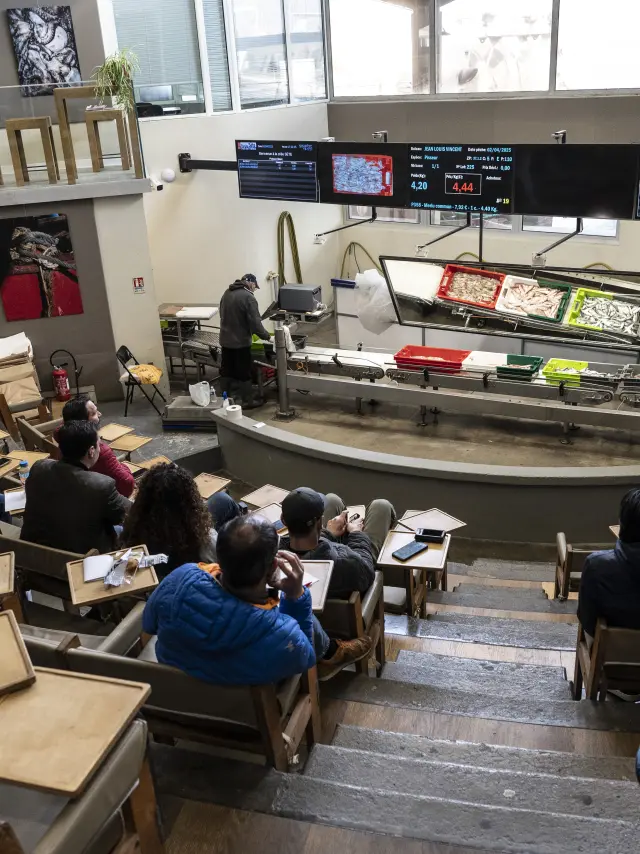
The Sète fish auction, the first fish market in Europe to be computerised, offers several types of fish and shellfish for sale – around 120 species – reserved for professionals in the fishing industry; auctions, either on-site in the fish market’s amphitheatre or remotely via the internet; sales may also be conducted by private treaty.

The Sète fishing port also manages the dry dock area, equipped with lifting gantries (with capacities of 20 and 300 tonnes) and a retention system (to protect the environment), enabling fishing vessels and pleasure craft to be hauled ashore and maintained. Finally, the Frontignan fisheries zone is dedicated to the establishment of businesses in the aquaculture and fisheries sectors.

Fishing has long been a traditional industry at the port of Sète

By the end of 2022, the fish market building had been completely refurbished, improving the handling of produce, enhancing quality and modernising the structure to make it more energy-efficient.

The Sète fish auction is an iconic landmark in the town of Sète; it is a market exclusively for trade, where fishermen sell their freshly caught fish at auction.

The Sète fish auction is particularly renowned for the quality of its Mediterranean fish and seafood. It is one of the region’s main fishing ports; every afternoon when the fishing boats return, local fishermen bring their catch to the auction for sale.

The buyers – professionals, usually fish wholesalers and restaurant owners – gather to try to secure the various lots of fish and seafood at the best price. The fish is displayed, and the descending-bid auctions take place rapidly, at a brisk pace.