©

Thau ceramics

|

S_GRANDJEAN_OT-THAU

A Unique Land When ceramics capture the spirit of Sète

In the creative space of La Boussole à Facettes, Cyrielle Garrigues’ hands shape far more than just ceramics. They sculpt memories, engrave traditions, and imprint the identity of a town she did not see come into being, but which she has chosen. Welcome to Terre Singulière, where every piece is a declaration of love for the Île Singulière.

Updated on 15 June 2026

FROM A BRETON PASSION TO A STORY FROM SÉTOS

Cyrielle was born in Saint-Brieuc, in Brittany. As a teenager, she took pottery classes during the summer holidays, a passion that would lie dormant for years. Ceramics returned to her life as an adult, serving as a refuge during her studies. “When I needed to clear my head, I went back to pottery classes. It was a hobby that really allowed me to switch off.”

In 2017, everything changed. A friend who runs a restaurant commissioned her to make bowls she couldn’t find in shops. At the same time, Cyrielle discovered Sète. It was love at first sight. She left her job and set up Terre Singulière. “It just happened naturally; it was meant to be.”

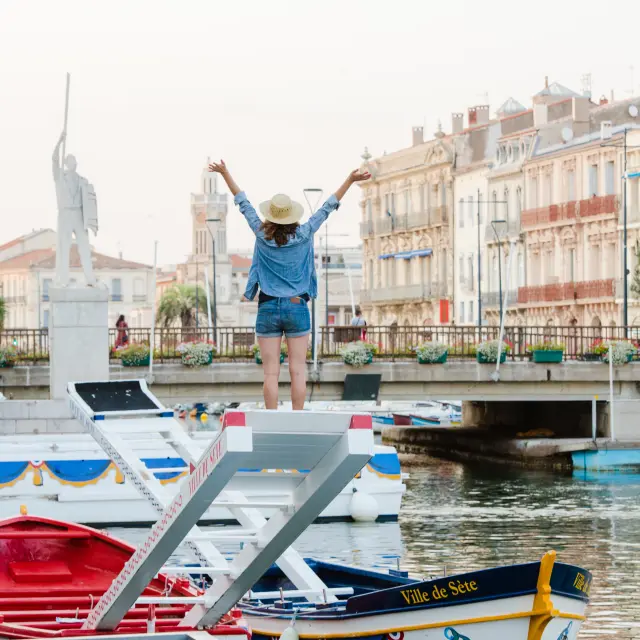
The name of her studio says it all. Paul Valéry nicknamed Sète “l’Île Singulière” (the Singular Island). When Cyrielle began working with clay in this town, the connection came naturally: Terre Singulière. Later, when she moved her workshop to Rue Paul Valéry, “I thought to myself that the stars had aligned.”
A UNIQUE TECHNIQUE IN THE SERVICE OF TRADITION

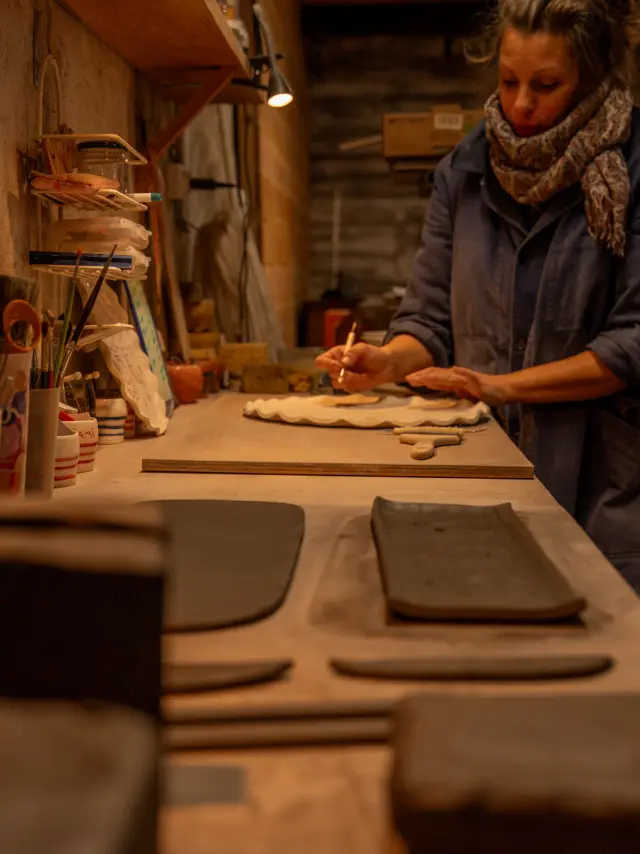
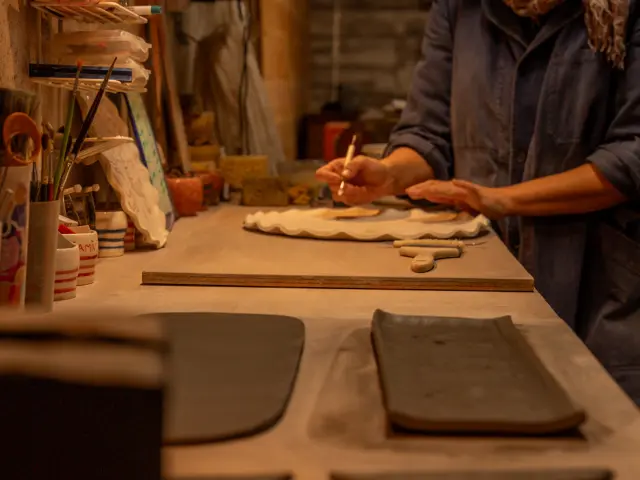
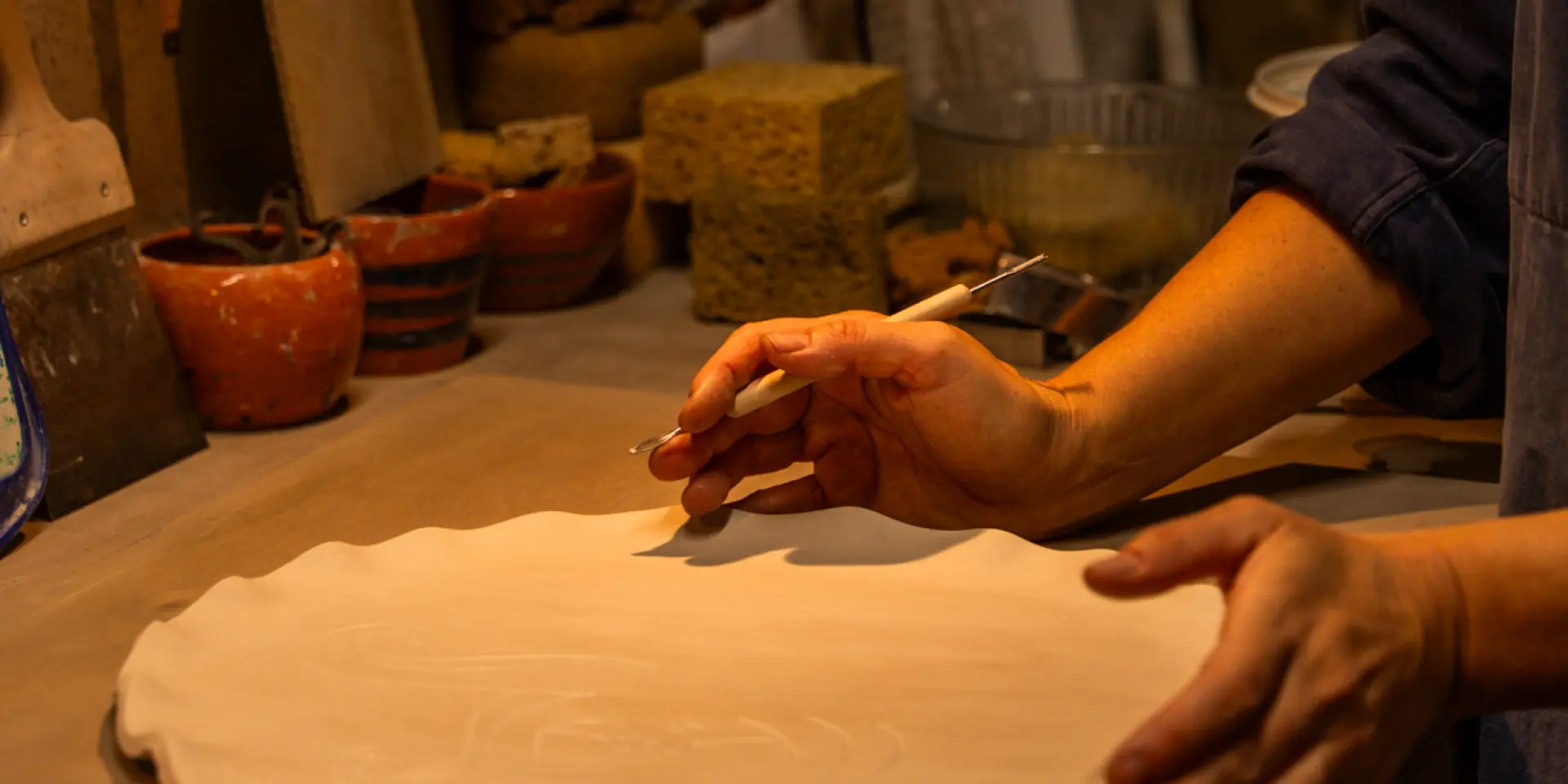
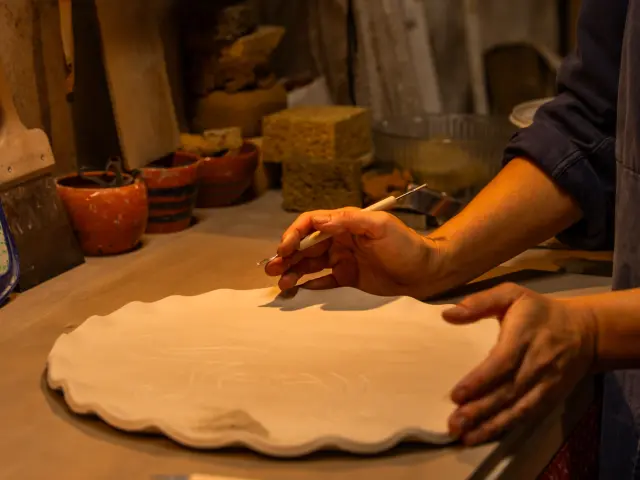
Push open the workshop door. On the workbench lie slabs of fresh clay, tools and moulds. Cyrielle works with red earthenware which, once fired, reveals tiny black grains reminiscent of beach sand.

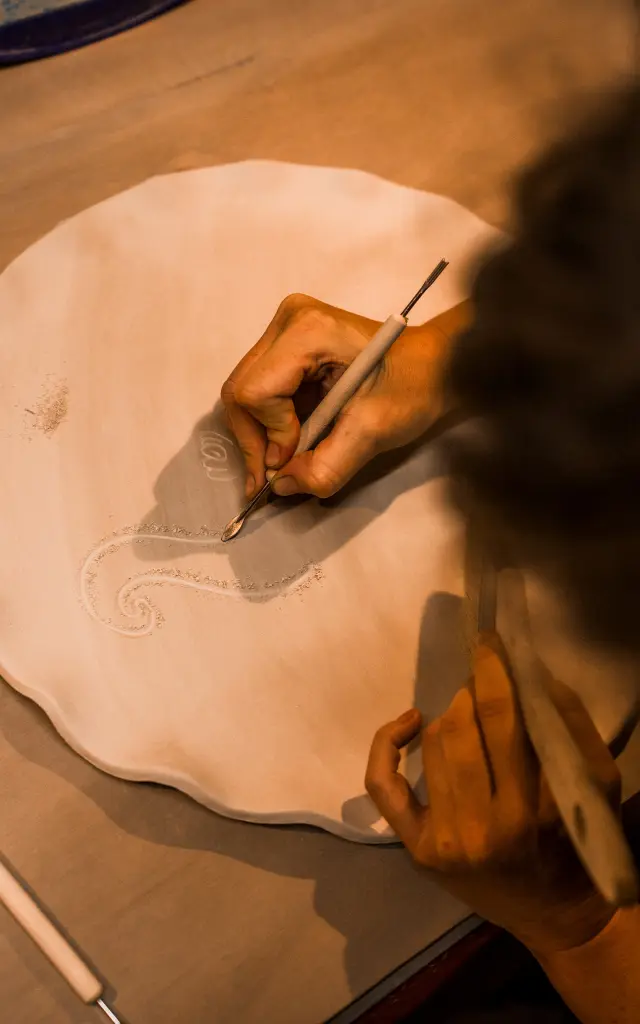
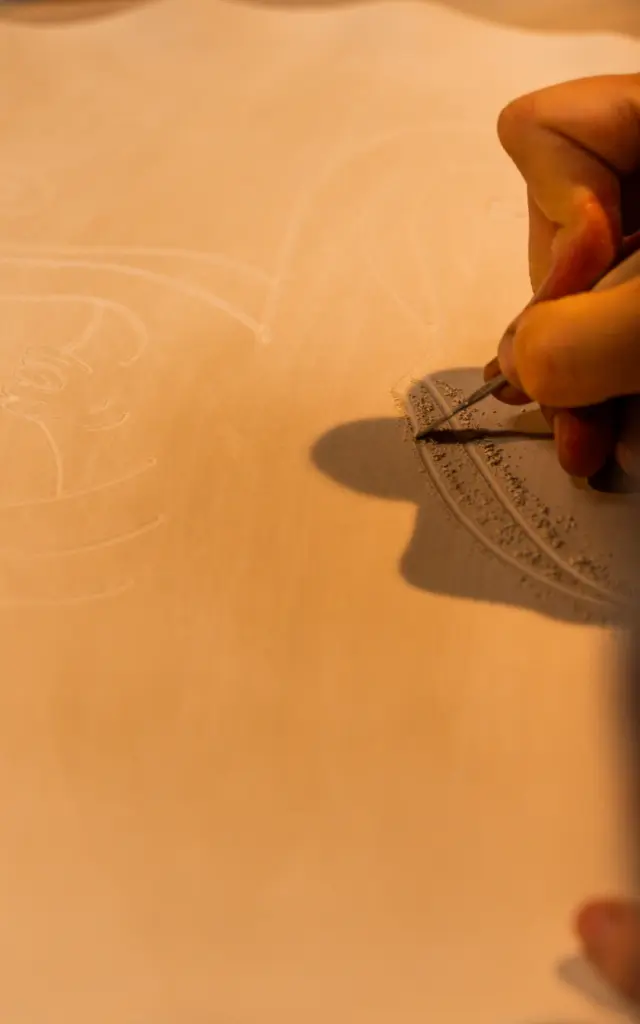
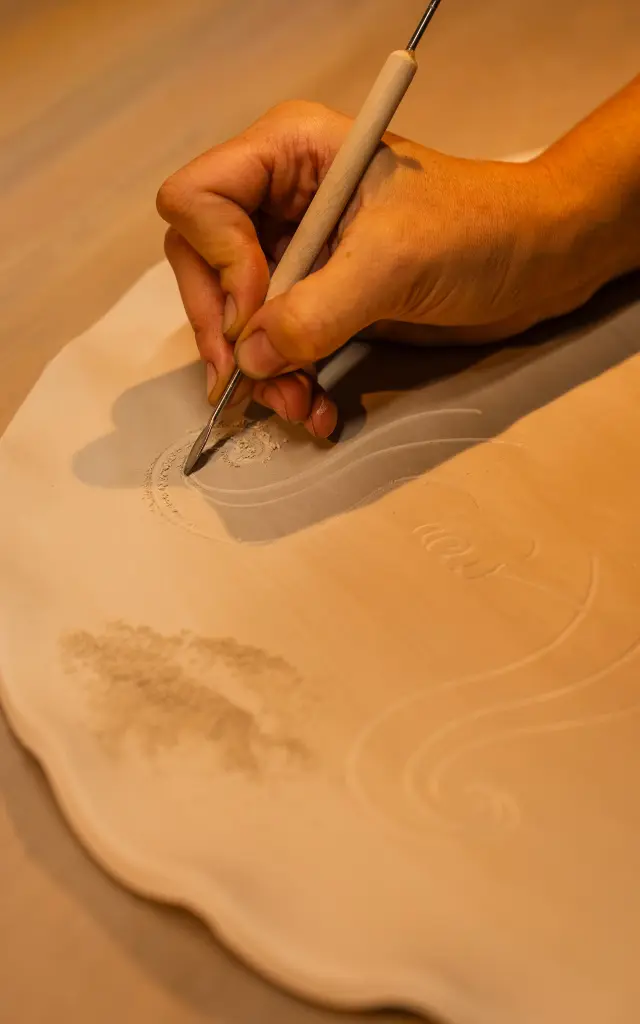
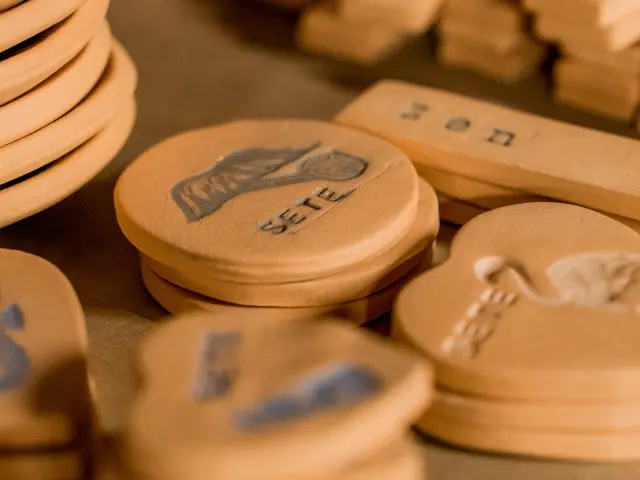
Her technique? A subtle blend of engraving, printing and inlay. “Actually, I don’t really think I’m much of a draughtswoman. So by using this stamping method, I just need to know how to press the object firmly into the clay while it’s still fresh. That’s how the symbol emerges.”

Watch her at work. She passes the clay through a rolling pin, “it reminds me of my mother rolling out her pastry,” then comes the magical moment: the imprint. A real oyster shell, a mussel, a rosemary leaf. “With a real plant, you get a level of detail I could never achieve with a drawing.”

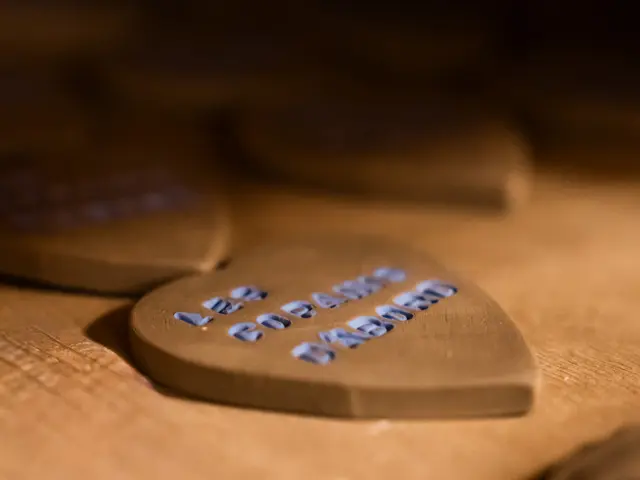
The engravings are done by hand. An octopus with eight tentacles, a sardine, a sea bream. Then comes the pigment, blue as the sea, black as ink, which slips into the inlays. “I really like that texture, that relief; it really adds an extra touch.”

The process takes time. At least a month between shaping the piece and the final enamelled result. “ We work with the elements, the weather. Time is of the essence.”


A TRIBUTE TO SETO CUISINE

In the window of La Boussole à Facettes, the creations tell the story of Sète. There is the famous tielle dish, its signature piece, featuring the imprint of a pufferfish. The oyster plates come in the colours of the bay: sea blue, sunset red, yellow, black and purple. Some feature imprints of real shells. Others feature pasta shaped like letters spelling out the word ‘Macaronade’. There are also magnets bearing the image of Sète, ‘pavois’péro’ plates, pizza dishes adorned with rosemary, and those little plant sticks inscribed with quotes from Paul Valéry or Brassens.

Each symbol tells a story. Sardines, sea bream, seahorses, anchors, boats… “I was born in Brittany, so I have quite a strong connection to the sea. I feel very attached to Sète because of its link to the harbour and the water. ” Her collection has grown over the past eight years, and every piece remains unique. “The way I position the shell ensures that each piece is unique.”


THE FACETED COMPASS: SHARED CREATIVITY

Since the summer of 2023, Cyrielle has been working at La Boussole à Facettes, a hybrid space that combines a workshop and a shop for local designers. “It allows me to bring the workshop and the shop together in one place. And then there’s the direct contact with customers who can place orders with us.”

Because Cyrielle also does bespoke work. Restaurants ask her for specific plates, and private individuals want to personalise a piece. “ It starts with a request, and then I put my own spin on it, and that adds a piece to the collection.”

Going further...