©

Jousting tournaments

|

C_SOSPEDRA_OT-THAU

St Louis’s Day Celebrations

It’s Monday! The penultimate day of the Saint-Louis festivities, which began on Thursday. It’s been a very full weekend for me. Between the various parades representing all the neighbourhoods, the famous square-ball tournament, the tribute to railway workers and the concert at the Théâtre de la Mer. We’re rounding off the festivities with the ‘heavyweight’ jousting tournament!

Updated on 15 June 2026

Jousting tournament

We meet up in the morning with friends at the Town Hall Square, or as the locals also call it, ‘Place du Poufre’*. We’re waiting for the famous macaronade! Jousters and locals eat this dish on special occasions or on Sundays with the family, but especially before Languedoc jousting tournaments.

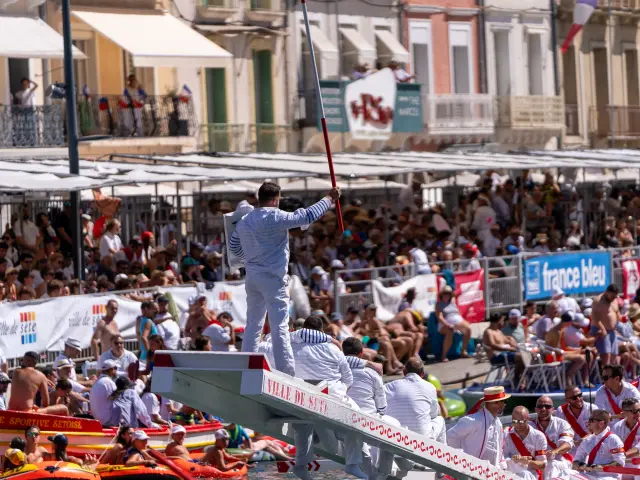
Tomato sauce, sausage – having dressed in white for the occasion, I’d better watch out for stains! And just as I’ve time for a quick coffee, the jouster’s procession gets underway in front of the town hall; I decide to follow the march to the beat of the peña, the drums and the oboes. The jousters set off for battle! They’re ready, dressed in white, heading towards the canal, ready to board. I take my seat in the stands; the atmosphere is electric, the Ventres Bleus (Frontignan supporters) are in place and raring to go. I’m told this is the only tournament of the festival open to jousters from other towns, so the supporters are here this Monday to cheer on their own.

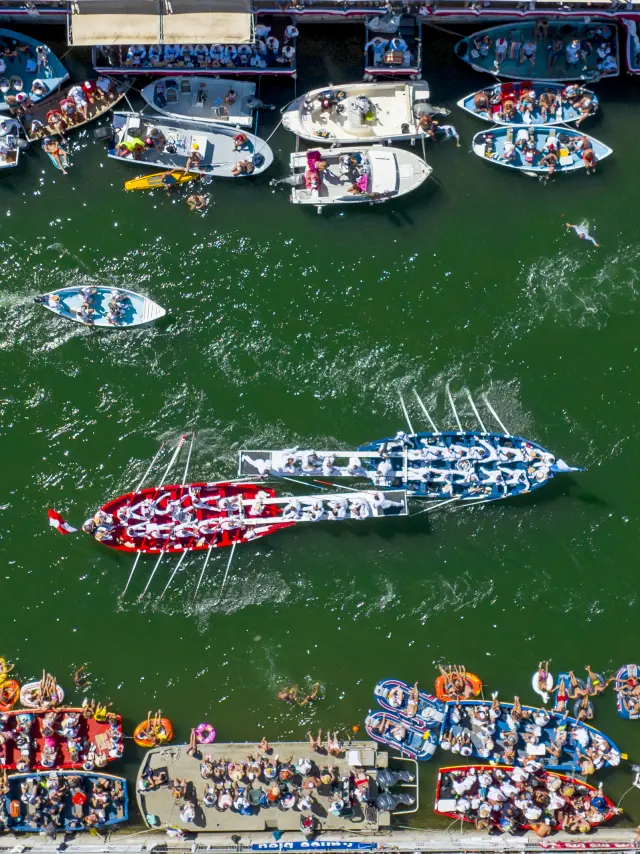
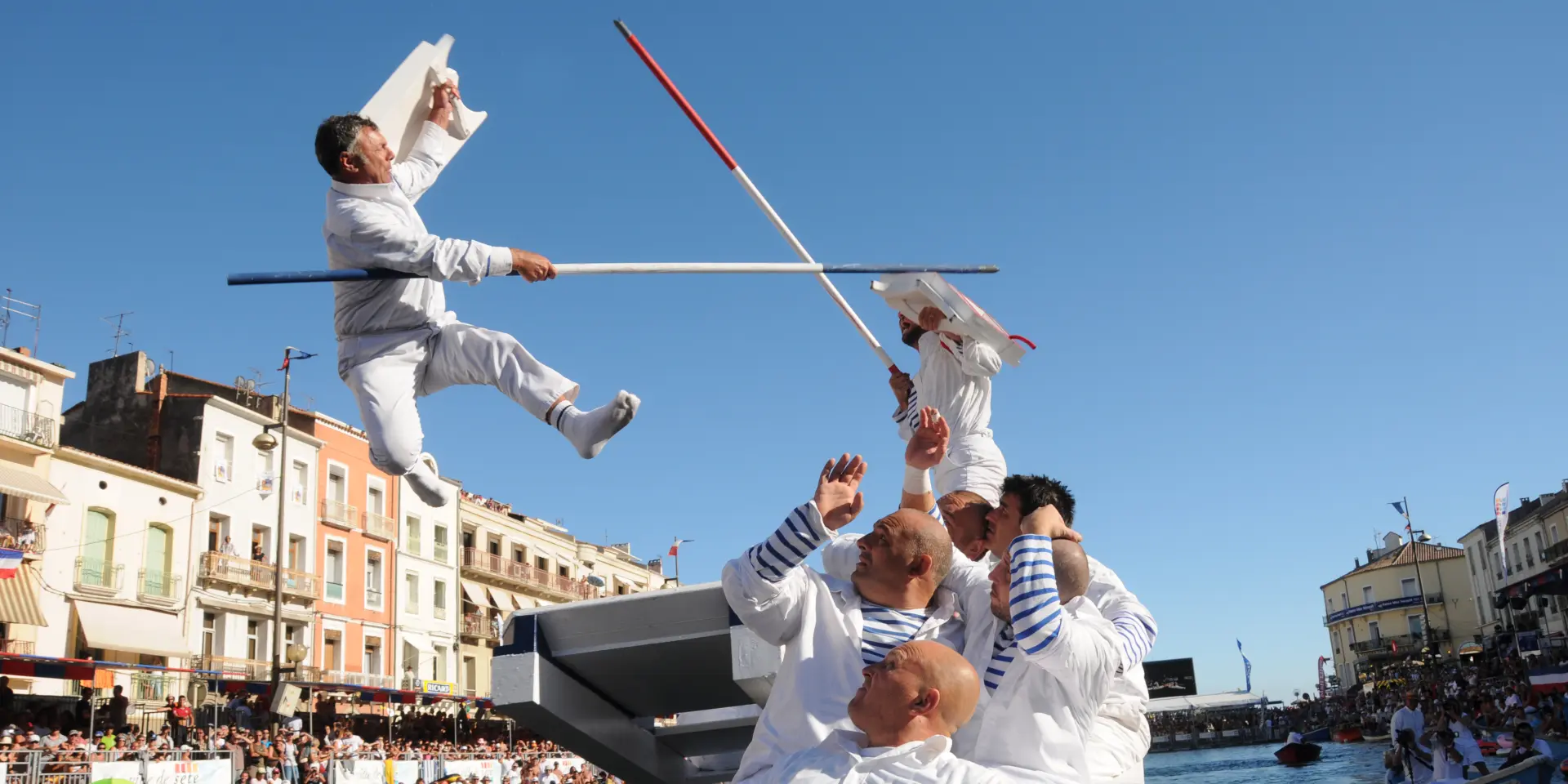
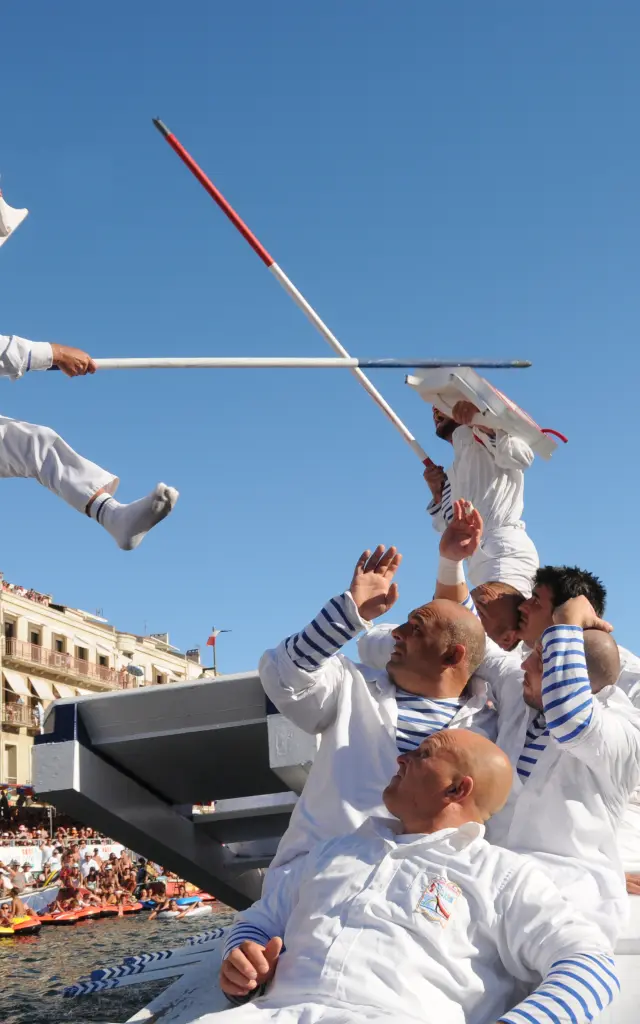
The procession of boats opens the tournament, as is traditional every year. The first one passes… It’s impressive: the length of the lance (2.80 metres), the height of the platform (where the jouster stands), the rowers. They qualify as the afternoon progresses; after all, you have to manage to knock three opponents into the water, which is no easy feat. The hours pass; it’s 8 pm, and we’re at the grand final of the ‘heavyweight’ category. It’s impressive: the crowd is there, the applause, every town cheering on its jouster. The pressure mounts—who will win the Saint-Louis?

*‘Poufre’ is also the name the people of Sète give to the octopus.
DID YOU KNOW?

Every year, the town of Sète asks a local artist to design the Saint-Louis poster. Di Rosa, Combas, Cervera, Cosentino, Vilar, Topolino, Marc Duran, Christopher Dombres… have all taken turns to undertake this task in recent years.

A little history

Sète was founded amidst the festive atmosphere of the Languedoc jousting tournaments. But it was not until many years later that oboes and drums would resound once more to celebrate Saint Louis’s Day. Until the end of the Ancien Régime, these celebrations were limited to a modest festival inhonour of Louis XIV, the king who founded the port. They were interrupted by the Revolution before resuming in 1806.

It was in fact the mayor of Sète, Emile Doumet, who took the initiative in 1853 to lend some splendour to this local festival, in response to the opening of the Cette–Toulouse railway line and the influx of ‘outsiders’ coming to watch the Sunday jousting tournament. But it was at the start of the 20th century that the festival really came into its own, enriched by boat parades, concerts, cycle races and the first swims across the canal from Cette, whilst epic jousting contests took place on the Canal Royal in front of thousands of spectators.

GOOD TO KNOW

The jousting tournaments are preceded by a parade of jousters, all dressed in white, accompanied by traditional music. The jousters are then invited to climb onto the tintaine to start the tournament.

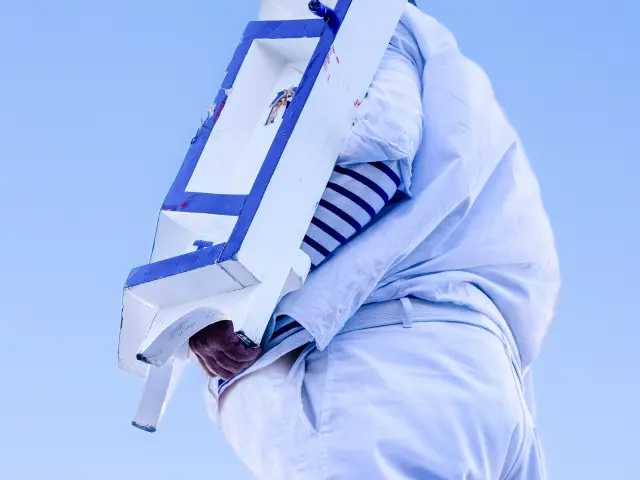
At the moment of the charge, the two boats (red and blue) brush past each other on the right to allow the jousters to perform ‘the pass’ using the ‘shield’ and the ‘lance’. The jouster who remains standing on the tintaine wins the round.

In August, for a week, the Saint-Louis festival offers spectacular jousting tournaments! This festival has existed since the founding of the port of Sète on 29 July 1666, which is also the day on which the first Languedoc jousting tournament took place in Sète.

Going further...