©

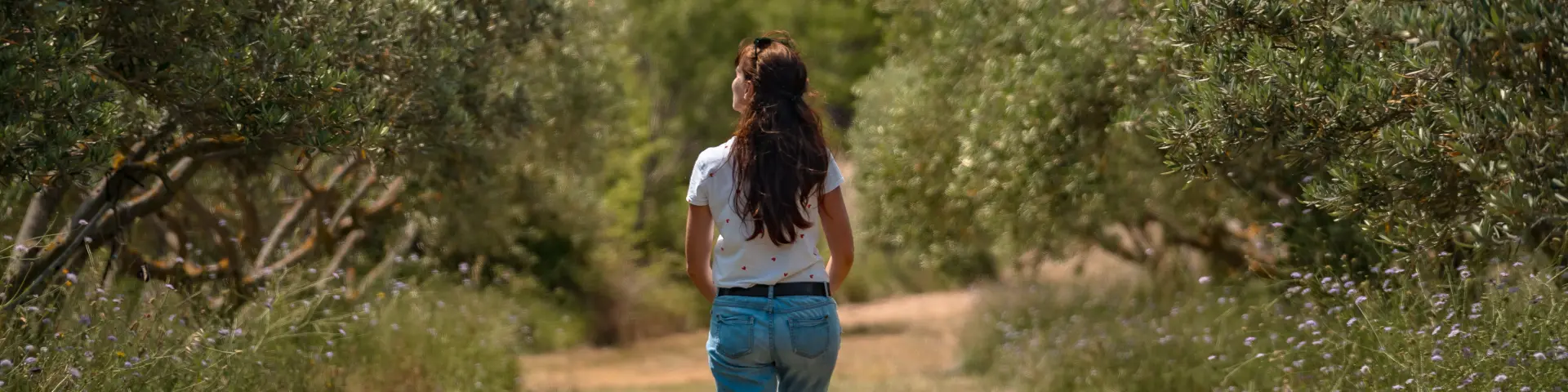
The Moulin de la Dentelle Olive Grove

|

S. Ceron_OT Thau

Flora and Fauna of the Thau Archipelago Exceptional Mediterranean biodiversity

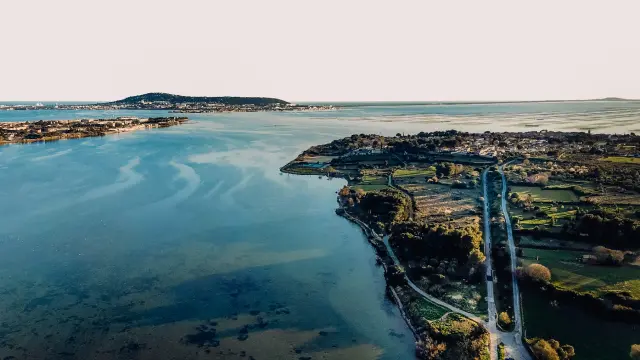
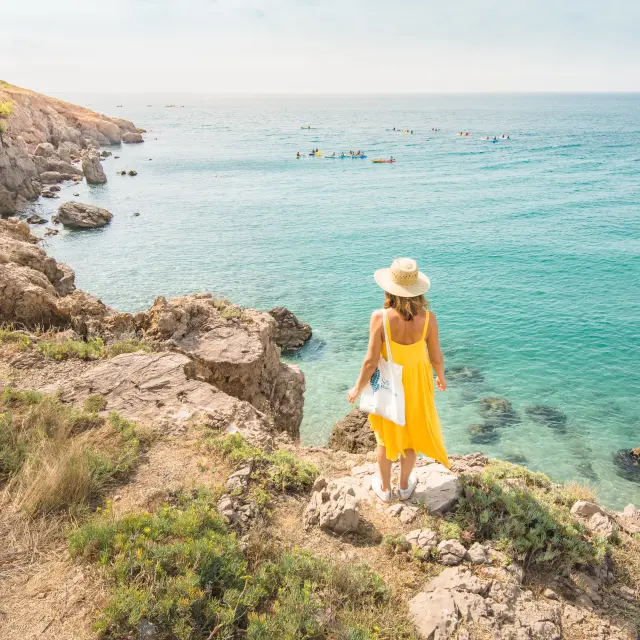
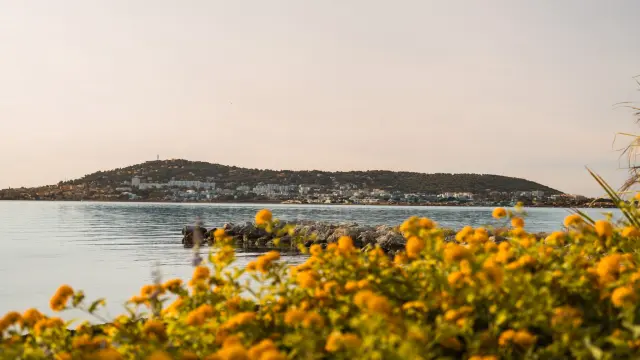
Between the sparkling Mediterranean to the south, the Thau lagoon stretching across 7,500 hectares, and the garrigue-covered hills rising towards the Gardiole massif, the Thau Archipelago is home to a mosaic of remarkable ecosystems. Each natural environment has developed its own unique flora and fauna, adapted to the specific conditions of the area: saltwater for some, the Mediterranean drought for others. Classified as a Natura 2000 site covering over 8,320 hectares, this biodiversity is subject to close protection. Let’s set off to discover these natural treasures that make the Thau Archipelago a true ecological gem.

On the Thau Lagoon side The green lungs of the Mediterranean

Beneath the waters of the Thau lagoon lies a little-known treasure: one of the largest seagrass beds on the Languedoc coast. These submerged meadows cover nearly a third of the lagoon, or 2,400 hectares. Two species coexist: Zostera marina and Zostera noltii, marine plants that resemble long grasses swaying in the current.

These seagrass beds play a crucial role. Acting as a nursery for fish, a spawning ground and a prime habitat for dozens of species, they fulfil the triple function of refuge, larder and nursery. Their state of conservation reflects the good health of the lagoon. The absence of tides in the Mediterranean provides them with ideal conditions: a constant water depth that prevents freezing and allows them to be maintained through vegetative reproduction.

As for aquatic fauna, the figures speak for themselves. The lagoon is home to 88 species of fish, including 16 sedentary species such as the spotted seahorse, the peacock blenny and the spirograph. Of these, 17 are considered rare and 40 exceptional. There are 70 species of molluscs (cuttlefish, clams, oysters, mussels), 110 species of crustaceans (crabs, prawns, sea fleas), and 12 species of echinoderms (starfish, sea urchins), not to mention 18 species of coelenterates (corals, anemones, jellyfish).

Plankton is also abundant: 125 species of zooplankton (microscopic crustaceans, fish and mollusc larvae), over 100 species of protozoa, 196 species of plants and 100 species of phytoplankton. This extraordinary abundance explains why the lagoon reaches a maximum depth of 11 metres, making it the deepest in the Languedoc after the Étang de Berre.
Wetland birds

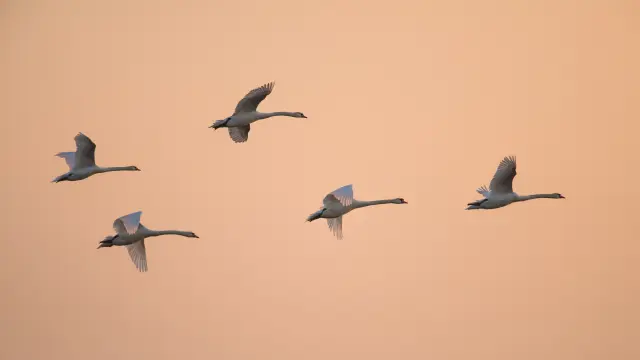
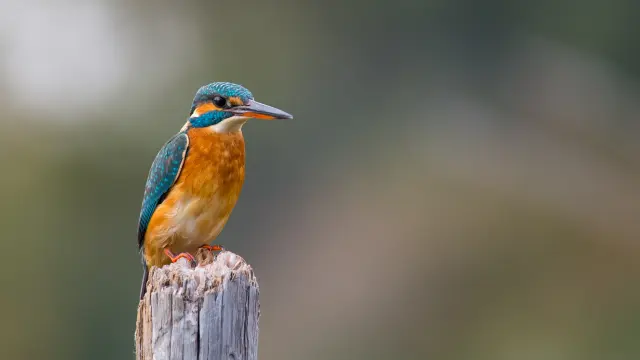
The lagoon’s edges are home to 14 wetlands designated as Natura 2000 sites: salt marshes, reed beds, beaches and dunes. These habitats are home to 15 bird species protected at European level. In particular, the lagoon is home to the main breeding colony of Mediterranean terns on the French Mediterranean coast, a species classified as being of Community interest due to its rarity.

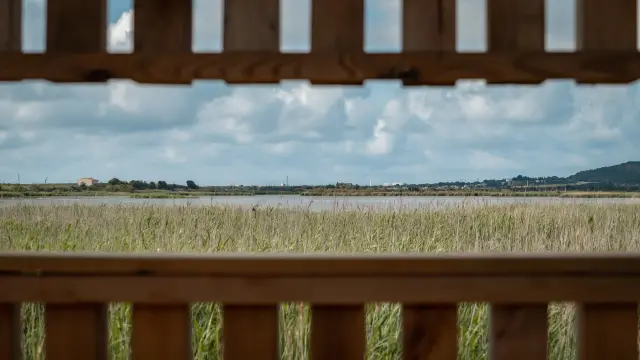
The Crique de l’Angle at Balaruc-le-Vieux serves as a refuge for large waders: resident flamingos, black-headed gulls, gulls, avocets, egrets, great crested grebes and grey herons. The marsh harrier, mallard and shelduck can also be seen here. In summer, migratory birds come to nest in the waters: terns and plovers. In winter, other species visit the pond during their migratory journey: great cormorants and reed buntings.

On the Mediterranean coast Amidst dunes and protected pine forests

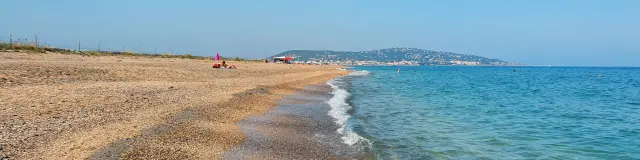
The Lido, which stretches for twelve kilometres between the lagoon and the Mediterranean, forms a fragile ecosystem designated as a Natura 2000 site. The dunes, stabilised by specialised vegetation, are home to rare species protected by the Conservatoire du Littoral. This dune flora clings to the shifting sand thanks to deep roots and withstands the salt carried by the sea spray.

The Bois des Aresquiers stretches its pine forest between the lagoons and the Mediterranean. This nine-kilometre-long wooded strip protects a remarkable biodiversity. Maritime pines and stone pines provide shade for a whole range of Mediterranean wildlife. In the former salt marshes, now converted into wetlands, flamingos and grey herons wade in search of food.

The Bagnas Nature Reserve near Marseillan covers 600 hectares of wetland. The figures speak for themselves: 200 species of birds, 16 species of reptiles, 9 species of amphibians, 30 species of mammals, 25 species of fish and 418 species of insects. This exceptional concentration of biodiversity explains why it has been designated a Natura 2000 site and is open to the public for guided tours throughout the year.

On the scrubland side

 The world of aromatic plants

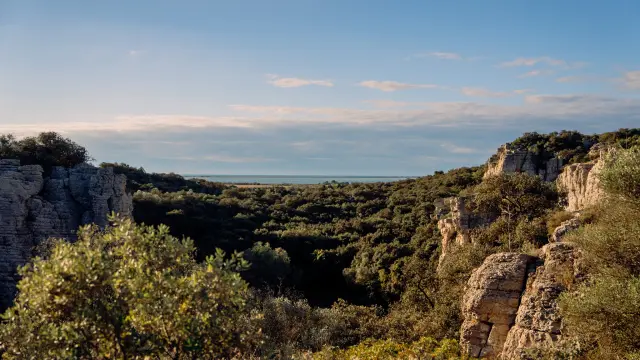
As you climb towards the hills that encircle the lagoon to the north, the landscape changes. The garrigue takes over, that low, open vegetation typical of Mediterranean limestone soils. It takes its name from the kermes oak – garric in Occitan – a prickly shrub with leathery leaves that withstands fire and drought admirably.

Spring transforms the garrigue into an explosion of colours and scents. The yellow of Spanish broom and Provençal gorse splashes across the slopes. The pink of the cottony rockroses, whose leaves are covered in insulating white felt, blends with the purple of thyme and lavender. The blue of the Montpellier asphodel and the white of the asphodels punctuate the scene. Wild orchids take advantage of the spring rains to display their delicate forms in all their diversity.

Aromatic plants reign supreme: thyme, rosemary, oregano and savory exude their volatile essences, which protect them from the sun and herbivores. The cade juniper, recognisable by its highly fragrant wood, grows alongside the terebinth pistachio, the narrow-leaved filaria, and the winged buckthorn. These shrubs have developed remarkable adaptations: small, leathery leaves to limit evaporation, deep roots to reach water, and the ability to regrow after a fire.

 The wildlife of the garrigue

This vegetation is home to a discreet but very much present fauna. The shrill song of the cicadas accompanies the Provençal summer. Reptiles bask on the rocks: the ocellated lizard (the largest in Europe), the Montpellier grass snake, and the green lizard. Birds also inhabit the area: red-legged partridge, subalpine warbler, southern wheatear, red-headed shrike, ortolan bunting and wheatear.

Mammals are harder to spot but inhabit the garrigue: wild rabbits, foxes and wild boars, which find refuge and food in these stony expanses. At night, nocturnal birds of prey hunt, taking advantage of the abundance of small rodents.

On the Gardiole side Between scrubland and Mediterranean forest

The Gardiole massif, which rises to 237 metres at the Croix de Saint-Antoine, is designated a ZNIEFF (Natural Area of Ecological, Faunistic and Floristic Interest) due to its outstanding natural features. This designation reflects the richness of its ecosystems, which alternate between low-growing garrigue on exposed limestone soils and forests of holm oaks and Aleppo pines on the slopes.
The holm oak (Quercus ilex), larger than its cousin the kermes oak, forms woodlands that provide shade and coolness even in the height of summer. Aleppo pines have adapted to the harsh conditions: poor soil, summer drought and the risk of fire. Their resin protects them, their needles limit evaporation, and their cones are fire-resistant, releasing their seeds once the flames have passed.

In more humid areas, one finds species not typically found in pure garrigue: arbutus trees with edible red fruits, tree heaths, tanners’ sumacs, and wild olive trees. This diversity of trees and shrubs creates micro-habitats that support a varied fauna.

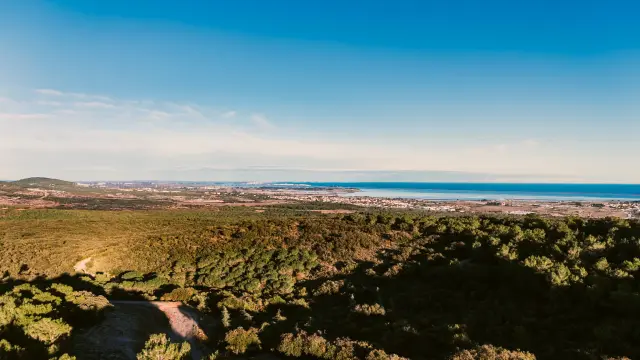
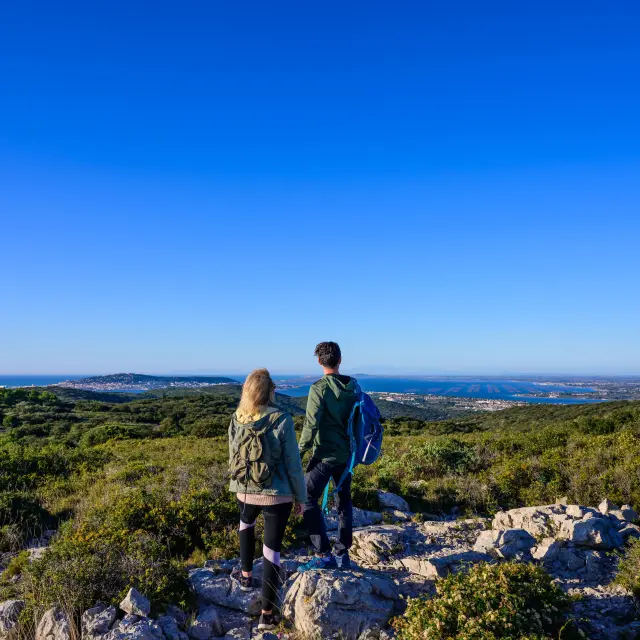
The paths criss-crossing the massif offer spectacular views of the Thau lagoon to the north and the Mediterranean to the south. This natural vantage point allows you to take in the entire mosaic of landscapes of the Thau Archipelago at a single glance: the water glistening below, the oyster beds dotting the lagoon, the villages perched on their promontories, and in the distance the Pyrenees on a clear day.

A natural heritage to be preserved

This exceptional wealth of flora and fauna is not a given. It is the result of a delicate balance between human activities and nature conservation. The Natura 2000 designation covering over 8,320 hectares, management by the Thau Basin Joint Authority, constant monitoring of water quality, and protected areas such as the Bagnas Reserve: all these measures aim to ensure the long-term conservation of this remarkable biodiversity.

Threats do exist: increasing urbanisation, high tourist numbers in summer, pollution risks, and climate change, which is altering the living conditions of species. In the face of these challenges, the Thau Archipelago has opted for responsible management, validated by the award of the Green Destinations Silver 2025 label.

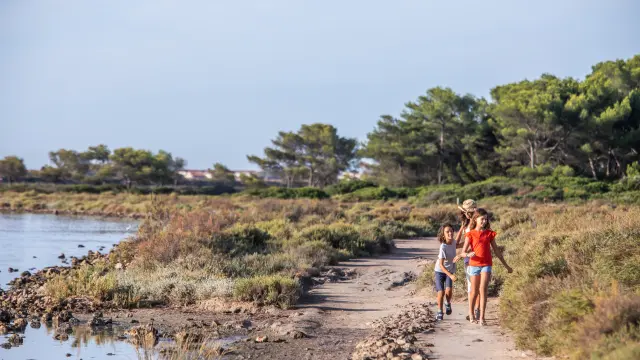
When you stroll through these natural areas, you are walking through a living landscape that is home to 88 species of fish beneath your feet in the lagoon, 200 species of birds above your head, and hundreds of species of aromatic plants that perfume the air you breathe. This bountiful Mediterranean nature can be explored along the marked trails of the Bois des Aresquiers, the Crique de l’Angle, the Gardiole massif and the Bagnas Reserve.

To preserve these treasures: stay on the marked trails, never light a fire, take all your rubbish away with you, do not pick flowers (some rare species are protected), keep your distance from wildlife, and keep your dogs on a lead in sensitive areas. By following a few simple rules, we can ensure that this exceptional biodiversity continues to thrive for future generations.

Sources

Thau Basin Joint Authority – Natura 2000 site FR9101411 “Seagrass beds of the Thau lagoon” • Sète Agglopôle Méditerranée – Documentation on the Thau lagoon • Pôle Lagunes – Interactive map • INPN (National Inventory of Natural Heritage) – Natura 2000 fact sheets • Bagnas Nature Reserve (ADENA) • Thau Archipelago Tourist Office • Conservatoire du Littoral • ABC (Atlas of Local Biodiversity) of the Lagoon