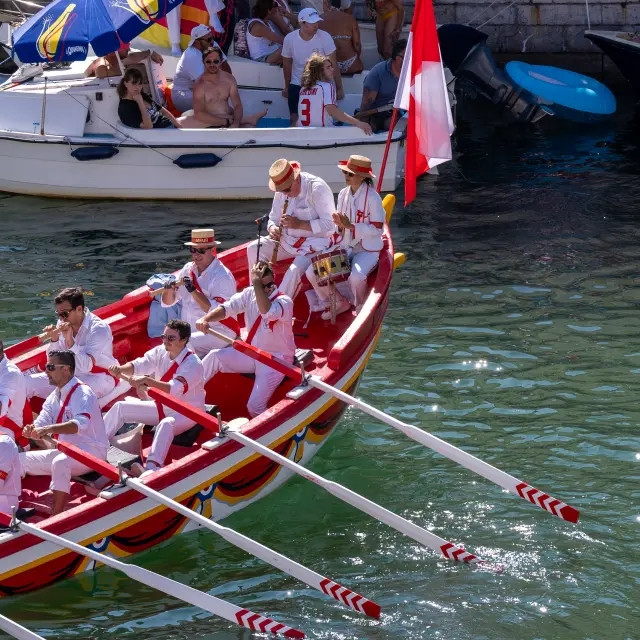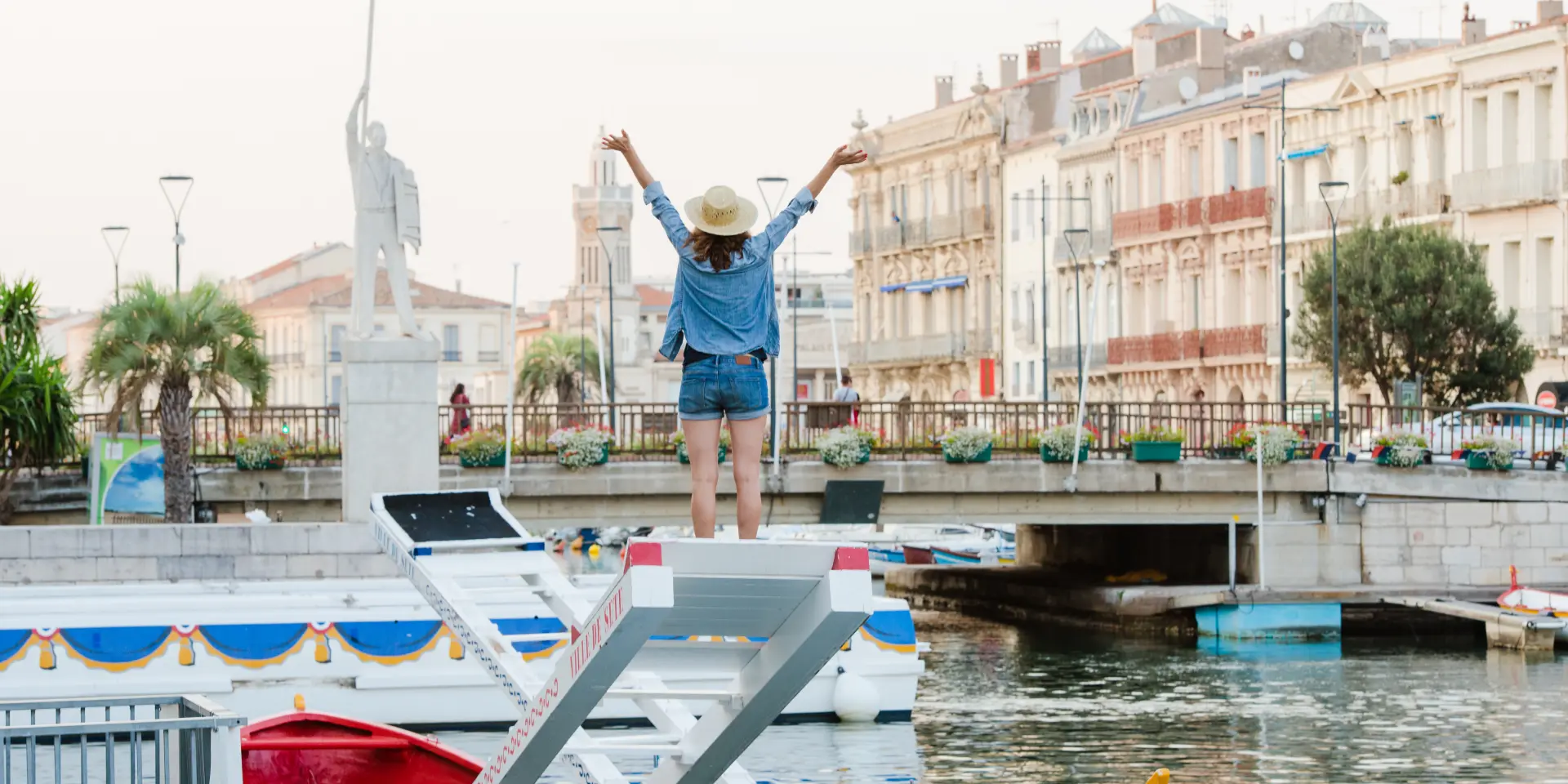
Young woman on a jousting barge, royal box. Quays
©

Young woman on a jousting barge, royal box. Quays

|

N_CHAUVEAU_OT-THAU

Panel 8: The Royal Frame

The Royal Framework

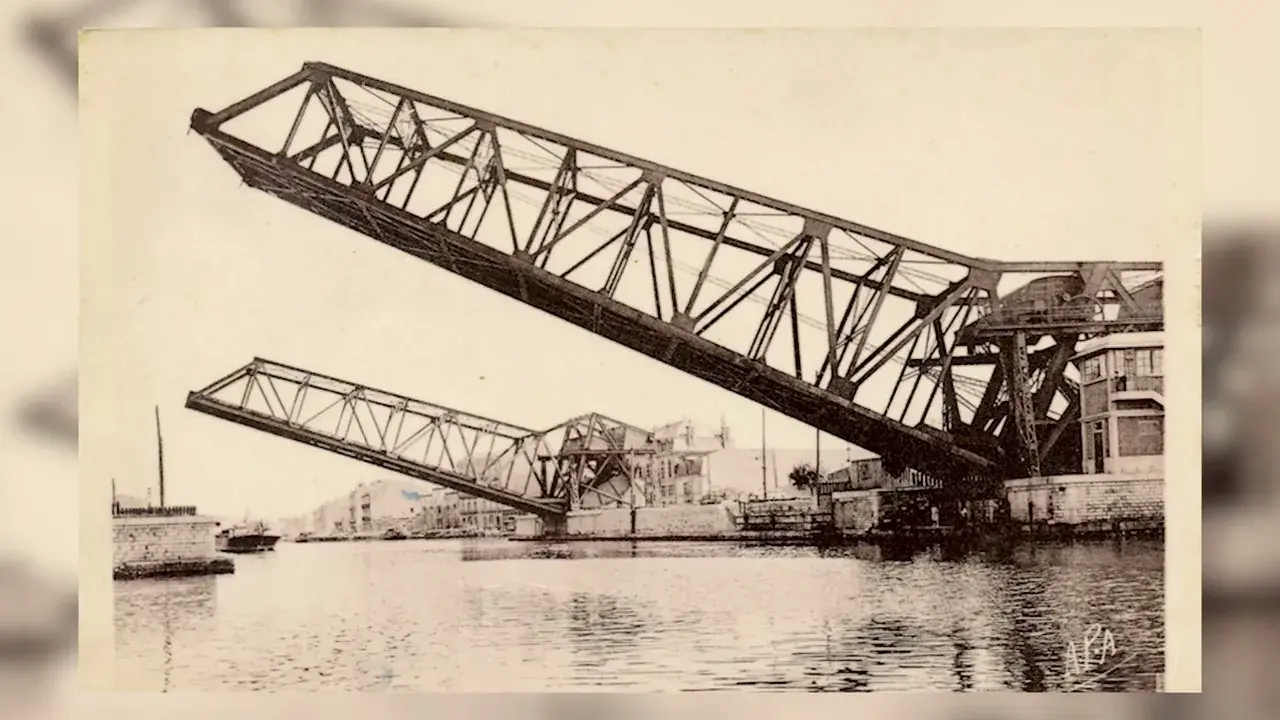
Histoire de Sète : les ponts

Dug between 1776 and 1886, the canal enabled the town to expand. A wooden footbridge once linked Rue Lazare Carnot and Rue Frédéric Mistral. It was removed when two bridges were built: the Pont de la Civette (formerly the Pont Royal, 1844) and the Pont de la Savonnerie (formerly the Pont Legrand, 1842). The town once had as many as six soap factories, which eventually went out of business due to competition from Marseille soap.

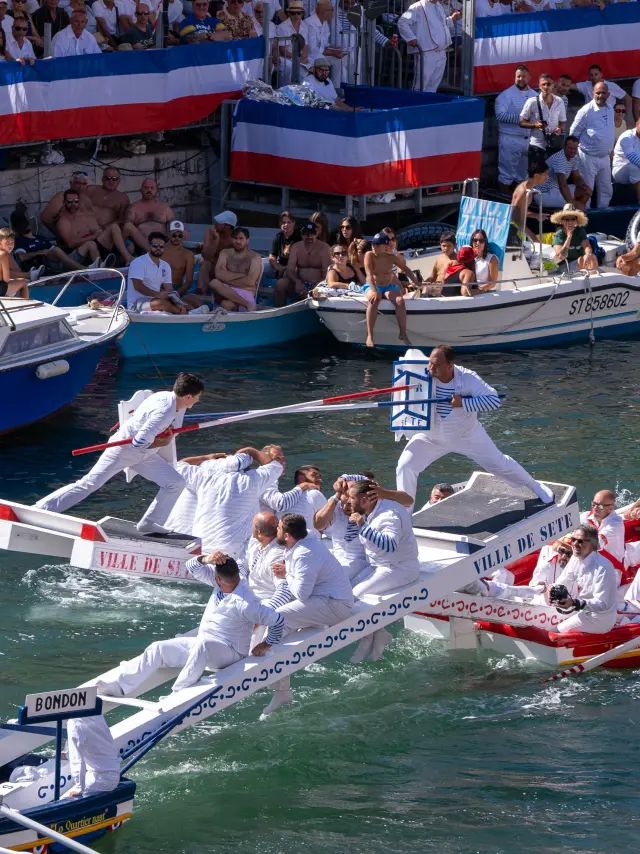
This section of the canal, known as the Cadre Royal and lined with ornate 18th-century buildings, is the summer venue for the hugely popular water jousting tournaments.

Whilst the origins of jousting (recognised as a sport in 1960) date back to antiquity, it was in the 12th century in Aigues-Mortes that knights awaiting embarkation for the Crusades practised combat on small boats. The first water jousting tournament in Sète took place in the Vieux Bassin on 29 July 1666, during the festivities marking the laying of the foundation stone for the construction of the harbour.
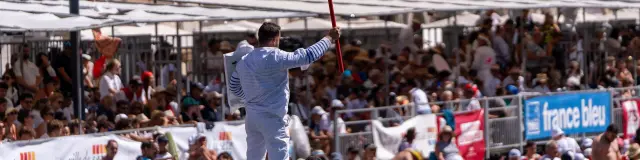
Since 1743, the highlight of the season has been the Saint-Louis tournament, held at the end of August.

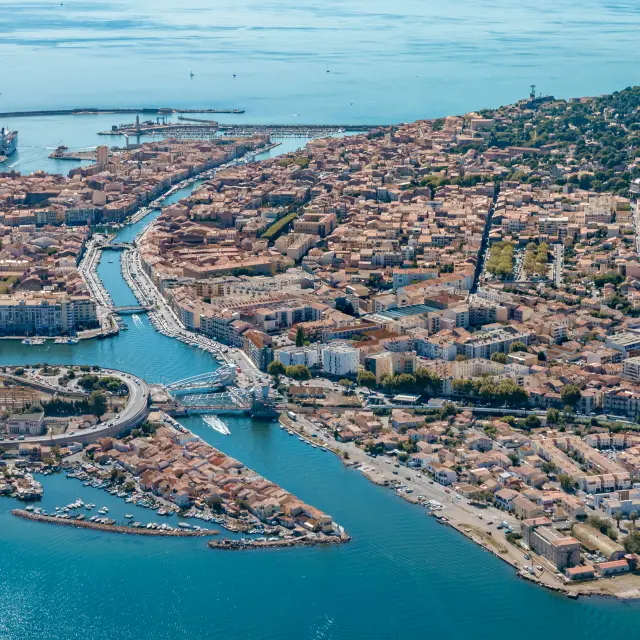
The Cadre Royal in Sète is an iconic and vibrant venue, deeply rooted in the town’s tradition and history. Situated on the Canal Royal, this stretch of the canal is flanked by the Pont de la Civette and the Pont de la Savonnerie, and bordered by the Quai de la Résistance, the Quai Général Durand, and the Quais Charles Lemaresquier and Léopold Suquet. It is against this spectacular backdrop that the water jousting tournaments take place, a Sète tradition dating back to July 1666.

The Canal Royal itself is an engineering masterpiece, created to link the Thau basin to the Mediterranean Sea. It marks the final stretch of the Canal des Deux-Mers, an ambitious project initiated in 1666 by Paul Riquet. This canal, having travelled 240 km and passed through 63 locks, ends in Sète, where it plays a central role in the life of the town.

The transformation of the Cadre Royal into a veritable water sports arena begins every year in June with the erection of the stands along the quays. These stands, which can accommodate nearly 3,000spectators, stand proudly for the water jousting tournament season.

During the week of Saint Louis’s Day, the excitement reaches its peak, with the stands filling with enthusiastic spectators and the waters of the canal coming alive with boats full of enthusiasts.

Preserving several functions of the site

The Cadre Royal is more than just a venue; it is a performing arts centre where the town of Sète is revealed in all its splendour. The water jousting events are more than just a sport; they are a cultural tradition deeply rooted in Sète’s identity. Visitors and locals alike gather here to celebrate the city’s competitive spirit, camaraderie and unique maritime heritage.

As such, the Cadre Royal in Sète is an unmissable destination for anyone wishing to enjoy an authentic and vibrant experience, typical of Sète’s culture. It is a place where history, sport and community come together, offering a captivating spectacle and an immersion in the true spirit of Sète.