©

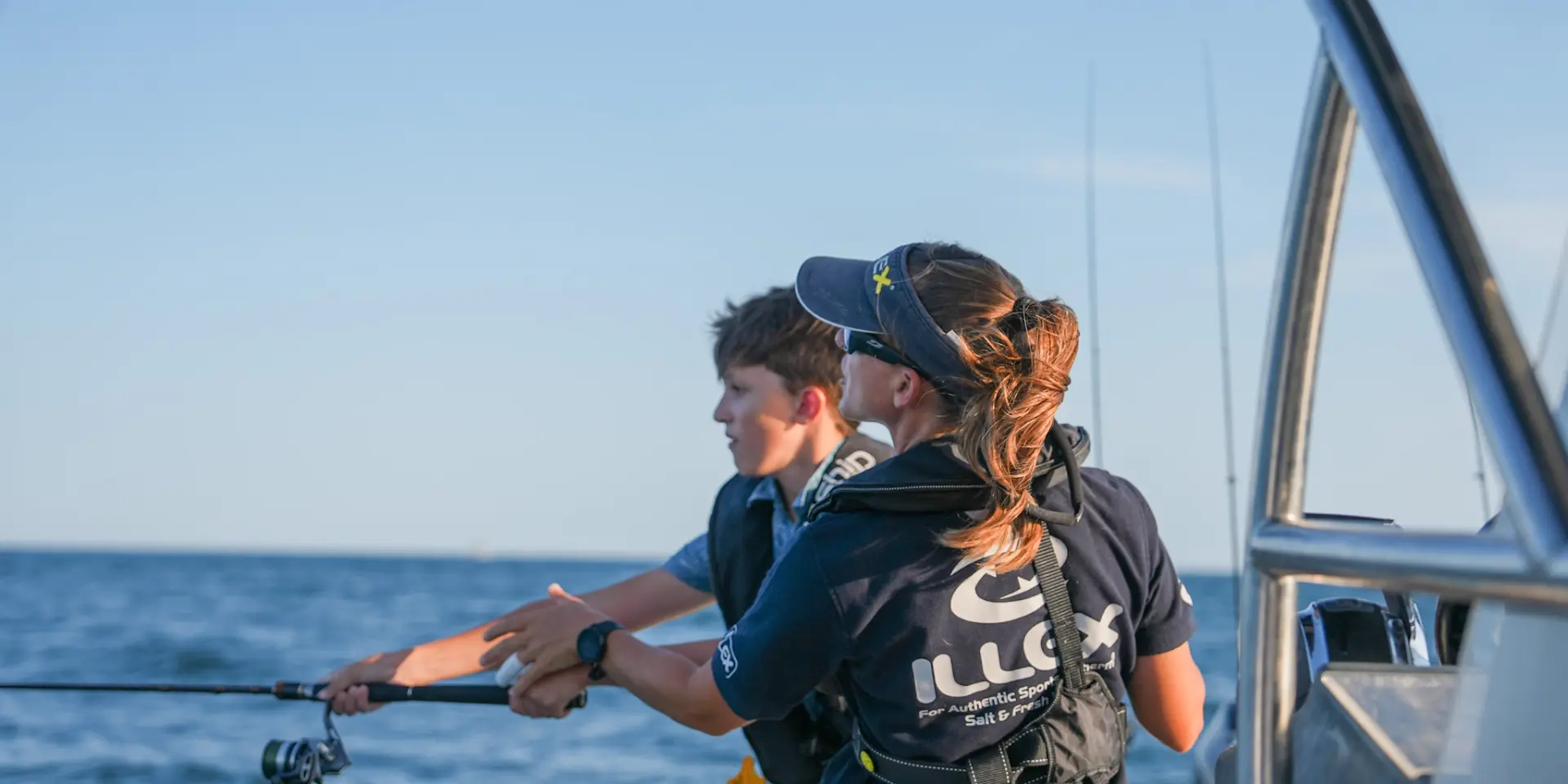
Fishing trip with Maesya Fishing in Frontignan

|

S_GRANDJEAN_OT-THAU

Small-scale fishing in the Thau Archipelago

Maritime traditions and expertise

The Thau Archipelago has lived in harmony with the sea for centuries. Long before shellfish farming shaped the lagoon’s landscape with its oyster beds, fishermen were already sailing the lagoon and the Mediterranean. This small-scale, traditional fishing, practised from generation to generation, still shapes the region’s identity today. In Sète, the leading fishing port on the French Mediterranean coast, in Mèze and its Port des Nacelles, or in Marseillan, traditional techniques coexist with modernity. Discover the history and the people behind this fishing industry that feeds the local region.

Sète The leading fishing port in the French Mediterranean

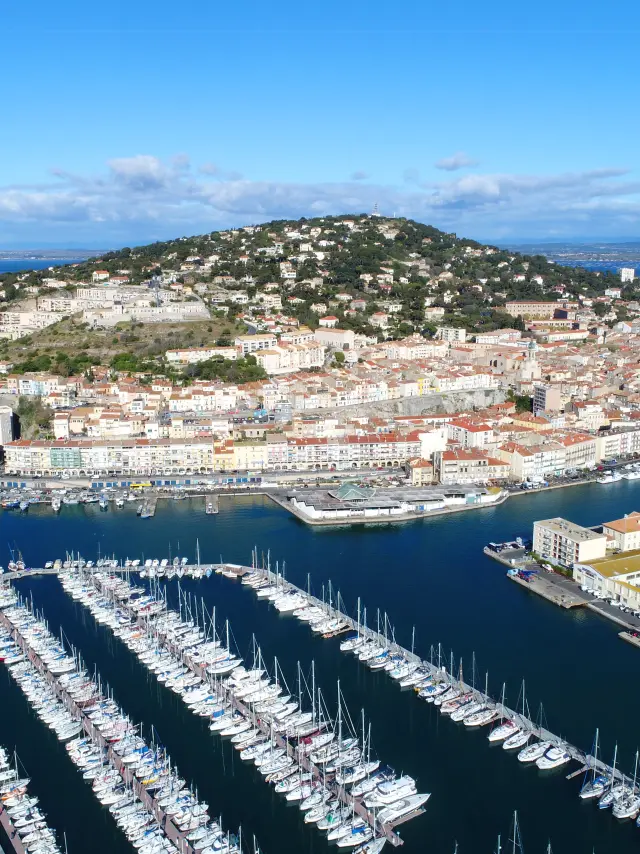
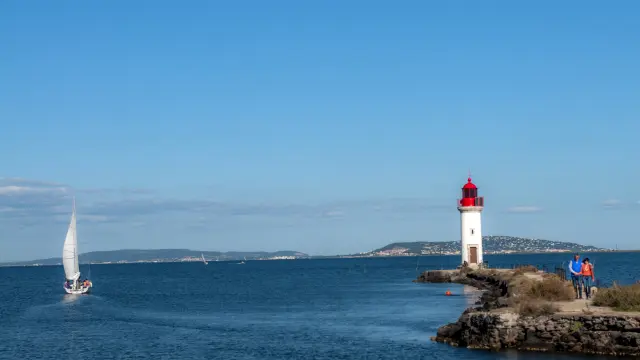
When Louis XIV decided in 1666 to build a port to link the Canal du Midi to the Mediterranean, he had no idea that Sète would become the leading fishing port on the Mediterranean coast. The old harbour basin, sheltered by the Saint-Louis jetty built at the town’s founding, has always been home to fishing boats. Even today, the spectacle of the trawlers returning each afternoon attracts onlookers from the promenade overlooking the harbour.

In the 18th century, Provençals and Italians from Genoa and Naples introduced tuna fishing techniques. The people of Sète adapted quickly and supplanted the foreigners by 1874. They developed drift-net fishing to catch sardines, mackerel and tuna. Later, at the start of the 20th century, ‘bœuf’ fishing emerged: two boats would pull a ‘ganguy’ net together, guiding the fish into a bag. In response to abuses, trawling became an individual activity in the 1930s.
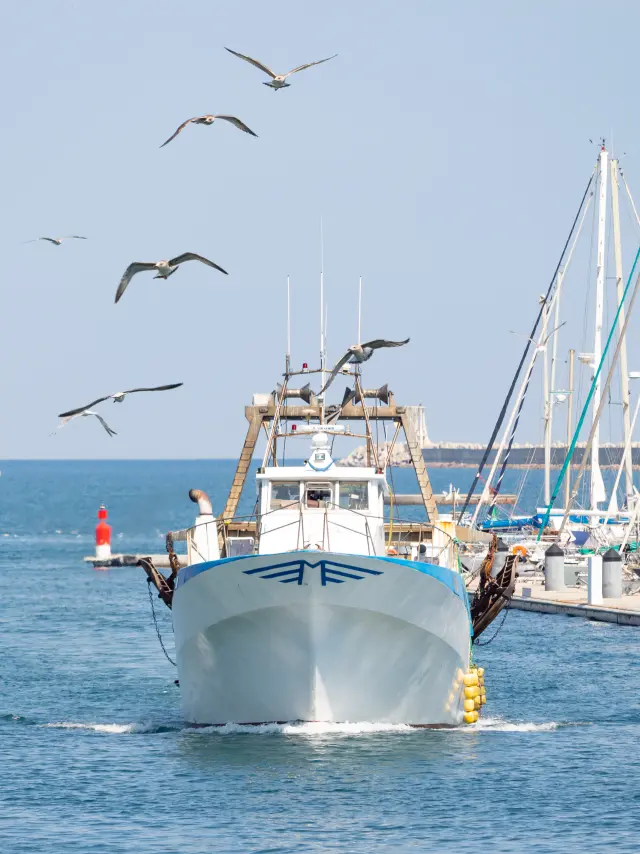
In 1960, the arrival of returnees from North Africa brought about a change in methods. Fishermen from Cetara, an Italian town in Campania, also settled in Sète and brought with them their expertise in anchovy fishing. In 1967, the Sète fish auction became the first in Europe to be computerised. This modernisation helped to optimise sales and enhance the value of the products.

Today, Sète has around fifteen trawlers and fifty small fishing boats. The fish market sells 120 different species: monkfish, red mullet, capelin, octopus, sea bream, sardines and anchovies. Around 2,200 tonnes of fish are sold each year. The port supplies the whole of France, as well as Italy and Spain. The fleet of 18 tuna seiners, measuring between 32 and 40 metres, sets out on its fishing season off the coast of Malta and the Balearic Islands every late spring. Their catches account for 50% of France’s bluefin tuna quota.

The fish auction takes place every day. Auctions take place in the amphitheatre or remotely via the internet. The building, designated as ‘Remarkable Contemporary Architecture’, is part of the history of a port that has never ceased to reinvent itself.
The Port of Les Nacelles in Mèze The home of the lagoon fishermen

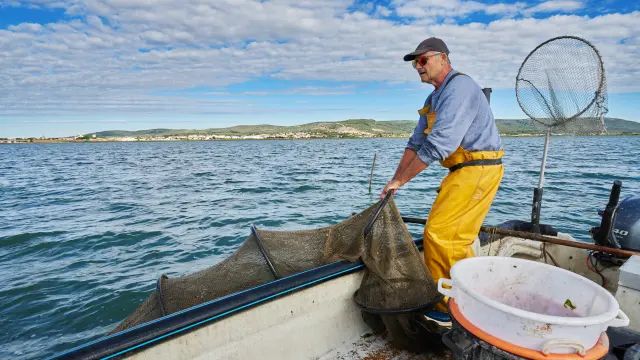
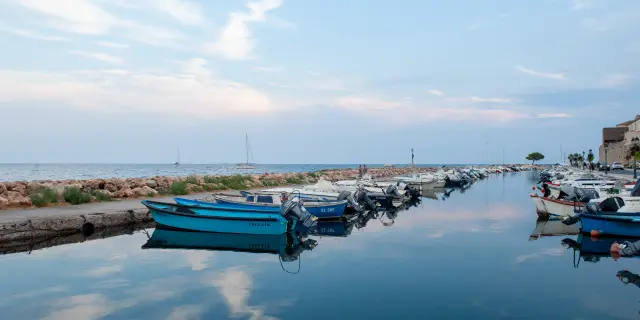
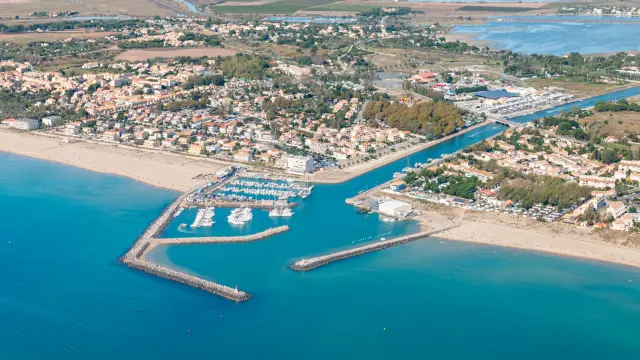
At the foot of Old Mèze, the Port des Nacelles takes its name from these traditional boats of the lagoon. It is here that fishermen practise ‘le petit métier’, a traditional fishing method that has been passed down from father to son for generations. Unlike trawlers, which head out to sea for several days, the small-scale fishermen set out daily and return the same day with their catch.

There are around 10 small-scale fishing boats in Mèze in winter, and around 40 in summer. They set off early in the morning at around 5 am and return at around 9 am. Fishing takes place all year round, though it is characterised by seasonality and traditional techniques. Sea bass, sea bream, mullet, eels: the species vary according to the seasons and migrations.

Every summer, the Fête du Bouletchou revives the tradition. This net, hauled in by hand onto the beach, was once used to catch fish approaching the shore. The technique, now a folk tradition, recalls the ancestral methods where fishermen worked from the shore without even boarding a boat.

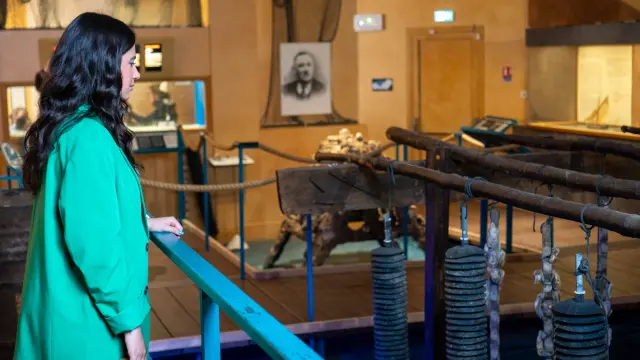
Once you leave the Port des Nacelles in Mèze, head towards Bouzigues, 7 kilometres away, to discover the Thau Lagoon Museum. Situated on the Bouzigues quay, the museum traces the history of fishing and shellfish farming. Models of nacelles, including the famous Gracchus Babeuf, a listed historic monument, are moored in front of the building. These traditional, brightly coloured boats are measured in ‘pans’: one pan is equivalent to approximately 25 centimetres.

Marseillan: between the lagoon and the Mediterranean

Marseillan occupies a unique position within the Thau Archipelago. Since ancient times, the town has always lived in step with fishing and wine-growing. Its harbour on the lagoon welcomes fishermen working in the lagoon, whilst Marseillan-Plage, connected by a 2-kilometre channel, opens out onto the Mediterranean.

The fishermen of Marseillan practise mixed fishing. In the lagoon, they catch eels, grey mullet and sea bream. At sea, they target sardines, anchovies, sea bass and gilthead sea bream. This dual activity allows them to adapt to the seasons and the available resources.

In autumn, the migration of sea bream leaving the lagoon to head for the sea is a major event. In Sète, in the Pointe Courte district, professional fishermen set their nets to take advantage of this seasonal abundance. This age-old tradition plays a vital role in the local economy and remains a highlight of community spirit and the passing on of skills.

Coexistence with shellfish farming

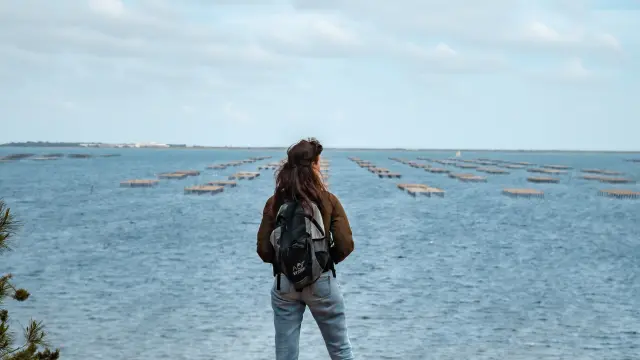
The Thau lagoon is home to two major maritime activities: fishing and shellfish farming. The 550 shellfish farms produce 12,000 tonnes of oysters a year across 1,200 hectares of beds. This output accounts for 10% of national production and provides a direct livelihood for 2,000 people.

Fishermen and shellfish farmers have shared the same space for over a century. Oyster beds occupy the deepest parts of the lagoon, whilst fishermen work on the periphery. This coexistence requires respect and consultation.

Certain marine species pose a problem. The gilthead seabream, after spawning at sea, returns to the lagoon in spring, ravenous. It devours everything in its path, including the oysters and mussels attached to the oyster farmers’ ropes. The oyster farmers protect their beds with nets, but the damage is sometimes still significant.

Fewer than 200 professional fishermen now work on the lagoon, compared with over 900 in the past. Stocks of certain species have dwindled. The eel is under threat and is the subject of stock recovery measures. The European clam, that ‘grey gold’ which was harvested by the tens of tonnes fifteen years ago, is becoming scarce. Scientists and fishermen have launched restocking operations.

Traditional fishing techniques

Over the centuries, the Thau Archipelago has developed fishing techniques tailored to the specific characteristics of the lagoon and the Mediterranean. Each method has an Occitan name that reflects its deep-rooted local origins.

The ‘capéchade’ (capejada in Occitan) is a traditional net set in the lagoon. It consists of several vertical panels that catch the fish. The “boulietch”, used until the 1960s, allowed fishing all year round, though with inconsistent results. The “ganguy” or ox net was pulled by two boats to drive the fish into a pocket.

Longlines remain widely used. This main line carries several baited hooks. Fishermen set it at depth and retrieve it a few hours later. This selective technique allows specific species to be targeted.

Pots, made of wicker or wire mesh, are set on the seabed with bait. Fish and shellfish enter easily but cannot escape. This traditional method is still used to catch crabs, octopus and eels.

Discover fishing: in the Thau Archipelago

There are several ways to discover the world of fishing in the Thau Archipelago. The return of the trawlers to Sète every afternoon offers a fascinating spectacle from the Saint-Louis pier or the promenade around the old harbour. The boats unload their catch, which is immediately taken to the fish market.

Sources

Port Sud de France, Town of Sète, Étang de Thau Museum, Thau Archipelago Tourist Office, Thau Infos, Pavillon France, Thau Basin Joint Authority, February 2026

F.A.Q